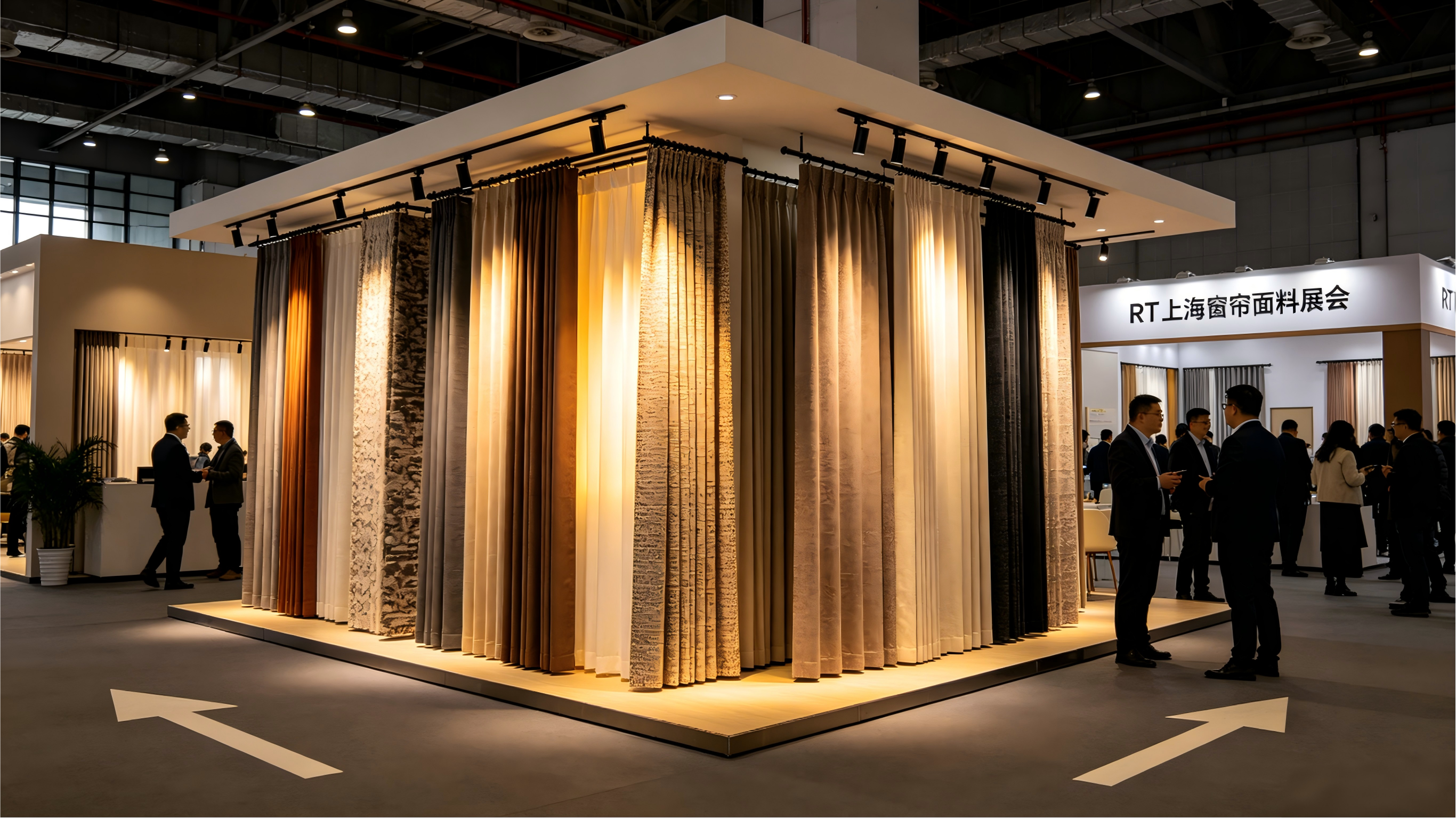
Global smart window covering market grows at 13.4% CAGR in 2026; energy-saving policies reshape building standards; smart dimming technology accelerates industry transformation.
The global wave of energy conservation and carbon reduction is reshaping the building and home furnishing industries at an unprecedented scale. In April 2026, the General Office of the Communist Party of China Central Committee and the General Office of the State Council jointly issued the "Opinions on Doing a Better Job in Energy Conservation and Carbon Reduction at a Higher Level and Higher Quality", which highlighted building energy conservation and carbon reduction as one of the five key tasks, explicitly promoting the large-scale development of ultra-low energy consumption buildings and the construction of safe, comfortable, green, and smart "good houses". Meanwhile, a study by the International Energy Agency indicates that reasonable external shading measures can reduce building cooling energy consumption by approximately 20% to 30%. Against this macro background, window covering and shading products are gradually upgrading from traditional home decoration roles to core technology components of building energy conservation systems. For professional sun protection fabric manufacturers and finished window covering producers, this means an unprecedented market opportunity is unfolding.
I. Global Window Covering Market Continues to Expand, with Smart Growth Leading the Way
According to the latest data released by Fortune Business Insights in April 2026, the global window covering market was valued at $15.07 billion in 2025, is expected to increase to $15.82 billion in 2026, and will continue to expand at a compound annual growth rate (CAGR) of 3.67% until 2034. The broader global window treatment solutions market is even larger, valued at approximately $45.11 billion in 2026 and projected to reach $68.7 billion by 2034, with a CAGR of 5.4%. Statistics from Stratistics MRC also confirm this trend — the global window treatment solutions market is advancing steadily.
The growth rate of the smart shading market far exceeds that of traditional categories. The global smart adaptive window screen market reached $4.54 billion in 2025, is expected to increase to $5.15 billion in 2026, with a CAGR as high as 13.4%, and is projected to climb to $8.47 billion by 2030. The automatic shading system market is also showing strong growth — it reached $21.43 billion in 2025, is expected to exceed $54.09 billion by 2035, with a CAGR of 9.7% between 2026 and 2035. At the same time, the global sun protection fabric and sun-protective textile market is growing steadily, with UV protection and energy efficiency improvement becoming core considerations for consumers when choosing window covering products.
North America holds a dominant position in the global window covering market with a 37.46% market share, while the Asia-Pacific region is the fastest-growing area due to rapid urbanization and rising disposable income. The enthusiasm for ultra-low energy buildings in the European market, combined with the sustained demand for high-quality shading solutions in the Middle East due to its hot climate, continues to drive cross-border window covering trade globally. These clear market signals explicitly indicate to all industry participants that smart shading and building energy conservation are injecting new growth momentum into the window covering field.
II. Policy Winds Drive Demand for Energy-Efficient Buildings, "Good Houses" Spur Window Covering Industry Upgrades
Entering 2026, many countries around the world are intensively releasing policy signals in the field of energy conservation and carbon reduction, with China's measures being particularly prominent. The joint Opinion issued by the General Offices explicitly calls for strengthening building energy conservation and carbon reduction, strictly managing the energy efficiency of new buildings, promoting the large-scale development of ultra-low energy buildings, and actively advancing energy-saving and carbon-reducing renovations of existing buildings in conjunction with the renovation of old residential communities. The Ministry of Housing and Urban-Rural Development subsequently issued opinions on improving housing quality, promoting the deep integration of the construction industry with advanced manufacturing and next-generation information technologies, and promoting intelligent construction, green building, and prefabricated decoration on a broader scale. Six departments further introduced policies supporting local governments to include green building materials in the scope of consumer goods trade-in programs, setting a revenue target for green building materials exceeding 300 billion yuan in 2026.
Although current policies mainly focus on window and door systems themselves, the policy recognition of the energy-saving value of external shading is gradually being transmitted to the window covering industry chain. An International Energy Agency study shows that reasonable external shading measures can reduce building cooling energy consumption by about 20% to 30%. External shading blocks solar radiation heat from entering the interior from the outside of the building, representing a more proactive energy-saving approach than relying on the "end regulation" of air conditioning. In new buildings, external shading is gradually becoming an important technical configuration to achieve energy efficiency targets; in public sector energy conservation and existing building retrofits, its characteristic of "no need for large-scale structural changes and quick results" makes it a preferred solution for energy-saving renovations. This not only directly drives demand for high-performance roller blinds, venetian blinds, honeycomb blinds, and other products but also opens up new paths for the window covering industry to participate in building energy efficiency design and green certification.
III. Technological Innovation: Breakthrough in Three-State Dimming and Accelerated Implementation of Smart Curtain Systems
In May 2026, the Intelligent Liquid Crystal Technology Institute of the Jiangsu Industrial Technology Research Institute launched the world's first mass production line for "three-state dimming" liquid crystal products — marking a historic breakthrough in core smart curtain technology and a key step toward industrial implementation. This globally unique dimming technology, which combines both "dynamic dimming" and "privacy protection" functions, can freely switch between transparent, shading, and privacy states, maximizing solar radiation regulation. The accelerating industrialization of this technology provides broader space for window covering companies to innovate products, which can be widely applied to glass doors and windows, curtain walls, interior partitions, and even automotive glass.
On the smart curtain system side, the industry in 2026 is at a critical inflection point of deep integration of sensor technology, the Internet of Things (IoT), and artificial intelligence. Global market demand for automatic light regulation systems continues to be released, with users no longer satisfied with simple electric lifting and lowering, but expecting complete shading solutions that can adaptively adjust based on sunlight angle, indoor temperature, and user habits. In commercial and office spaces, large glass curtain wall buildings are further releasing demand for electric sun shading blinds. For sun protection fabric manufacturers, upgrading from supplying basic fabrics to providing "functional smart fabrics" that can embed sensors is becoming an important direction for enhancing product competitiveness. It is foreseeable that as the smart shading concept widely penetrates application scenarios such as residential homes, hotels, medical facilities, and education, new window covering products with autonomous sensing and adaptive adjustment capabilities will rapidly capture market leadership.
IV. Highlighted Opportunities in the Middle East and Global Markets, Overseas Construction Projects Accelerate Release of Shading Demand
The Middle East has always been a core demand market for high-quality shading solutions. Since 2026, public tender information for several large-scale engineering projects in the region has further confirmed the expanding overseas market space for professional shading products. In April 2026, China Metallurgical Construction Engineering Co., Ltd. (MCC) released a tender announcement for the shading project of King Salman Square in Saudi Arabia, covering a large area of shading structures and rainproof fabric procurement. Additionally, the announcement of the tender results for the Qatar shading canopy project in January 2026 demonstrates the strong demand for shading products in the Middle East market.
During the same period, a public project tender released by the University of Jordan clearly specified the procurement of roller blind products with UV protection performance exceeding 90%, along with clear requirements for fabric openness factor and fire resistance performance. This fully demonstrates that in the Middle East market, the performance parameters of shading products have shifted from "soft preferences" to "rigid access conditions." At the same time, projects such as the railway rolling stock project for the 10th of Ramadan City in Egypt and the Sailun Group Egypt project also involve procurement needs for shading components and window and door systems. The highly professional demand for shading products from governments and large construction companies in the Middle East provides numerous opportunities for sun protection fabric manufacturers and window covering companies to explore overseas markets, and also lays a solid foundation for "Made in China" professional window covering products to gain higher recognition on the international stage.
V. Conclusion: The Golden Track for Professional Window Covering Manufacturers Has Already Opened
In the global economic landscape of 2026, the sun protection fabric and finished window covering industry stands at the center of the triple wave convergence of "building energy conservation + smart home + globalized services." From the steady expansion of the global window covering market exceeding the one hundred billion RMB mark, to smart adaptive window screens leading categories with double-digit CAGR; from the intensive introduction of new energy conservation and carbon reduction policies in the building sector across China, Europe, and the US, to the sustained demand for professional shading solutions in large-scale Middle East projects — the definitive growth trend of the industry is clearly discernible.
For a professional sun protection fabric R&D and finished window covering manufacturer like Wanbo Import and Export, the focus areas for current action should concentrate on four dimensions: first, keenly capture the rigid demand growth brought by energy-saving building policies in various countries, deeply integrate with building energy efficiency design and green building projects to incorporate products into energy-saving solution systems; second, continuously follow up on smart dimming and adaptive technology R&D, driving product iteration and upgrading with new technologies, providing customized solutions for different scenarios such as office curtains, hotel curtains, living room curtains, bedroom curtains, and small window curtains; third, deepen the core product system of blackout roller blinds, electric升降 blinds, honeycomb blinds, sheer shades (Shangri-La blinds), and zebra blinds (dual roller shades), maintaining continuous industry leadership in comprehensive properties such as sun protection, heat insulation, waterproofing, and UV protection; fourth, actively seize the project windows in regions such as the Middle East, Southeast Asia, and Europe, winning long-term trust in overseas markets with high-performance, high-reliability shading products. During this historic window of opportunity, only by deeply integrating professional manufacturing strength with global market dynamics can one ride the wave forward and become a core leader in the global window covering industry upgrade.
```