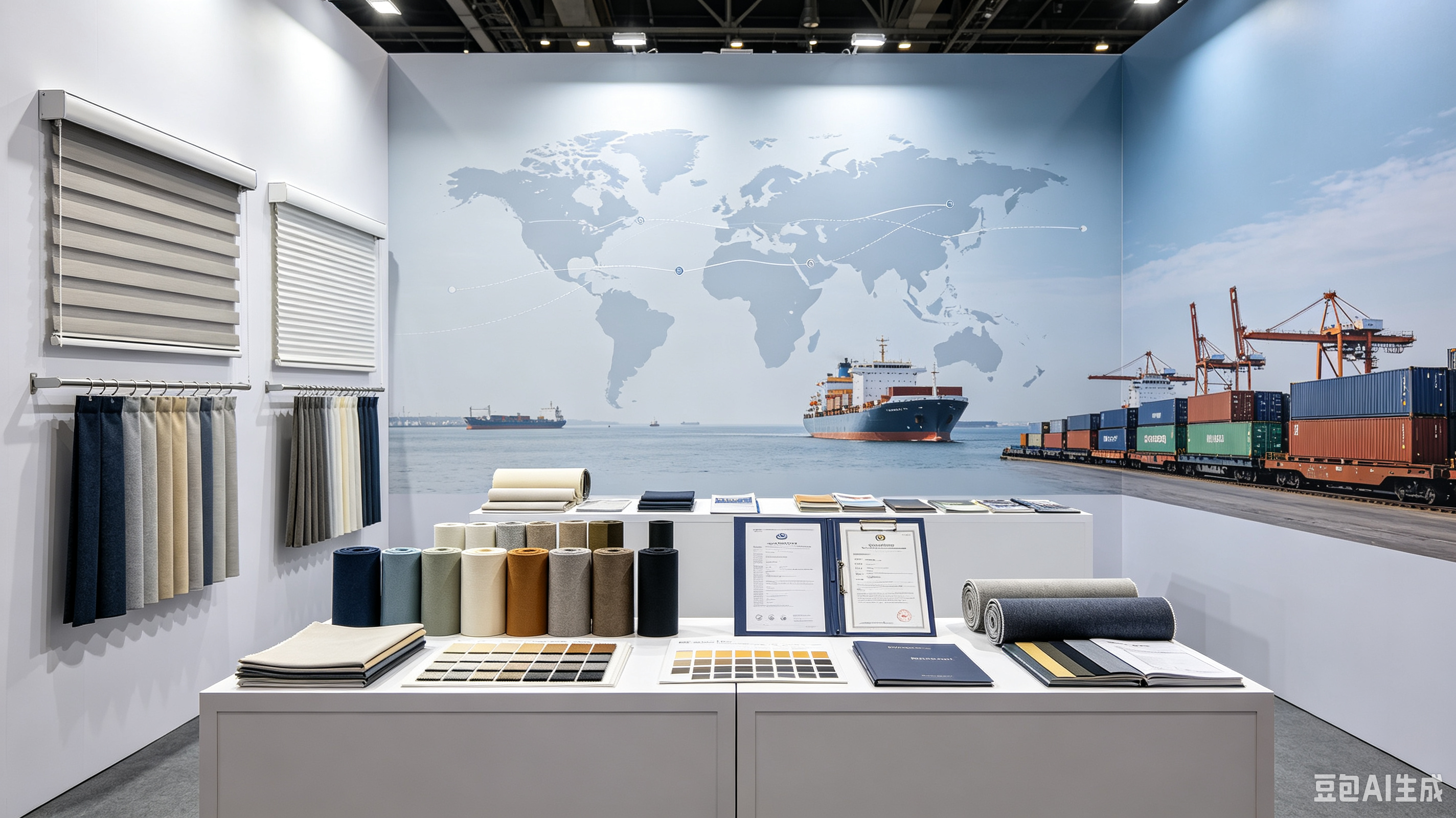
Global countries updated textile import compliance rules in 2026. Learn compliant roller shade & sofa fabric selection, supplier screening and low-cost shipping solutions for global buyers.
textile import compliance 2026roller shade fabric compliantsofa fabric exportlow cost sea shipping solutionchina textile sourcing guide
In 2026, multiple nations worldwide have updated their textile import‑access standards. The European Union, Gulf‑Cooperation‑Council states, South Africa and Southeast‑Asian countries have successively upgraded sampling‑inspection rules, eco‑friendly flame‑retardant criteria and customs‑clearance review mechanisms for soft‑furnishing fabrics. Roller‑shade sun‑shading fabrics and sofa upholstery fabrics rank among the most‑imported soft‑furnishing textile categories and have become high‑priority inspection targets for customs authorities across countries. Many overseas purchasers report that fabrics routinely sourced in previous years now frequently trigger customs detention, cargo hold‑ups, fines, returned shipments and suspended construction projects. Coupled with volatile Red‑Sea ocean‑freight rates, port congestion and rising surcharges, procurement expenses and trade‑related risks have increased sharply.
Unlike former‑year purchasing priorities centred merely on fabric price, style and ready‑stock availability, core purchasing demands for overseas buyers in 2026 have shifted toward compliant certification, consistent quality, hassle‑free customs clearance and cost‑effective dependable sea‑shipping delivery. Recent international textile‑industry research demonstrates that original‑source Chinese factories furnished with complete international compliance certificates, one‑stop multi‑category supply and diversified cross‑border logistics solutions have become the top‑tier cooperative partners for global importers, engineering contractors and soft‑furnishing wholesalers. Targeting the brand‑new 2026 textile‑import regulations, this guide elaborates compliance‑based procurement benchmarks for roller‑shade fabrics and functional sofa fabrics, market‑leading hot‑selling product lines, supplier screening criteria and low‑cost ocean‑shipping export schemes, delivering professional, actionable purchasing guidance on Chinese textiles for overseas buyers.
I. Core revisions to overseas fabric‑import regulations for 2026 and essential risk‑avoidance tips for purchasers
This year, import supervision for soft‑furnishing textiles has been tightened in all countries. Random spot‑checking has given way to full‑batch inspection coverage. Major regulatory adjustments fall under three primary categories, which also represent the most‑common pitfalls for overseas buyers:
1. European Union market: upgraded mandatory dual standards for environmental‑safety and flame‑retardant performance
The EU’s updated textile‑safety legislation has formally taken effect. All indoor roller‑shade fabrics and sofa‑upholstery materials must pass low‑formaldehyde, heavy‑metal‑free and flame‑resistance grade testing. Non‑compliant soft‑furnishing textiles are prohibited from entering home‑renovation, hotel and commercial‑engineering markets. Shipments lacking valid test reports will be seized and disposed of, incurring hefty port‑storage fees and importer black‑list entries.
2. Middle‑Eastern Gulf market: unified heat‑insulation and flame‑retardant engineering specifications
Saudi Arabia, the United Arab Emirates and other nations have unified building soft‑furnishing admission criteria. Every architectural sun‑shade roller fabric and indoor sofa‑upholstery textile must furnish officially‑recognised certification for heat insulation, ultraviolet‑resistance and flame retardancy. Engineering‑grade fabrics without valid certifications are disqualified from project tenders and customs‑clearance procedures.
3. African and Southeast‑Asian markets: compulsory inspection of weather‑resistance and packaging specifications
Outdoor roller‑shade and outdoor‑sofa fabrics undergo strict assessments on ageing‑resistance, waterproof capability and colour fastness. Export shipments must adopt moisture‑proof, collision‑resistant and abrasion‑resistant packaging. Improper packaging will result in entry refusal, raising export‑operation barriers for small‑and‑medium‑sized middlemen.
II. Top compliant hot‑selling fabrics for 2026, engineered to satisfy global import‑entry criteria
In accordance with newly‑enforced national‑level import rules, the two highest‑selling, fully‑compliant and risk‑free fabric groups cover sun‑shade roller‑shade textiles and functional sofa‑upholstery materials, catering to diverse regional‑market requirements:
(1) Compliant best‑selling roller‑shade sun‑shading fabrics
1. EU‑compliant eco‑friendly blackout roller‑shade fabric: Fully compliant with 2026 EU textile regulations, free of excessive formaldehyde and unpleasant odours, with certified flame‑retardant ratings. It suits European residential‑decoration, hotel and office‑building projects, accepts small‑batch mixed orders and boasts a 100% customs‑clearance success‑rate.
2. Middle‑Eastern‑project‑qualified heat‑insulated roller‑shade fabric: High‑grade thermal insulation, powerful UV‑blocking capacity and complete light‑blocking performance. It carries universally‑accepted Gulf‑region engineering certifications, serves construction‑project procurement within hot‑climate territories, maintains large‑scale ready‑stock reserves and supports long‑term supply contracts for new‑city developments and commercial complexes.
3. Weather‑resistant compliant outdoor roller‑shade fabric: Passes African and Southeast‑Asian weather‑resistance testing. Waterproof, mildew‑proof, ageing‑resistant and colourfast, with ocean‑shipping‑standard export packaging, perfectly suited for sun‑shading installations at street‑front shops, scenic spots and holiday resorts.
(2) Compliant best‑selling furniture sofa‑upholstery fabrics
1. EU‑certified flame‑retardant eco‑friendly sofa fabric: Developed for European public venues and home‑furnishing markets, validated by EU safety accreditations, abrasion‑resistant and stain‑repellent with minimalist colour schemes. It ranks as a popular restocking product for European soft‑furnishing retailers in 2026.
2. Heavy‑duty wear‑resistant engineering‑grade sofa fabric for the Middle East: Outstanding scratch‑resistance and shape‑retention, ideal for hotel, apartment and commercial‑space renovation projects. The comprehensive set of compliance certificates supports engineering‑project bidding and customs clearance.
3. UV‑blocking waterproof outdoor sofa‑upholstery fabric: Optimised for hot, rainy outdoor surroundings, sunlight‑tolerant, corrosion‑resistant and mildew‑proof, meeting market requirements for outdoor furniture in Africa and Southeast‑Asia.
III. Updated core benchmarks for overseas purchasers screening Chinese fabric suppliers in 2026
Under tightened regulatory oversight, low pricing no longer constitutes a competitive procurement advantage. Valid compliance credentials, stable quality‑control standards and professional export‑service capacity define primary supplier‑selection benchmarks. Five screening metrics assist overseas buyers in avoiding commercial pitfalls:
1. Traceable complete qualifications: Every fabric carries country‑specific test reports, certificates‑of‑origin and legitimate compliance documentation with verifiable authentic records. Uncertified, borrowed or expired certificates shall never be accepted;
2. Self‑managed manufacturing and quality‑control: In‑house weaving, coating and post‑treatment production lines enable full‑range parameter supervision. Batch‑to‑batch colour deviation and sub‑standard functional performance are minimised, guaranteeing bulk‑goods consistency against physical samples;
3. One‑stop multi‑category supply: Both compliant roller‑shade textiles and sofa‑upholstery fabrics are available for consolidated container shipments, cutting ocean‑freight expenditure and communication‑plus‑logistics risks arising from coordinating multiple separate vendors;
4. Diversified ocean‑shipping export alternatives: Operations are never reliant solely on the Red‑Sea shipping lane. Ocean freight, sea‑rail intermodal transit, trans‑continental cargo trains and emergency air‑freight services mitigate hazards such as channel congestion, freight‑rate surges and cargo detention;
5. Specialised foreign‑trade compliance support: Pre‑order compliance audits, personalised matching to national import‑access standards and end‑to‑end customs‑clearance assistance resolve all trade‑related obstacles created by new‑era regulations.
IV. Optimal ocean‑shipping export schemes for 2026, resolving textile‑industry logistics bottlenecks
Addressing volatile Red‑Sea navigation, rigorous international customs inspections and climbing logistics costs, customised export‑transport plans for roller‑shade and sofa fabrics minimise overseas purchasers’ overall trade expenses and risks:
Middle‑Eastern market: Prioritise combined Central‑Asia cross‑border railway plus sea‑shipping routes to bypass congested Red‑Sea lanes, eliminate war‑related surcharges and sustain dependable transit times for full‑container large‑scale engineering orders;
European market: Mediterranean sea‑rail intermodal dedicated routes are recommended, delivering short voyage durations and low freight costs for small‑batch mixed restocking orders while avoiding excessive costs from Cape‑of‑Good‑Hope detours;
African / Southeast‑Asian market: Direct deep‑sea shipping routes are adopted alongside optimised export packaging to prevent transit‑period damage and cargo detention and guarantee intact cargo arrival;
Urgent‑priority orders: Air‑express shipping enables rapid restocking, supporting sample deliveries and peak‑season emergency replenishment so that construction timelines and retail‑store sales remain uninterrupted.
Conclusion
Global soft‑furnishing textile commerce has formally entered a brand‑new 2026 phase defined by regulatory compliance, stable supply chains and low‑cost operations. Strengthened national import‑entry policies and volatile marine‑shipping conditions have exposed overseas buyers dependent upon low‑price unqualified middlemen to heavy‑loss risks. For worldwide importers, engineering contractors and soft‑furnishing wholesalers, partnering with a qualified original‑source Chinese fabric factory boasting complete accreditations, rigorous quality assurance, multi‑option logistics and specialist services constitutes the decisive method for managing procurement risks, lowering comprehensive costs and capturing local‑market share.
Market demand for compliant sun‑shade roller‑shade textiles and functional sofa‑upholstery fabrics continues surging. Overseas buyers are encouraged to arrange factory audits, conduct small‑scale trial sales and proceed toward full‑container bulk cooperation in order to construct stable, regulation‑compliant Chinese textile supply‑chains and leverage mature export‑logistics arrangements to confidently navigate the 2026 foreign‑trade landscape.