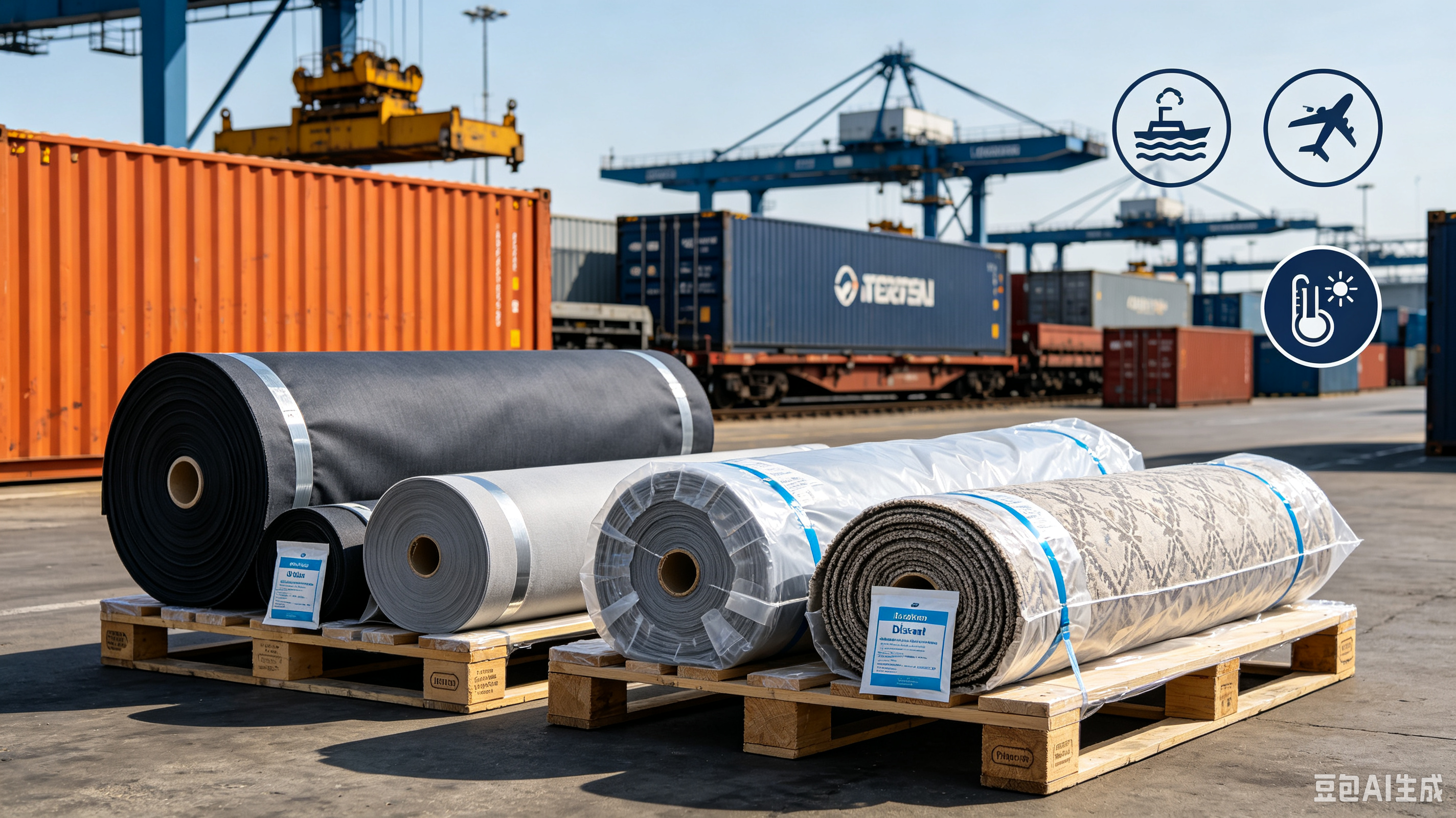
With ongoing red‑sea shipping risks, how overseas roller blind & sofa fabric buyers source verified Chinese manufacturers remotely via AI tools, combine online‑offline exhibition sourcing and avoid ocean‑transport damage.
Digital technology is rapidly reshaping the global sourcing landscape for home‑textile fabrics. In 2026, a growing number of overseas buyers of roller‑blind fabrics, sofa fabrics and carpets no longer rely solely on travelling to offline exhibitions to source suppliers. Instead, they adopt brand‑new procurement models including AI‑powered online sourcing, virtual factory audits and remote sample‑checking, so as to cut cross‑border travel costs and shorten supply‑chain docking cycles. Meanwhile, geopolitical risks along the Red Sea and Strait of Hormuz shipping routes persist. Problems such as congestion at some transit ports, vessel schedule delays and high‑temperature moisture damage inside containers still bring much uncertainty to textile sea‑freight exports. Although remote procurement is convenient and efficient, it sets higher requirements for fabric quality verification, logistics‑scheme planning and supplier screening. Combined with the newly‑launched AI fabric‑matching service at Keqiao Textile Expo, practical remote‑sourcing workflows, sea‑shipping risk‑avoidance solutions and the hot‑selling fabric list for the second half of the year, this article delivers a work‑able remote sourcing & procurement guide for overseas curtain‑fabric buyers.
I. New Sourcing Trend in 2026: Two‑way Synergy Between Online AI Tools and Offline Exhibitions
As China’s largest home‑textile fabric industrial cluster, Keqiao in Shaoxing rolled out a multilingual AI intelligent‑matching system during this spring’s Textile Expo. Even far away overseas, international merchants can remotely upload fabric pictures and input technical parameters, to quickly match original‑source factories capable of producing roller‑blind fabrics, window screens, jacquard‑woven fabrics, coated fabrics and ice‑crack textured fabrics, breaking the geographical restrictions of offline exhibitions. For overseas buyers, the dual‑track sourcing strategy of “online preliminary screening + final‑round negotiation at exhibitions” is currently recommended:
- AI‑powered online preliminary supplier screening: Prioritize integrated manufacturers with in‑house weaving and post‑treatment coating capacity. Original Keqiao fabric suppliers such as Wanbo can provide fabric colour cards, flame‑retardant test reports and recycled‑fabric compliance certificates online, completing the first‑round qualification check in advance;
- Target key offline exhibitions in the second half of the year for in‑depth on‑site negotiations:
- Heimtextil Overseas Roadshow, Frankfurt Germany;
- Keqiao Autumn Textile Expo (Shaoxing), October;
- Valencia International Home Textiles Exhibition, Spain.
II. Common Risks of Remote Curtain‑fabric Procurement & Sea‑freight Risk‑avoidance Solutions
The two biggest pain‑points of remote procurement are colour‑deviation risks for bulk‑produced fabrics and cargo‑damage delays during long‑ocean transportation. Affected by tensions across the Middle‑East waters, rerouting around the Cape of Good Hope extends transit time to European and Mediterranean ports by 10‑15 days. Inside sealed containers, temperatures can exceed 70℃. Roller‑blind coated fabrics and sofa fabrics stored for long periods under high‑temperature enclosed conditions are highly vulnerable to coating ageing, mildew and moisture stains. For remotely‑placed orders, buyers may refer to the following logistics counter‑measures:
- Regular large‑volume orders: Book direct sea‑freight space well in advance. For full‑container shipments of roller‑blind fabrics, carpets and woven textiles, direct shipping routes are preferred while high‑risk transit ports should be avoided. Require suppliers to apply dual‑protection packaging with moisture‑proof stretch film plus desiccants to minimize heat‑related cargo losses from the source. A 60‑day stocking buffer period is suggested to cope with possible skipped‑port delays.
- Urgent orders for engineering flame‑retardant fabrics: Alternative sea‑rail intermodal transport via China‑Europe Railway Express. Hotel and office‑building roller‑blind projects have strict delivery deadlines. Sea‑rail transport is unaffected by Red‑Sea‑route disruptions and offers stable transit lead‑times, perfectly suited for shipments of Class B1 flame‑retardant jacquard fabrics and full‑shading coated roller‑blind fabrics.
- Small‑batch trial‑orders of new ice‑crack fabrics and window screens: Fast restocking via sea‑air intermodal transport. When sourcing new‑release fabrics remotely, start with small trial shipments delivered by expedited sea‑air services. Inspect fabric texture before committing to large‑volume orders to prevent quality discrepancies caused by remote sample evaluation.
III. Recommended Hot‑selling Fabric List for Remote Sourcing in H2 2026
Based on new‑product trends at Keqiao fabric market and market demand from overseas home‑renovation & engineering projects, the following product categories are top sellers for the Middle East, Europe and Australia in the second half of 2026, suitable for overseas buyers to request samples and prepare inventory remotely:
- Low‑saturation textured shading coated roller‑blind fabric: Matte full‑shading fabrics in earth‑tone and oat‑shades, heat‑insulating and UV‑resistant, well‑suited for high‑temperature home‑decor markets in the Middle East, excellent colour fastness and fade‑resistant during long‑haul sea transport;
- Ice‑crack textured curtain & window‑screen fabric: Popular textured fabrics with fast‑updating patterns, maintaining strong momentum within Europe’s residential retail market, low entry threshold for flexible small‑batch customization;
- High‑shrinkage‑yarn wear‑resistant sofa fabric: Stain‑proof and scratch‑resistant, ideal for commercial soft‑furnishing projects such as homestays and cafes, stable re‑order rates, colour‑fastness test reports available on request;
- Eco‑friendly recycled jacquard‑woven fabric: Compliant with EU Digital Product Passport regulations, can be used for custom‑made roller blinds in high‑end residential buildings, eliminating environmental‑compliance risks for exports to Europe;
- Outdoor UV‑resistant sun‑shade fabric. Australia enters spring‑summer season in the second half of the year, triggering a surge in orders for balcony & courtyard outdoor roller blinds, with outstanding anti‑ageing and sunlight‑resistant performance.
IV. Practical Pitfall‑avoidance Guide for Overseas Buyers Sourcing Chinese Fabrics Remotely
Without on‑site inspection during remote procurement, buyers can implement four risk‑control measures to secure their orders. First, always request physical A4 colour‑cards at the early procurement stage, never confirm fabric colours merely from online pictures to avoid bulk‑lot colour deviation. Second, agree on mid‑production video inspections with the factory to monitor real‑time weaving and coating‑processing activities. Third, adopt milestone‑based phased payment terms; pay the final balance only after receiving and verifying real‑life photos of finished bulk goods. Fourth, pre‑negotiate multiple alternative shipping plans with suppliers, so you can instantly switch logistics routes once port‑congestion risks emerge on the originally scheduled route and guarantee on‑time delivery.
Conclusion
In 2026, AI‑powered digital sourcing is reshaping cross‑border curtain‑fabric procurement workflows. Overseas buyers can select qualified Chinese original‑source manufacturers using intelligent online matching tools, carry out deep‑dive supplier verification at offline exhibitions, and prepare diversified multi‑channel shipping solutions in advance. By selecting popular items including textured roller‑blind fabrics, ice‑crack fabrics and recycled eco‑friendly textiles, buyers are able to cut expensive cross‑border travel costs, effectively evade geopolitical shipping risks and capture market dividends during the global peak soft‑furnishing sales season in the second half of the year.