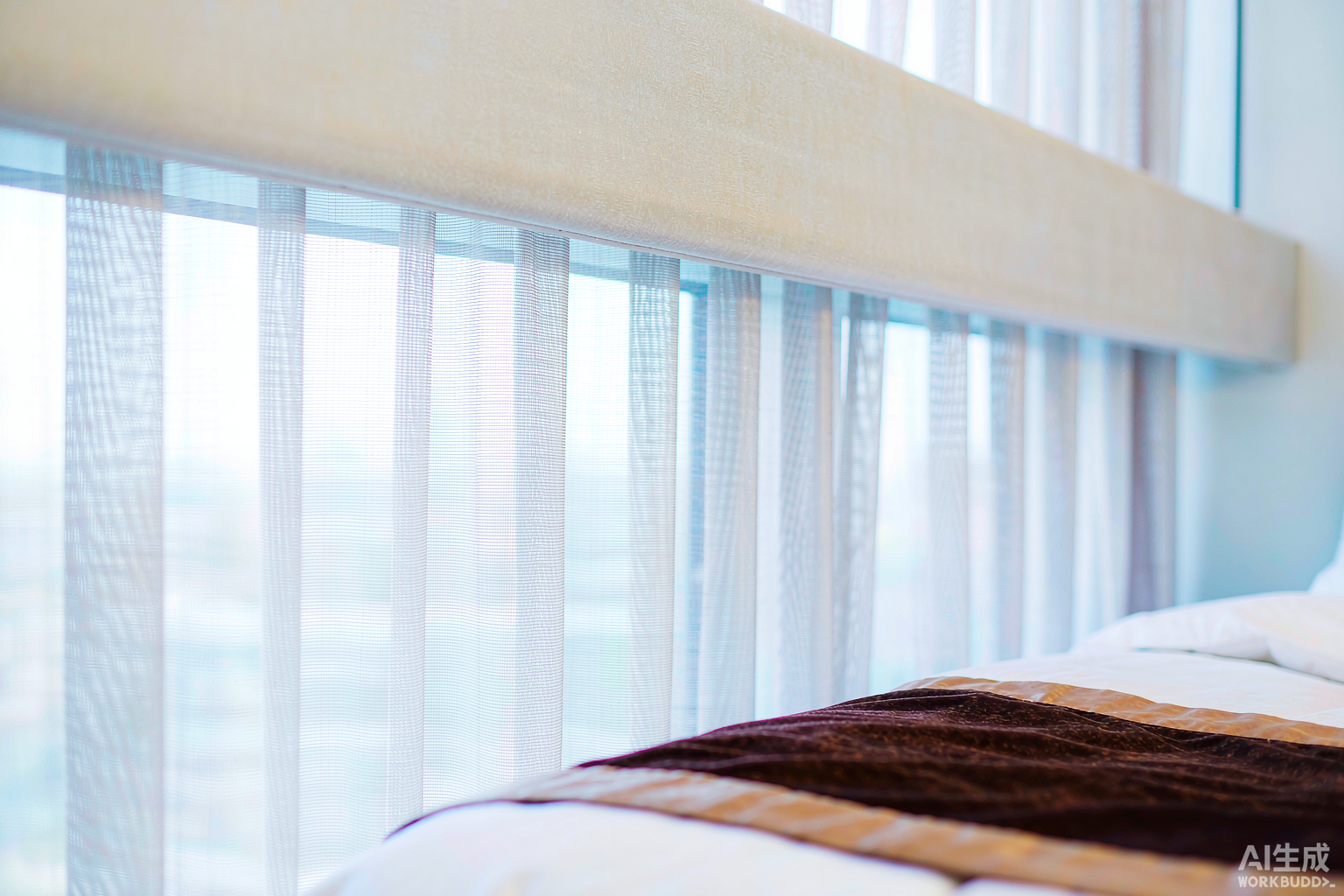
The global antimicrobial textile market reaches USD 15.47 billion in 2026, with home textiles among the fastest-growing segments. This guide breaks down the three demand engines (hospitality, healthcare, home wellness), four antimicrobial technology routes, the ISO 20743/AATCC 100/JIS L 1902 testing matrix, five best-seller categories for 2027 and an eight-step buyer verification protocol — plus the latest ocean-freight window and Wanbo one-stop supply solutions.
Hygiene has quietly become the defining purchasing criterion in the window covering trade. Open any serious RFQ for a hotel refurbishment, a hospital wing, a senior-living residence or even a premium retail blind program in 2026, and the specification sheet will contain a page that did not exist five years ago: antimicrobial efficacy ratings, anti-mite claims, wash-durability thresholds and the name of the accredited laboratory that must sign off. For overseas buyers, the suppliers who can deliver fabrics that survive third-party verification — not just marketing language — are the ones who will hold the 2027 project pipeline.
The market numbers confirm how fast this shift is happening. According to The Business Research Company, the global antimicrobial textile market will grow from USD 14.02 billion in 2025 to USD 15.47 billion in 2026 (up 10.4%), reaching USD 22.61 billion by 2030 at a 10.0% CAGR. Global Market Insights projects an even steeper curve — from USD 15.7 billion in 2026 to USD 43.6 billion by 2035 at 12% CAGR. Multiple reports identify home textiles as one of the fastest-growing application segments (roughly 19.5% annual growth), with curtains, bedding and upholstery fabrics the three categories where antimicrobial treatment is penetrating fastest in interior settings. In China, industry statistics put the domestic antimicrobial functional curtain market above RMB 18 billion in 2025, with a five-year CAGR near 18%, and penetration in engineering soft-furnishing procurement climbing from under 15% in 2020 to over 40% in 2025.
1. Three demand engines: hospitality, healthcare & senior living, and home wellness
Hotels and hospitality are the single largest incremental source. Guest-room curtains are among the largest soft surfaces in a room, living permanently in air-conditioned condensation, humidity and low ventilation — ideal conditions for mold, mildew and dust mites. In 2026, leading hotel groups added "antimicrobial + anti-mildew + washable" to their standard technical requirements for curtain renovation, precisely because it extends replacement cycles, cuts industrial laundry frequency and shortens room downtime. In tropical and Gulf markets, anti-mildew performance effectively determines the real service life of the fabric.
Healthcare and senior-care facilities impose the hardest constraints. Cubicle curtains and blackout drapes in patient rooms are recognized cross-contamination risk points; hospitals across Europe and North America now require quantitative antimicrobial test reports with full traceability. Nursing homes, rehabilitation centers and maternity facilities face lighter regulation but almost universally specify to hospital-grade standards. This segment demands far more than ordinary home textiles: skin-contact safety and wash durability (typically ≥80% antibacterial-rate retention after 50 launderings).
Home wellness is the third engine. Children's rooms, pet-owning households and allergy-prone consumers form a high-willingness-to-pay segment, and "anti-mite" and "anti-mold" are among the highest-premium functional claims at retail. For importers and brand owners this means antimicrobial roller-blind and curtain fabric is no longer only a contract product — it is a high-margin category for e-commerce and chain retail.
2. Four mainstream technology routes — buyers must tell them apart
The real difference between fabrics lies in the chemistry of the antimicrobial agent and how it is applied. Four commercial routes dominate today, each with trade-offs:
- Silver-ion / nano-silver systems: the broadest spectrum and most mature technology; metal and metallic-salt agents currently hold about 61% of the global market. Inhibition rates against common pathogens (Staphylococcus aureus, E. coli) can exceed 99%. The costs are high, and regulatory scrutiny is tightening: EU REACH reviews and, in the United States, EPA registration requirements for silver-based antimicrobial textiles, plus California Proposition 65 labeling obligations. Always request the agent's compliance documentation and migration-test data.
- Quaternary ammonium compounds (QAC): low cost and simple processing, typically applied by pad-batch finishing. Wash durability is the weakness — low-concentration finishes can lose most of their efficacy after only three to five washes, which is exactly where the market's "phantom antimicrobial claims" concentrate. Verification methods are covered in the standards section below.
- Nano zinc / copper-based inorganic agents: better heat and weather resistance than organic systems and outstanding anti-mildew performance, ideal for high-humidity applications — bathroom roller blinds, seaside hotels, laundry-room dividers. Lower yellowing risk than silver, so better suited to light and off-white grounds.
- Bio-based agents (chitosan-modified, etc.): a response to EU pressure on traditional biocides, sold as a sustainability story alongside GRS and OEKO-TEX credentials. Still costlier, but global purchases of bio-based antimicrobial fiber reached 48,000 tonnes in 2025 (about 9.2% of supply) and the curve is steepening.
There is also one critical process dividing line: mass-colored / spun-in (masterbatch added during extrusion) versus after-treatment (coating or padding). Spun-in agents sit inside the fiber and can retain ≥80% of antibacterial efficacy after 50 washes, at higher agent consumption and cost. After-treatment is cheaper and faster to deploy, but durability depends entirely on the quality of the finish and process control. Buyers should ask directly which route was used and demand post-wash retesting to the relevant standard.
3. The testing and certification matrix: reading the report is the real procurement skill
"Antimicrobial" is not a free-form claim. A qualified supplier should offer a test package covering at least the following:
- ISO 20743 (international quantitative method): antibacterial activity value, generally R ≥ 2.0 (equivalent to 99% reduction) as the pass line, covering gram-positive and gram-negative bacteria plus fungi.
- AATCC 100 (US market): quantitative inoculum-recovery method; the industry norm is ≥90% reduction at 24 hours. AATCC 147 (zone-of-inhibition) serves as a quick qualitative screen.
- JIS L 1902 (Japanese market access): quantitative plus qualitative methods with explicit wash-durability requirements; Japanese customers typically require compliance after 50 launderings.
- ASTM E2149 (dynamic contact method): performance under friction and liquid contact, appropriate for coated fabrics.
- GB/T 20944 series + GB/T 31713 (China): agar-diffusion (zone >7 mm valid) and shake-flask (≥70% reduction) methods plus hygiene-safety requirements for antibacterial textiles — needed for dual-standard projects.
- GB 18401 / OEKO-TEX Standard 100 / REACH: an antimicrobial fabric must first be a safe fabric. Formaldehyde ≤75 mg/kg and pH 4.0–8.5 are baseline; skin-contact products should carry OEKO-TEX, and EU customers will also check the REACH restricted-substances list.
- Anti-mildew package: GB/T 24346 (growth rating 0 = no growth), ASTM G21 (soil-burial, ≥80% strength retention), ISO 846 climate-chamber — for high-humidity applications.
Practical tip: insist on reports from CNAS/CMA or ISO/IEC 17025-accredited laboratories, tied to the specific batch and dye lot — not generic "same-process" certificates.
4. Best-seller picks for 2027: five high-conviction categories
Based on current order structure and end-user feedback, five product families are positioned to lead the antimicrobial window-covering race into 2027:
- Antimicrobial anti-mildew full-blackout roller blind fabric: the default combination for hospitals and guest rooms — antimicrobial coating + high blackout (99%+) + mildew resistance in one, with the 280–320 g/m² weight band moving the largest volume.
- Silver-ion antimicrobial sheer fabric: lightweight sheers live in light, grease and humidity; "antibacterial + odor-free" is an intuitive retail story that e-commerce listings can package as "invisible protection."
- Machine-washable antimicrobial blackout curtains: the core need of serviced apartments and select-service hotels — quick-dry linings plus antimicrobial finishing dramatically cut industrial laundry cost.
- Anti-mite jacquard and chenille dual-use curtain/upholstery fabric: grafting antimicrobial and anti-mite performance onto proven texture trends (chenille, crackled-ice weave, high-density jacquard) delivers both aesthetics and function — and double-high price points and margins.
- Waterproof antimicrobial shower/medical cubicle fabric: a hydrophobic microporous layer makes liquids bead and roll off; combined with antimicrobial finishing it enables wipe-clean maintenance — a genuine repeat-purchase necessity in healthcare, spa and senior-living channels.
5. The eight-step verification protocol: turning claims into evidence
Against a market of uneven quality, overseas buyers can run a systematic validation with this checklist:
- Require disclosure of the antimicrobial agent type, chemistry and brand of the additive supplier — refuse vague answers like "imported antimicrobial agent";
- Confirm whether the process is spun-in or after-treatment, and obtain wash-durability data for that specific process;
- Specify the test standard for the destination market (AATCC 100 for the US, ISO 20743 for Europe, JIS L 1902 for Japan) in writing;
- Add post-wash retesting: after 50 launderings per ISO 6330, ≥80% retention of antibacterial efficacy equals durable performance;
- Verify ecological safety: GB 18401 or OEKO-TEX reports, formaldehyde and pH figures, heavy metals and azo data;
- For EU orders check REACH restricted substances and BPR declarations; for US orders confirm Proposition 65 labeling duties;
- Demand laboratory reports matched one-to-one to production dye lots, and retest 3–5% of bulk production at random;
- Write all of the above into the quality annex of the purchase contract, with defined rejection and claim mechanisms for failed batches.
6. The export window: delivering functional fabric on time and on budget
A great product still has to arrive on schedule. Latest ocean-freight snapshot (as of 15 October 2026, Drewry data): the World Container Index stands at USD 4,485 per 40ft, up 3% week-on-week — Shanghai–Rotterdam USD 3,522 (+6%) and Shanghai–Genoa USD 3,945 (+7%), the first Asia–Europe rebound after thirteen consecutive weekly declines; Shanghai–Los Angeles USD 7,884 (+3%) and Shanghai–New York USD 10,075 (−1%), with transpacific rates still elevated on strong US import demand. Carriers are attempting to push Asia–Europe FAK levels to USD 4,500–4,800 per FEU from 19 October, but returning Suez Canal transits and fewer blank sailings keep adding effective capacity, so the increase may not stick. Rates and space change daily — the figures here explain market structure and do not replace a live quotation. Because antimicrobial programs carry extra testing lead time, buyers should lock vessel space in parallel with sampling and laboratory work, allowing three to four weeks of booking lead time.
7. Wanbo: one-stop antimicrobial functional fabric supply
Based in Keqiao, Shaoxing — the heart of China's textile cluster — Wanbo specializes in roller blind, sheer, curtain, sofa and carpet fabrics, with mature development and mass-production capability in antimicrobial and anti-mildew functional lines. We customize across silver-ion, QAC and nano-zinc routes, support both spun-in and after-treatment processes, coordinate third-party testing with SGS/Intertek and OEKO-TEX certification assistance, and handle OEM/ODM small-batch rapid-response orders. From pattern development, sampling and sealed counter-samples, laboratory reports, LCL/FCL shipping through to destination-port customs clearance, Wanbo delivers the full chain for overseas buyers. If you are sourcing verified antimicrobial window-covering fabrics for 2027 hospitality, healthcare or retail programs, contact the Wanbo team for our sample book and quotation.