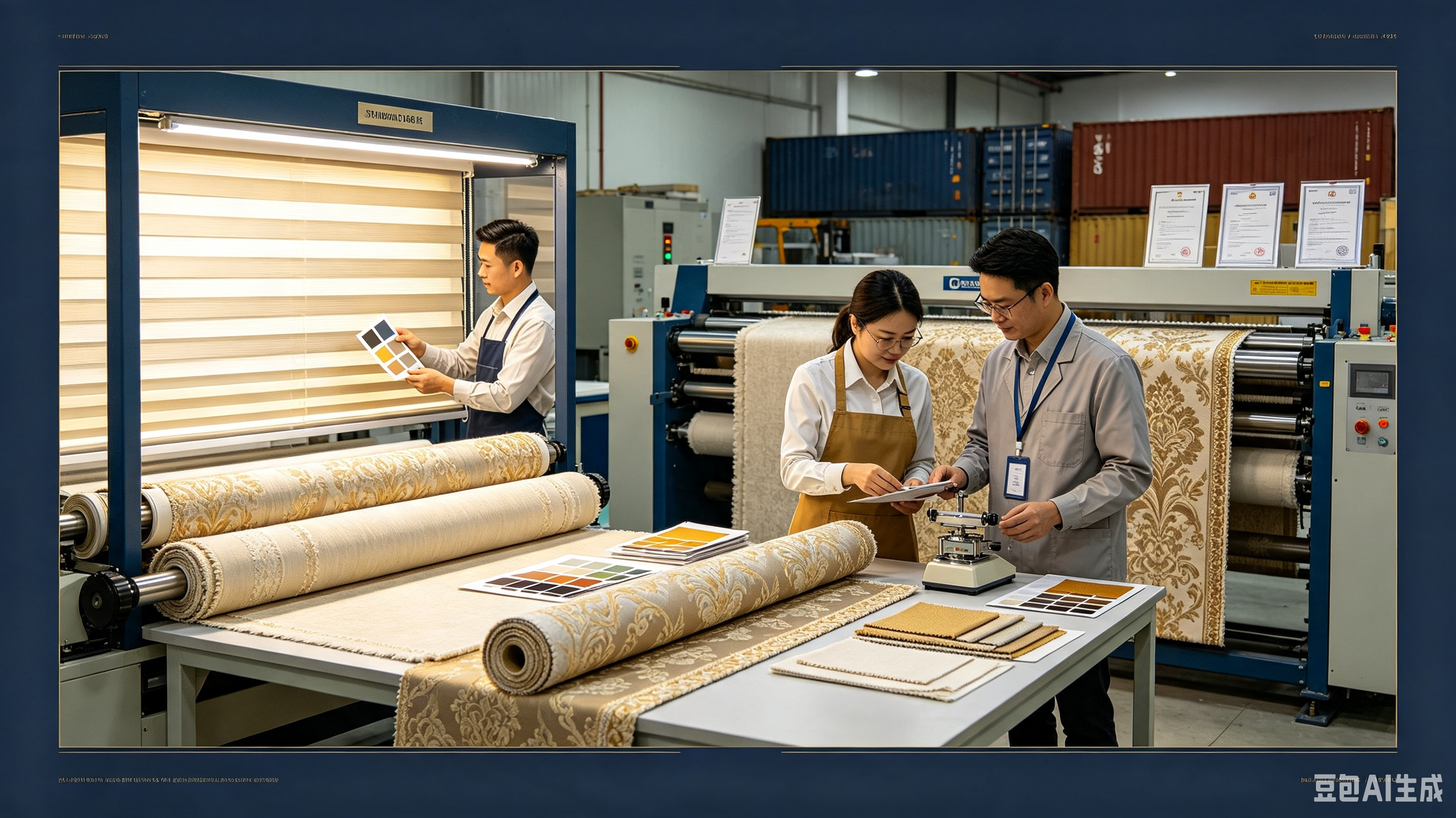
Analysis of blind fabric foreign‑trade disputes, practical quality control & hot‑selling fabric selection for overseas buyers.
roller blind fabricwindow covering fabrictextile quality controlcurtain fabric sourcingcoated shade fabric
Global trade of sun‑shade roller‑blind and window‑covering fabrics keeps rising in 2026. Industry statistics show that global import volume of functional window‑covering fabrics has exceeded USD 11.1 billion, with continuously growing shares of engineering orders from the Middle East, Europe and Australia, according to Alibaba Se…. Many overseas purchasers confirm samples with all indicators satisfactory, yet problems such as dye‑lot colour difference, excessive GSM fluctuation, unqualified shading performance and inconsistent hand‑feel versus approved samples emerge after containers arrive at destination ports. These issues trigger product returns, rework, project delays and generate high ocean‑freight charges as well as inventory losses. Statistics from textile foreign‑trade quality‑inspection institutions reveal that 72% of foreign‑trade disputes over curtain and roller‑blind fabrics stem not from raw‑material defects, but missing pre‑production confirmation, in‑process patrol inspection and pre‑shipment inspection procedures.
Numerous intermediaries only supply samples without complete mass‑goods quality‑control workflows, so quality defects are only exposed after goods arrive at overseas ports. As a source fabric manufacturer, Shaoxing Wanbo Import and Export specialises in coated fabrics, high‑shrinkage yarn fabrics, jacquard woven fabrics, window gauzes and sofa upholstery fabrics. We implement full‑process quality control covering pre‑production, in‑production and final inspection. Drawing on abundant export practical experience, we sort out actionable fabric‑quality risk‑control schemes for overseas buyers and analyse key selection points of currently popular export‑oriented fabrics, helping overseas buyers reduce hidden losses caused by cross‑border procurement.
I. Frequent quality‑dispute risks in roller‑blind sun‑shade fabric trade
Overseas window‑covering procurement mainly faces five major pitfalls, which must be clearly specified within technical clauses before contract signing.
-
Colour difference and dye‑lot discrepancyRoller‑blind and coated sun‑shade fabrics are mass‑produced dyed textiles; colour deviations may occur among different dye lots. Samples may look acceptable under artificial lamp light while colour shift appears under natural daylight, which constitutes the most‑frequent complaint source for overseas engineering projects. Purchasers shall require ΔE colour‑difference value controlled within 1.5, and inter‑roll colour difference of the same batch reaching Grade 4 or higher on grey scale. Verbal promises shall be rejected; colour‑difference standards must be written into purchase contracts. For Middle‑Eastern high‑intensity sunlight scenarios, light fastness of at least Grade 4 is mandatory to prevent fading and whitening in later service life.
-
Large deviation in GSM weight and fabric widthGSM directly determines shading rate, fabric thickness and container loading weight. The industry generally allows ±3%‑5% tolerance. Some unqualified suppliers cut GSM weight for mass production, resulting in thinner fabrics and unsatisfactory shading effect; excessive GSM raises container gross weight and incurs extra port surcharges. Width and GSM value shall be tested at three positions: fabric start, middle and end for each roll, instead of testing only tiny sample pieces.
-
Unstable performance parameters of shading and heat insulationFor many engineering orders, buyers confirm 90% shading rate on small samples, while shading performance varies wildly among rolls of mass‑produced goods. Especially for coated roller‑blind fabrics, uneven coating thickness leads to patchy light transmission after on‑site installation. Hotel and commercial real‑estate projects may reject the whole consignment. When signing contracts, specify tolerance range of shading coefficient for each batch and require manufacturers to provide batch‑wise test reports.
-
Physical fabric defects and hidden risks from post‑finishingWoven, high‑shrinkage yarn and jacquard fabrics tend to have skipped yarns, oil stains and weft skew. Coated fabrics may suffer coating peeling and sticking. Some factories skip pre‑shrinking treatment, so finished roller blinds shrink and deform after washing and trigger massive after‑sales complaints from end‑users overseas.
-
Inappropriate labelling and roll‑packaging failing long‑distance sea‑transport requirementsFabrics encounter high‑temperature and high‑humidity conditions during ocean voyage. Simple packaging causes damp‑damaged and mouldy fabric rolls. Confusing roll‑number labels and metre‑markings block sorting after port arrival and delay distribution as well as engineering construction progress. Export fabrics require reinforced outer packaging with PE moisture‑proof film, and each fabric roll shall carry clear specification labels.
II. Four‑step actionable risk‑control workflow for overseas purchasers to reduce disputes from source
1. Pre‑production phase: Never skip Lab‑dip and pre‑production bulk sample confirmation
Do not place orders merely based on online pictures. Before mass production starts, confirm lab‑dip samples first, then pre‑production first‑lot bulk samples. Sign and seal approved samples for filing. All technical indicators including GSM, width, shading rate, colour fastness and shrinkage rate shall be confirmed in written form to avoid misunderstanding caused by oral communication. For overseas clients, Wanbo Import and Export provides pre‑production first‑lot sample confirmation for every order; mass weaving and coating production will only start after full approval.
2. In‑production patrol inspection: Sampling test for key working procedures
Conduct sampling inspection during weaving, dyeing and coating post‑finishing phases. Double‑check raw yarn material, weave structure of high‑shrinkage‑yarn and jacquard fabrics, and coating‑thickness uniformity. Parameter deviations can be adjusted timely to avoid full‑batch scrapping.
3. Pre‑shipment final inspection: Adopt international AQL inspection standard
Prior to shipment, apply the four‑point fabric inspection standard. Randomly select fabric rolls of different colours and dye lots, compare colour difference under standard D65 light‑box, actually measure GSM and width, and screen for defects. Overseas buyers may arrange third‑party inspectors for on‑site audit or request complete self‑inspection reports from manufacturers. Wanbo factory is equipped with fabric‑inspection equipment. Every fabric roll is inspected and defect positions are marked to minimise outflow of defective goods.
4. Risk safeguard reserved within contract clauses
Write into contracts: allowable tolerance for colour difference, GSM and shading rate; disposal solutions for quality‑related issues; prohibit quality disputes triggered only after goods reach destination port. Do not leave all risks on purchasers’ side.
III. Hot‑selling export‑oriented fabric recommendations for 2026 (adapted for different overseas markets)
- High‑shrinkage‑yarn coated roller‑blind fabric: Hit product for Middle‑Eastern market, UV‑resistant and high‑shading, suitable for hotel and villa projects, smooth surface, firm coating, anti‑sticking during long‑distance sea‑transport.
- Jacquard woven sun‑shade fabric: Popular in European market, premium texture with semi‑shading performance, fast‑moving goods for home‑decoration retail channels.
- Semi‑transparent window‑gauze series: Strong market demand in Southeast Asia, light‑weight and translucent, ideal for home‑decoration supporting orders.
- Functional sofa‑upholstery fabric: Abrasion‑resistant, water‑repellent and stain‑resistant, fit for outdoor furniture and apartment soft furnishing. Can be consolidated with roller‑blind fabrics in one container to lift container utilisation rate and cut unit ocean‑freight cost.
- Engineering‑grade heavy‑duty woven base fabric: For large‑scale real‑estate bulk‑purchase projects, high stability, strict requirements for colour fastness and dimensional stability.
IV. Core advantages of cooperating with source manufacturers versus intermediaries
Many overseas buyers are accustomed to sourcing from online trade intermediaries. Intermediaries own no production workshops; they provide fancy samples but outsource mass‑production to multiple external factories, which leads to big quality fluctuation among batches.
Source manufacturers realise one‑stop integration: raw‑material procurement, weaving, dyeing, coating, inspection and roll‑packaging. Small‑volume trial orders and large‑scale engineering projects are both acceptable. Test reports such as Oeko‑Tex and flame‑retardant certificates targeting overseas markets can be supplied. Supported by Keqiao textile industrial chain, Wanbo Import and Export supplies multiple categories including roller‑blind fabrics, window gauzes and sofa upholstery fabrics. Consolidated container shipment is supported to help overseas purchasers optimise container space and lower unit logistics costs.
Conclusion
In foreign trade of roller‑blind sun‑shade fabrics, major losses seldom come from unit product price, but from goods return, project suspension and brand‑reputation damage caused by unqualified mass‑produced goods. Overseas purchasers shall not only compare quotations. The whole workflow covering pre‑production confirmation, in‑process sampling inspection and pre‑shipment check shall be incorporated into procurement procedures. Prioritise source manufacturers with complete self‑inspection capabilities, clarify order technical parameters and preserve approved samples. Only in this way can buyers stably receive qualified mass‑goods and seize dividend brought by global window‑covering fabric market growth.