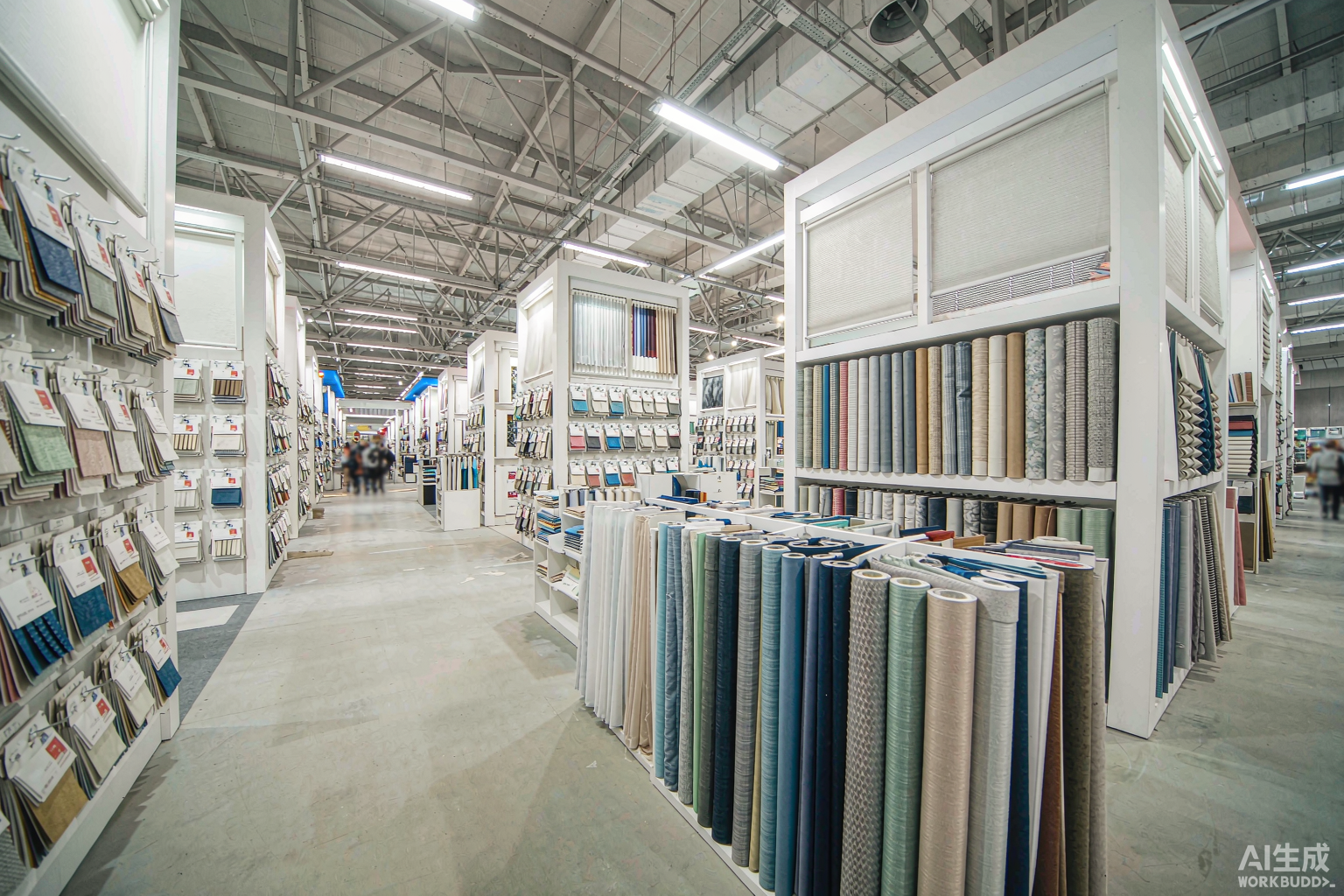
Phase 3 of the 140th Canton Fair opens October 31 with fabrics, home textiles and carpets all in. How to plan the phases, how Canton and Keqiao divide the work, the on-booth 45-minute inspection routine, and why early-to-mid December is the best shipping window for fair orders.
October 31 – November 4, Guangzhou Puts the World’s Fabric Buyers Under One Roof: the Complete Sourcing Guide to the 140th Canton Fair Phase 3
For the global fabric sourcing community, the densest “Guangzhou purchasing month” of the year has arrived: Phase 3 of the 140th China Import and Export Fair (Canton Fair) runs October 31 – November 4, 2026 at the Canton Fair Complex under the theme “Better Life”, with textile raw materials and fabrics, home textiles, carpets and tapestries all open at once. If you sell curtains, roller blinds, sofa fabric or carpets anywhere overseas, these three weeks in Guangzhou are the most efficient product-selection venue of your year — and with factory-visit windows before and after the show, one trip can carry half of your annual sourcing decisions. This article delivers three blocks of practical content: the section layout, an on-booth fabric inspection method, and the ocean freight window, so you can turn this fair into orders.
1. How to Use the Three Phases Correctly: Which Days a Fabric Buyer Should Attend
The 140th Canton Fair runs in three phases: Phase 1 October 15–19 (Advanced Manufacturing); Phase 2 October 23–27 (“Quality Home”: household items, furniture, building and decorative materials, home-textile-adjacent categories); Phase 3 October 31 – November 4 (“Better Life”: textile raw materials and fabrics, fashion, home textiles, carpets and tapestries, toys, baby and maternity). The changeover gaps — October 20–22 and October 28–30 — close the halls to buyers.
For soft-furnishing fabric buyers the recommendation is straightforward: treat Phase 3 as your main battlefield (fabrics, home textiles and carpets are all in this phase); if your business also spans furniture matching or home décor accessories, add two or three days of Phase 2. The changeover days are ideal for factory visits around the Pearl River Delta (Foshan, Dongguan) or a short flight to Hangzhou for the Keqiao fabric market. Overseas buyers should complete buyer pre-registration on the official Canton Fair website in advance; buyers who need visa documents can apply for an official invitation through the buyer service system, and should bring passport and business cards for badge collection. With roughly 1.55 million square meters of exhibition space across 13 categories and 56 sections, locking target booth numbers through the website’s exhibitor and product search beforehand is an order of magnitude more efficient than wandering the halls.
2. Why a Fabric Buyer Should Still Fly In: Canton Fair versus Keqiao
Buyers often ask: if wholesale fabric sourcing happens in Keqiao, why come to the Canton Fair at all? The two solve different problems. Keqiao is a fabric distribution hub — its strengths are massive SKU availability, fast sampling and flexible repeat orders, ideal for replenishment purchases with defined specifications. The Canton Fair is a concentrated showcase of export credentials and new-product launches: companies in the fair’s brand sections generally carry stable export track records, complete certification systems and in-house development capability, making it the right venue for finding long-term strategic suppliers, negotiating OEM/ODM programs, and previewing next-quarter trend products.
Within Phase 3, the sections most relevant to fabric buyers are: textile raw materials and fabrics, home textiles, and carpets and tapestries. For roller-shade and sunshade buyers, look for three things. First, functional fabric launches — new weights and new color cards in full-blackout coatings, sunscreen fabrics and flame-retardant series. Second, fabric-to-finished-blind integration — many exhibitors display fabric and finished blinds together, letting you evaluate the whole-chain capability from roll to installed product. Third, hardware co-exhibition — tube, chain and track component makers exhibit in the same period; negotiating fabric and hardware together prevents the classic mismatch of fabric roll diameter versus tube system back at home.
3. On-Booth Fabric Inspection: the 45-Minute Method
The biggest risk at any fair is fabric that looks great under showroom lighting and disappoints in bulk. Here is a 45-minute inspection routine that completes about 80% of first screening at the booth.
First 10 minutes — weight and construction: carry a portable GSM scale (or estimate grams per square meter with a phone and a ruler). Mainstream full-blackout coated fabric runs 220–320 g/m², semi-blackout around 180–250 g/m², sheer voile 60–120 g/m². For hand-feel, pinch the coating uniformity: fold the fabric and press the coated reverse with your fingertip — beware any batch that crackles or shows coating micro-cracks after bending. Middle 15 minutes — three live tests: hold your phone flashlight behind the fabric and look for pinholes of light (full blackout should show none); rub the coated face hard twenty times with white cotton and check for color transfer or whitening; hold sheer fabric against the light to check warp-weft evenness and whether the “window shadow” pattern reads crisply. Final 20 minutes — five key questions: MOQ and color-mixing rules, bulk lead time, available certifications (OEKO-TEX, REACH, flame-retardant class), coating process route (white glue / colored glue / PVC), and whether small multi-color mixed containers are supported. Write the answers on the back of the supplier’s business card on the spot — you will thank yourself when comparing quotations after the fair.
4. Four Product Directions Worth Chasing in This Year’s Halls
Knowing how to inspect fabric is not enough — you also need to know what to look for. Combining the 2027 spring/summer home-textile trend releases with recent on-floor feedback, we advise buyers to focus on four directions. First, matte texture: the “quiet luxury” wave has spread from fashion into home décor — low-saturation earth tones, sculpted relief textures and geometric tone-on-tone jacquard are reshaping the premium narrative of curtains and sofa fabric, with high-gloss fabrics giving way to matte weaves. Second, micro-pearlescent and metallic grays: jacquard with fine pearl fibers blended into the yarn shows restrained layered luster under light, fits the premium retail channel, and carries a 15–30% price premium over ordinary jacquard with a better margin structure. Third, washed-hand and faded stripes: under the sun-holiday theme, washing processes, space-dyed and slub yarns give striped and checked fabrics a relaxed, “sun-bleached” character — these products are moving fast in Australia-New Zealand and South-East Asian retail. Fourth, function-stacking: a single function no longer sells — flame-retardant plus anti-bacterial plus UV-protective three-in-one, low VOC, and rising GRS-recycled polyester content are becoming the default requirement of project tenders. Sort your booth photos into these four buckets and post-fair selection decisions become dramatically faster.
5. The November Freight Window: Landing Fair Orders in a Price Trough
Orders signed at the fair are only as profitable as their shipping plan. The current market offers an unusually friendly window. According to the Freightos Baltic Index in early October, Asia–North Europe rates stand around USD 3,260 per FEU and Asia–Mediterranean around USD 3,555 per FEU — down roughly 60% from the July peak — while the SCFI read USD 2,199 per TEU on October 2. On routings, after CMA CGM, Maersk, MSC, Hapag-Lloyd and Cosco, ONE has announced a return to Suez transits and Premier Alliance services are rejoining Red Sea routings this month; MSC executes new Asia–North Europe FAK rates from October 19 at USD 3,150 per TEU and USD 4,500 per 40-ft. Linerlytica judges that the Suez return is the biggest threat to carriers’ efforts to defend rates — which, seen from the cargo owner’s side, is precisely the window.
Rhythm recommendation for fair orders: Phase 3 closes November 4; reserve two weeks for sample and order confirmation and three to four weeks of production for standard-weight fabrics, so shipping in early-to-mid December catches the rate trough. Note that the pre-Chinese-New-Year rush usually lifts rates and tightens Europe-bound space from January — home-textile shipments should be booked by December 10. And do not forget the environmental-surcharge line: with 100% phase-in of shipping carbon allowances in 2026, major carriers’ Asia–Europe environment surcharges run about USD 170–220 per FEU from October (Maersk EMS/ESS USD 170, ONE EES USD 220). Build it into the landed-cost model together with war-risk and peak-season surcharges. Rates and the situation change daily; always confirm against the live quotation on booking day.
6. Before, During and After: an Executable Checklist
- Three weeks before: complete buyer pre-registration and invitation application on the official site; shortlist 30–50 target booths through exhibitor search and book meeting slots; keep this round’s category list to five or fewer; pack a GSM scale and white cotton cloth.
- One week before: confirm visa and hotels (Guangzhou hotels tighten during Phase 3 — the earlier the cheaper); plan the changeover-day factory route — if you can only add one day, prioritize a shading-fabric factory to see the coating line and fabric-inspection machines.
- Each fair day: run every target booth through the 45-minute method; label every collected sample with booth number and date; each evening consolidate photos, parameters and quotation points so open questions can be re-asked the next day on the spot.
- Three negotiation anchors at the booth: MOQ rules for mixed small containers, price-and-capacity locks for rolling orders, and the scope of certification and test reports — these decide whether post-fair cooperation actually lands.
- Within 48 hours after the fair: send sample-confirmation requests and formal inquiries to shortlisted suppliers — the first week after the Canton Fair is when suppliers respond fastest; do not wait until you are home to organize.
- Within two weeks after: finish sample comparison and trial-order decisions; design trial orders at 200–500 meters per color; lock bulk lead times and payment terms; simultaneously start freight inquiries and write the December rate window into the delivery plan.
- One month after: review the SKU structure and replenishment rhythm of this round; move proven best-sellers into rolling replenishment agreements; schedule newly discovered trends into next quarter’s development list.
- Compliance throughout: confirm pattern-copyright ownership (fair-floor patterns carry high copy-and-modify risk) and destination import tariffs and safeguard rates (for example Indonesia’s safeguard duty of IDR 9,841 per kilogram on curtain-type products) — complete the duty-inclusive cost before signing.
Closing: the Fair Is Only the Start — Delivery Capability Is the Answer
What the Canton Fair gives you is the ability to survey the global supply chain in three weeks; what turns a booth business card into stable shipments is shade consistency and on-time delivery across every order that follows. When selecting suppliers, score “booth performance” and “factory capability” separately — the first for trends and communication, the second for coating lines, inspection equipment, stock depth and sampling speed.
Wanbo has been rooted in the Keqiao shading-fabric industry of Shaoxing for 15 years, supplying roller shade fabric, sheer voile, sofa fabric, carpet, jacquard, high-shrinkage and coated fabrics from one factory. During the fair we welcome overseas buyers to book a factory visit — see the coating production line, the inspection process and stock rolls firsthand — and we support small mixed-container direct shipments for orders placed at the fair. If you are planning to attend Phase 3 of the 140th Canton Fair, contact us in advance and we will reserve showroom time and a factory route for you.