Gold Supplier is a paid membership, Verified Supplier is inspected on-site by SGS/TUV, and Trade Assurance is order protection rather than a supplier rating. This article unpacks the four platforms, a three-layer verification method, nine red flags and fabric-specific traps - GSM inflation, sealed counter samples and borrowed certificates - with a ten-step checklist and landed-cost reminders.
For overseas buyers, almost every sourcing journey in 2026 starts online: Alibaba.com, Made-in-China.com, Global Sources and 1688 host millions of Chinese suppliers, and a search for "roller blind fabric" or "blackout curtain fabric" returns thousands of listings. But the openness of these platforms cuts both ways - the same reach that helps legitimate factories find global customers also leaves room for trading companies posing as factories, and even for phantom storefronts. The industry consensus is blunt: a badge is not proof of quality, and a platform is the starting point of sourcing, not the finish line. Most sourcing disputes - wrong specifications, downgraded quality, missed deadlines - trace back not to deliberate fraud but to a verification step that was skipped. This article puts the four platforms, the real meaning of each badge, a three-layer verification method, nine red flags and the fabric industry's own traps on a single checklist, so you can complete the homework before paying a deposit.
1. Four Platforms, Four Different Logics
Alibaba.com is the flagship international marketplace with the largest supplier base, backed by Trade Assurance order protection and a Verified Supplier program checked by third-party inspection firms - the natural main arena for most overseas buyers. Made-in-China.com skews toward manufacturing-and-trading companies, with particular depth in machinery, building materials and industrial categories, and a clearly tiered membership system. Global Sources grew out of electronics, runs tightly linked consumer-goods fairs, and attracts larger-scale suppliers on average. 1688.com is China's domestic wholesale platform: the lowest prices and the fastest new products, but no international payment or order protection, high language and process barriers, and usually the territory of a buying agent or a Chinese-capable team. The pragmatic approach is a combination play: use Alibaba to build a comparable price base with protection, use Made-in-China and Global Sources to cross-check market prices and supplier density for the same product, and use 1688 to learn the true ex-factory price range - once you know the factory price, no middleman markup will steer your negotiation.
2. What the Badges Actually Prove - and What They Do Not
Confusing the badges is the most common beginner mistake. Gold Supplier is, at its core, a paid membership plus years on the platform: it proves the supplier invested real money and survived, not quality, capacity or integrity. Verified Supplier means a third-party firm such as SGS, TUV Rheinland or Bureau Veritas inspected the company and production site on-site, and the inspection report is usually downloadable from the storefront - the single highest-value badge. Trade Assurance is an order-protection service, not a supplier rating: it promises a refund if the goods do not match the contract or ship late, protecting this order, saying nothing about the next batch. Ordinary listings carry essentially no verification. Read them with layered weights: Verified and Trade Assurance rank high, Gold membership and years-on-platform rank medium, reviews and transaction history rank medium-high - every badge is a signal to start researching, never a license to stop.
3. Three-Layer Verification: Badges, Identity, Track Record
Layer one - badges. Confirm Verified status, Trade Assurance enrollment and membership age; this alone filters out the riskiest storefronts. Layer two - identity. Request the business license, check that the unified social credit code, registered name and storefront entity match, and cross-check through official company-registry channels. Then establish whether you are talking to a factory or a trading company: both are legitimate, and trading companies are even advantageous for small mixed orders, but the role must be disclosed - evasion is itself a signal. The cheapest fraud check available is a live video factory walkthrough: ask the supplier to walk you through the production line, warehouse and cutting area in real time; fabricated factories tend to collapse on camera. Layer three - track record. Look at the last six months of transaction volume and whether the order curve is steady; read the three-star and negative reviews before the five-star ones, because complaints about packaging damage, color deviation and late shipment are the real risk portrait. Check response rate and response time - a supplier who answers vaguely before the sale will answer even more vaguely after it. One fabric-specific move completes the picture: run a reverse image search on the storefront photos; listings that stole another factory's images and buyer photos will surface immediately.
4. Nine Red Flags: Two or More Should Pause the Payment
Drawing on industry audit and trade-protection practice, no single signal convicts, but two or more of the following should stop the payment process. One, quotes 40%-60% below market - significantly undercutting every competitor at the same spec usually means downgraded materials, a bait quote, or no goods at all. Two, pressure to pay off-platform - Western Union, cryptocurrency, a personal account, or a sudden "our bank account changed" email: the classic payment-hijack script. Three, a receiving account that does not match the registered company name - payments must go to the corporate account matching the business license. Four, a brand-new storefront with an explosion of perfect reviews - a burst of flawless feedback in a short window is usually manufactured. Five, refusal to provide the business license or a video factory call. Six, refusal to accept a paid sample, or insistence on full payment upfront. Seven, manufactured urgency - "pay today or the price doubles", "only three containers left". Eight, expired or mismatched certificates - OEKO-TEX and ISO certificate numbers can be checked on the issuing body's website, and certificates borrowed from another factory are exposed in one search. Nine, evasive technical answers - a real mill's salesperson answers GSM, yarn count, coating weight and color-fastness grades precisely; vague copy-pasted replies suggest someone who has never touched the fabric.
5. The Fabric Industry's Own Traps
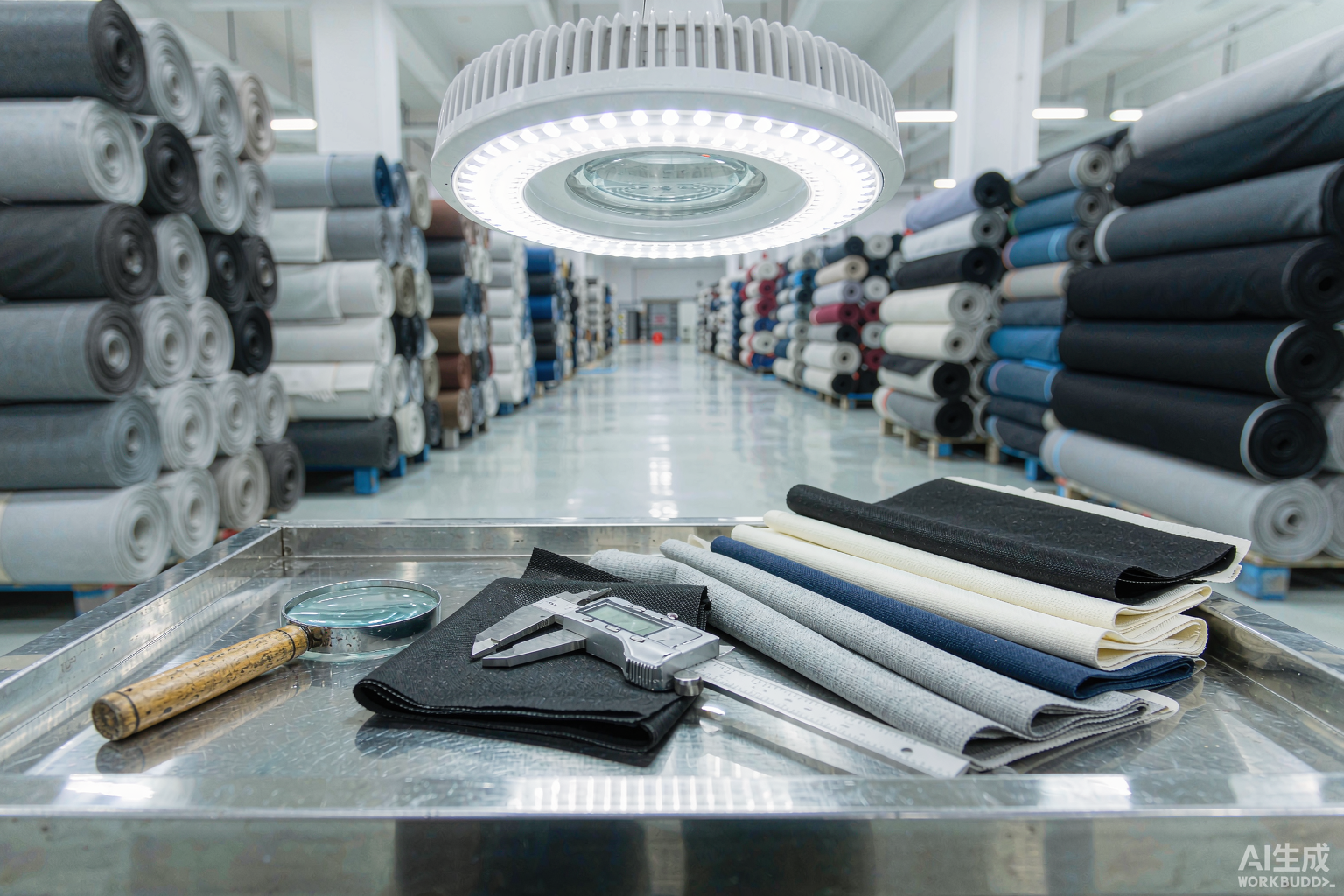
Beyond the universal pitfalls, fabric buying has its own minefield. Samples that do not match bulk (bait-and-switch) is the classic: the sample uses premium yarn, the bulk order quietly switches to a cheaper blend - the countermeasure is sealed counter samples on file plus a contractual bulk-versus-seal comparison. GSM inflation comes next: a "320g/m2" full-blackout roller blind fabric that measures 280g on arrival is exposed instantly by a spot check with a GSM cutter. Coating weight and blackout rate must be accepted separately - added coating weight does not equal improved blackout, and blackout performance should be judged on measured data using an agreed test method. Batch color-fastness drift bites hardest in multi-batch bulk: washing, rubbing and light-fastness grades should be written into the contract with test standards and minimum grades. The MOQ trap appears as a low-MOQ quote that becomes "1,000 meters minimum for this color" after the deposit. And certificate borrowing is especially common in functional fabrics - the OEKO-TEX or flame-retardant certificate shown belongs to a different company; verifying the certificate number, certificate holder and validity is a mandatory step.
6. Payment Safety and Third-Party Inspection: The Final Two Gates
The payment structure itself is a risk tool. For the first order, prefer Trade Assurance or platform escrow, writing the specifications, color tolerances, lead time and inspection standards into the platform order so a dispute has documentary footing. Established relationships can move to staged T/T terms (commonly 30% deposit, 70% against a copy of the bill of lading) - avoid 100% upfront payment in any form - and large contract programs can run on a letter of credit. The second gate is third-party inspection: a pre-shipment inspection (PSI) and an in-production dupro check can be commissioned from SGS, Bureau Veritas, TUV or QIMA for a few hundred dollars, moving the cost of "finding out on arrival" upstream. For larger engagements, go further and commission a factory audit to verify capacity, equipment and compliance in one pass. If a dispute does occur: open it inside the platform immediately and preserve all communication and payment records - once money leaves the platform, remedies all but disappear, which is why staying on-platform must be an iron rule.
7. Landed Cost: 30%-50% More Than the FOB Quote
A platform FOB quote is only the starting line. Freight, insurance, duty, customs clearance and last-mile delivery together add 30%-50% on top of FOB for most lanes, and comparing suppliers without this calculation almost guarantees choosing the wrong one. Take the October 2026 market as the reference: Drewry's World Container Index composite stood at USD 4,434 per 40ft container on 1 October (-1%), with Asia-Europe down for twelve consecutive weeks - Shanghai-Rotterdam at USD 3,399 and Shanghai-Genoa at USD 3,702. The phased Suez return is releasing effective capacity (week-39 transits up 68% year on year; Hapag-Lloyd restoring Asia-Med services in stages through October-December), a tailwind for first-half 2027 contract negotiations. But the Strait of Hormuz remains severely constrained, Red Sea war-risk premia are still elevated, and surcharges on the transpacific and other lanes can swing back at any time - compare suppliers on landed cost at the same shipping window and the same trade terms, never on naked FOB.
8. The Ten-Step Verification Checklist
Compressed into an executable sequence, tick each item before paying a deposit:
- Platform and badge screening: confirm Verified Supplier and Trade Assurance status; exclude unverified new storefronts.
- Request the business license, match the unified social credit code and storefront entity, and cross-check through the public registry.
- Establish factory or trading company in writing, then confirm with a live video walkthrough of the production line, warehouse and cutting area.
- Reverse-image-search the storefront and product photos to expose stolen or stitched-together imagery.
- Verify certificate numbers (OEKO-TEX, ISO, flame-retardant) on the issuing bodies' websites, checking the certificate holder.
- Paid sample first: test GSM, coating, blackout rate and fastness against the spec sheet, then seal and archive the counter sample.
- Read the negative and three-star reviews, check six-month transaction volume and response rate, and watch for review-burst patterns.
- Keep payment on-platform: Trade Assurance or escrow for the first order, staged T/T for established partners, and refuse 100% prepayment and any account-change emails.
- Commission third-party inspection: an in-production dupro plus a pre-shipment PSI, with the inspection standard written into the order.
- Calculate landed cost - FOB plus freight, duty and clearance on the same basis - before deciding who wins the order.
9. Why Good Suppliers Welcome the Checklist
Looked at from the other side, this checklist is also a showcase for good suppliers. Legitimate factories are not afraid of scrutiny: the business license is sent on request, the video factory call is scheduled the same week, certificate numbers are given freely, test reports go out as originals, and sealed-sample versus bulk comparison is written into the contract proactively. When a supplier invites your audit, provides third-party reports unprompted and supports platform-protected orders, what they are really delivering is verifiable certainty - and in a fabric business where lead times are sensitive and batch drift is intolerable, certainty is itself the competitive edge.
10. Wanbo Invites You to Verify Us Item by Item
Shaoxing Wanbo is rooted in the Keqiao fabric industrial belt and has long supplied roller blind fabrics, curtain and sheer materials, sofa upholstery fabrics and home textile fabrics to the Middle East, Europe, Australia and Southeast Asia. We invite overseas buyers to run the checklist in this article against us: business license and third-party test reports available on request, video and on-site factory audits easily arranged (well suited to post-Canton-Fair or post-R+T itineraries), paid samples shipped against your spec sheet with sealed counter samples archived, orders supported on Trade Assurance with third-party inspections from SGS, BV or QIMA, and fully traceable trilingual (Chinese-English-Arabic) merchandising. The 2027 fair windows and freight windows are open - bring your specification sheet and request a quotation. Prices and shipping conditions change daily; the figures in this article explain the method and do not replace a same-day quotation.