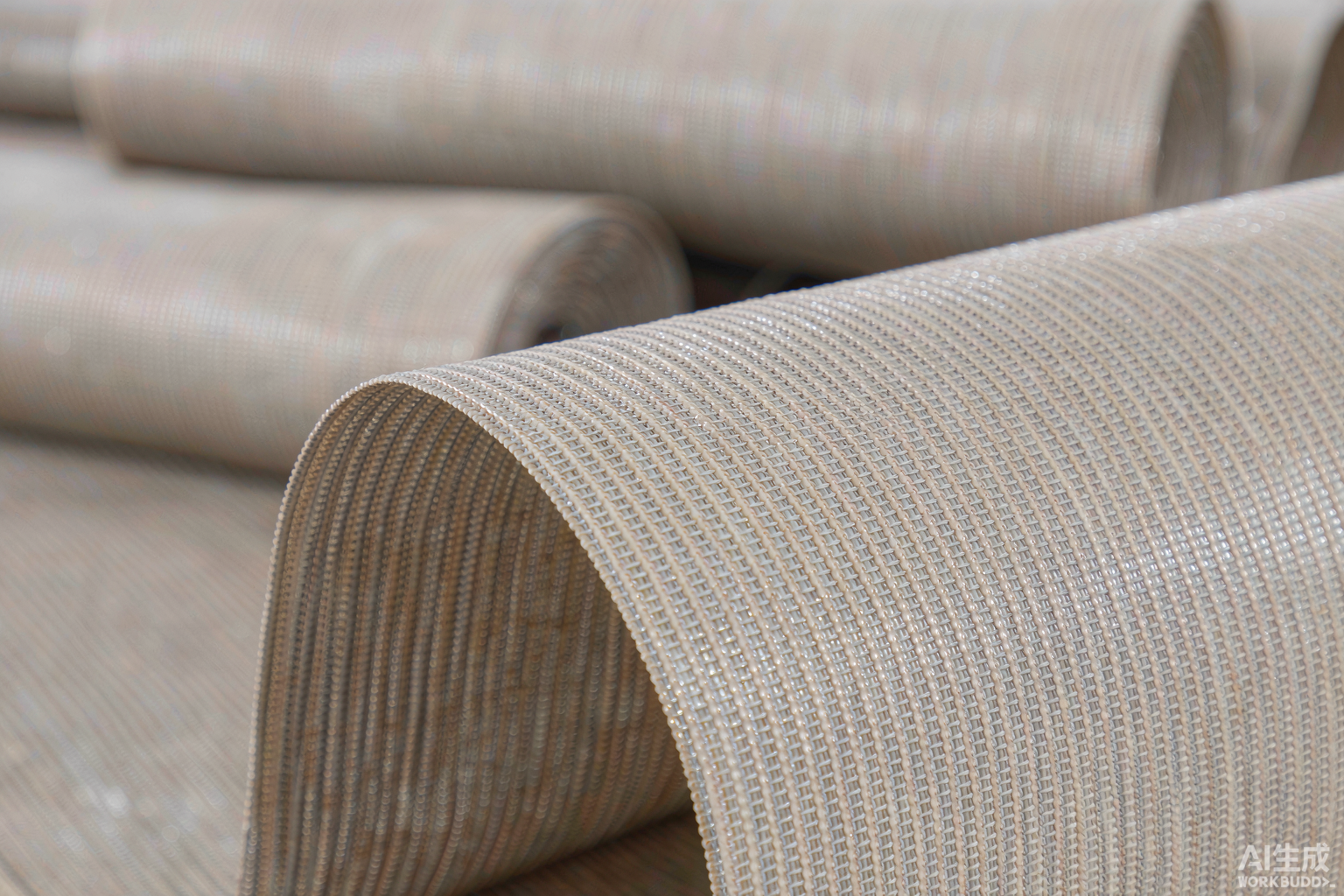
Fading, chalking and mildew top the complaint charts. This guide breaks down three aging mechanisms, five sets of contract-ready acceptance metrics, specification logic for four climate zones, responsibility attribution for aging problems, and the four traps most often hidden in warranty clauses.
When sourcing shading fabric, buyers ask most often about colour, weight and price. But the question that truly separates one supplier from another is the one nobody asks out loud: "What will this roll of fabric look like three years after it goes onto the window?" Window covering fabric is not a fast-moving consumer good — residential roller shades are typically designed for a 7 to 10 year service life, and hotel or commercial-office projects expect the fabric to outlast an entire soft-furnishing refurbishment cycle. Fading, chalking, embrittlement and mildew — any of these appearing in year two or three after installation turns directly into end-customer complaints and distributor returns. This article takes apart the "shelf life" of shading fabric: how fabric actually ages, which laboratory indicators predict real-world service life, what specification matches which climate zone, and the four traps most often hidden inside warranty clauses.
1. How Fabric Ages: Three Degradation Mechanisms
The first is photodegradation. Ultraviolet radiation carries enough energy to break chemical bonds in the polyester polymer chain, manifesting as colour loss, surface chalking and a brittle hand feel. This is why the industry keeps repeating two terms — colour fastness and UV rejection: whether the face colour fades, and how quickly, depends on the light-fastness grade of the dyestuff and the UV-shielding capability of the coating; whether the base fabric turns brittle depends on the fibre itself and the anti-UV additive package. The second mechanism is hydrolysis and mildew. In hot-humid climates, moisture slowly hydrolyses under-cured coating layers, causing blisters and delamination between coating and base cloth; simultaneously, mould colonies establish themselves on the fabric surface, leaving stains that cannot be washed out. Installers in equatorial markets such as Singapore have a rule of thumb: mildew stains and fading always arrive before structural failure — the fabric is not yet broken, but it already looks expired. The third mechanism is mechanical wear. A roller shade winds and unwinds daily; the fabric flexes repeatedly at the tube and rubs against the side rail edges. A coated fabric's abrasion resistance, and the base cloth's tensile and tear strength, determine whether it "still runs smoothly after five years" or "starts fraying at the edges in year three".
2. Translating "Durable" into Contract-Verifiable Numbers
"Sun-resistant" and "long-lasting" are adjectives; contracts need numbers. First, colour fastness: light fastness is measured under the ISO 105-B series, with Blue Wool Scale grade 4 as the mainstream industry requirement, and grade 6 or even 7-8 demanded on premium projects; wash and rub fastness under ISO 105-C06 and related standards should not fall below grade 4. Second, colour difference ΔE: after 500 hours of xenon-arc exposure, a measured ΔE of 1.2 or below is imperceptible to the naked eye — only a mill that can produce this data has the standing to promise "no visible fading in three years". Third, UV metrics: UPF 50+ means blocking 98 percent or more of ultraviolet radiation; sunscreen fabrics (polyester/PVC composites) typically achieve 85-99 percent UV rejection, while full-blackout coated fabrics should exceed 95 percent UV rejection while maintaining over 99 percent light blocking. Fourth, mechanical metrics: breaking strength (in the order of 1,800 N/5 cm longitudinally on engineering-grade composites), Martindale abrasion (100,000-cycle class products belong in the project tier), and coating adhesion. Fifth, biological metrics: anti-mildew and anti-bacterial performance per ASTM G21 or equivalent, mandatory in hot-humid markets. Write these figures into the purchase contract and the inspection standard, and "durability" stops being sales talk and becomes an enforceable technical clause.
3. Climate Typing: The Same Fabric Can Last Twice as Long in One Climate as Another
The identical fabric installed in Bergen, Norway and on the Dubai waterfront has completely different life expectancies. In equatorial hot-humid climates (Southeast Asia, the Gulf in summer), UV stays high all year and humidity rarely drops below 70 percent: prefer light-coloured, highly reflective sunscreen fabrics or PVC composites with anti-mildew treatment, and avoid dark solid-coated fabrics under prolonged direct sun — dark colours absorb heat, run hotter, and accelerate coating hydrolysis. In coastal salt-spray climates (the Mediterranean littoral, the Australian coastline): salt crystallisation abrades coating surfaces and corrodes metal components faster; beyond the fabric itself, verify the salt-spray test grade of bottom bars, tubes and fittings. In high-UV plateau and desert climates (the Middle East interior, the Australian outback, the South African plateau): UV intensity is extreme and diurnal temperature swings are violent, so specify light fastness grade 6 or above with fiberglass base cloth or high-polyester constructions — fiberglass reinforcement can multiply breaking strength several times over and is the engineering-grade choice for extreme climates. In temperate climates (Western Europe, North America): the dominant degradation driver shifts to interior-side mechanical wear and misuse of cleaning chemicals, so prioritise abrasion resistance and cleanability. The buyer's first question is not "which pattern looks good" but "what climate zone is my project in, and which way does the facade face" — a west-facing floor-to-ceiling glass curtain wall and a north-facing internal window are simply not asking for the same cloth.
4. Warranty Clauses: The Four Most Commonly Missed Traps
Mainstream mills offer fade warranties on blackout fabrics of around 7 years residential and 5 years commercial high-traffic, but the fine print varies enormously. Trap one: does the warranty cover "structural failure" or "appearance degradation"? Many warranties only compensate cracking and delamination, while fading beyond a certain ΔE is excluded — yet fading is precisely what generates most end-customer complaints. Trap two: what is the remedy — replacement fabric, material credit, or depreciated value? Under a depreciated-value 7-year warranty, a claim in year five may be worth only a third of the original price. Trap three: exemption conditions. Installation orientation (west-facing elevations are frequently excluded), cleaning-agent type (fading caused by chlorine-based or strong solvent cleaners is not covered), and installation method (bending marks from winding contrary to procedure) can all become grounds for denial. Trap four: who stands behind the warranty? The mill's warranty, the fabricator's warranty and the distributor's warranty are three different legal entities; in cross-border purchasing, always obtain the mill's original warranty letter and confirm the seat of arbitration. A warranty with real value states the assessment metric (e.g., ΔE not exceeding a defined value within the warranty period), a floor for UV rejection, the number of years the coating will not delaminate, and the dispute-resolution test method (which standard, which laboratory).
5. Six Practical Verification Actions for Buyers
- Put the metrics into the specification sheet: light fastness (Blue Wool grade), ΔE ceiling after 500 xenon hours, UPF/UV rejection, tensile and tear strength, abrasion cycles, anti-mildew grade — every line, no exceptions. A verbal "five years no fading" carries no legal weight; written into the spec sheet it does.
- Request third-party test reports matched to your batch: demand reports for the same colour number and weight as the production batch, not a "same series, other year" report; where budgets allow, arrange retesting at SGS or Intertek.
- Select construction by climate zone: anti-mildew sunscreen or PVC composites for hot-humid regions; salt-spray-verified hardware alongside fabric for coastal regions; fiberglass base cloth or high-light-fastness recipes for high-UV regions; abrasion and cleanability first for temperate regions.
- Run an "installed-wall" aging comparison: place the fresh sample beside the mill's outdoor-exposed aged sample and verify the ΔE data with your own eyes; at the same time check whether the aged sample's hand feel has turned brittle or the coating has blistered.
- Lock the mill's original warranty letter: confirm the warrantor is the fabric mill, that appearance degradation is covered, that remedy and test standard are stated, and tie the warranty letter to the payment rhythm (e.g., balance payable upon receipt of the original warranty letter).
- Seal and archive reference samples: retain 1-2 metres of every batch, countersigned by both parties, as the benchmark sample for any future dispute — the cheapest and most effective dispute-prevention instrument available.
6. Field Diagnosis and Responsibility for Four Common Aging Problems
The first high-frequency problem is "fading". Distinguish the source first: uniform fading across the whole roll, appearing earliest on the light-facing side, points to photodegradation (insufficient light-fastness of the dyestuff or missing UV additives); a marked difference in fading between edges and centre may relate to installation orientation and local heat build-up; local whitening after washing or wiping indicates a rub/wash fastness problem. Responsibility follows the source: dyestuff and formulation issues belong to the mill, cleaning-method issues to the user — which is why the specification sheet must lock both light fastness and wash fastness. The second problem is coating blistering and delamination. Examine the cross-section: separation between coating and base cloth usually indicates under-cured coating or adhesive failure — a factory process defect; fine bubbles inside the coating concentrated in the heat-exposed zone indicate hydrolytic aging, requiring a review of whether the coating recipe matches a hot-humid climate. The third problem is mildew stains. Mildew accompanied by odour, appearing mostly on the inner face of a roll kept wound for long periods, indicates excessive humidity in storage or in use — the responsibility may lie with warehousing, with transport (container condensation) or with the end environment, and must be traced along the chain. The fourth problem is edge fraying and bending marks at the tube line. Regular marks along the tube contact line usually mean incorrect winding tension or a mismatch between tube diameter and fabric thickness — a "tunable process issue" rather than a fabric quality defect, and here the supplier's installation-technique support is worth more than a replacement shipment.
7. Warehousing and Display: The Neglected First Half of Fabric Life
Half of a fabric's service life is consumed before it ever reaches the window. Warehouses should enforce three rules: keep goods out of direct light (a sunlit shelf position can push head-to-tail colour difference beyond ΔE 2 within six months); control humidity (45-65 percent relative humidity, pallets raised off floors against rising damp); and store rolls upright (stacking horizontally crushes the bottom rolls into permanent creases). Apply first-in-first-out to both samples and stock, and do not let showroom display rolls overstay their rotation — the greenhouse effect behind display glass measurably accelerates fading, so rotate display rolls every 3-6 months and move retired rolls to the internal sample room. Build pre-shipment warehouse time into the delivery plan too: the closer the slitting and rolling happens to container loading, the more "remaining life" the customer receives. Distributors should hand over cleaning and care instructions with the product (neutral detergents only, no chlorine bleach, regular dust removal) — that alone extends effective fabric life by a further 20-30 percent, at zero cost, and doubles as a value-added after-sales touchpoint.
8. Wanbo's Durability Delivery System
In producing roller blind fabrics, sheer curtains, full-blackout coated fabrics, sofa upholstery, carpets and jacquard decorative fabrics, Shaoxing Wanbo manages durability as an engineering metric: our mainstream roller series ships at light fastness grades 4-6, full-blackout coated fabrics hold above 99 percent light blocking with UV rejection and coating adhesion controlled in parallel, hot-humid market orders default to anti-mildew and anti-bacterial finishing, and UPF 50+ specifications and fiberglass-composite engineering fabrics are available on request. We support specification customisation by destination climate (three formulation tracks: salt-spray, hot-humid, high-UV), batch sample sealing, third-party laboratory coordination and original mill warranty letters, with trilingual documentation and technical files. If you are sourcing fabric for hotels, offices or retail channels that must still look respectable five years after installation, tell us your project's climate zone and warranty expectations — Wanbo will return a list of contract-ready indicators tailored to the project.