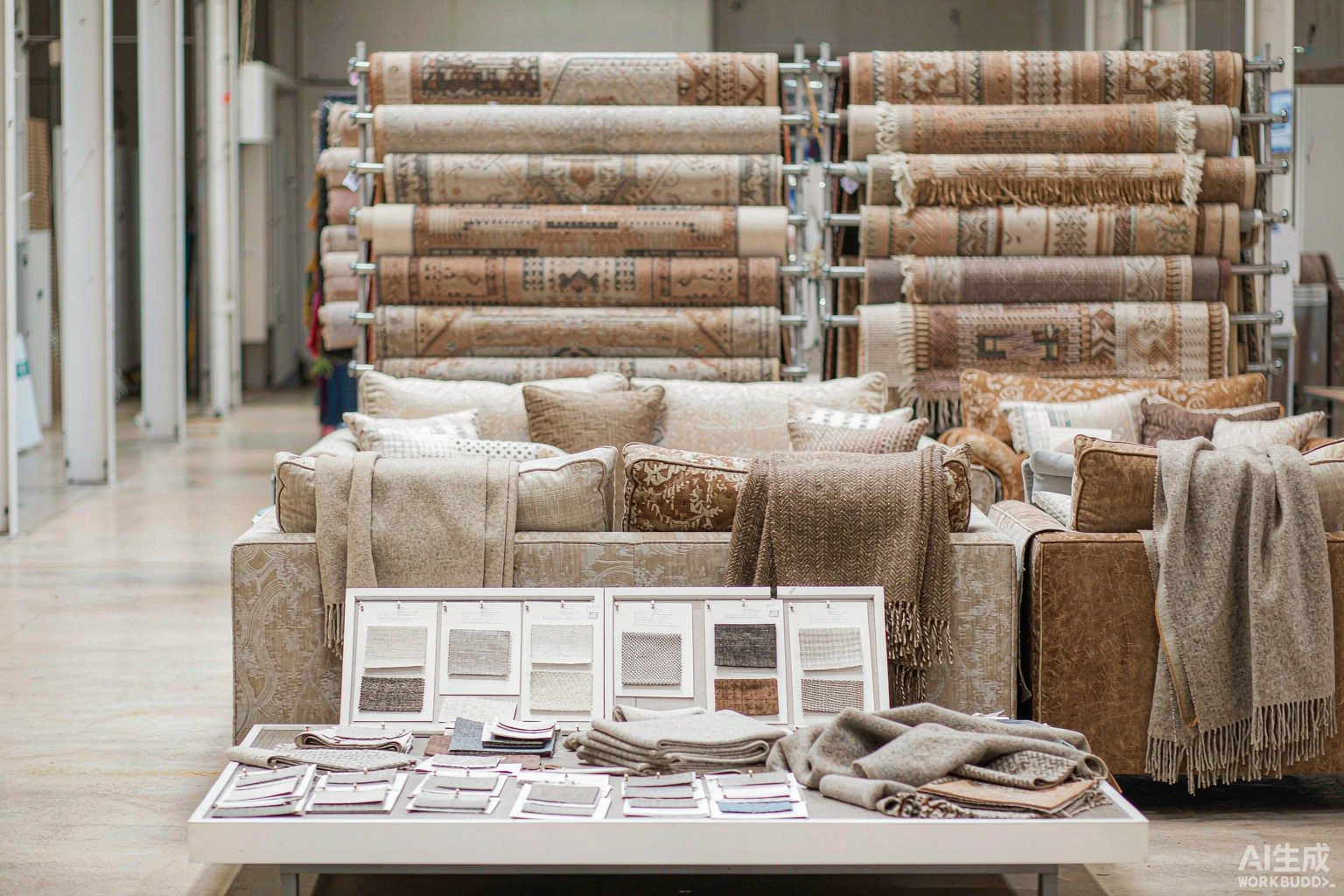
Finding the right supplier is the biggest hidden cost in fabric sourcing. This guide compares trade fairs, B2B platforms, Google search, direct Keqiao cluster sourcing, agents and social channels — and delivers a six-step verification funnel covering credentials, audits, samples, trial orders, certificate cross-checks and payment terms for sofa, rug, sheer, roller blind and curtain fabric buyers in 2026.
For overseas fabric buyers, the biggest challenge in 2026 is no longer "finding fabric" — it is "finding the right supplier" among thousands of self-proclaimed source factories. Sofa upholstery fabric, area rugs and carpets, sheer curtains, roller blind fabric, drapery, jacquard, high-shrinkage yarn, coated fabric, woven textile — search any of these categories and you will surface thousands of suppliers claiming to be the factory. The share that can deliver consistently, accept small trial orders, and produce verifiable certificates is far smaller than most buyers expect. According to multiple market research reports, the global sofa upholstery fabric market stands at roughly USD 7.5 billion and is growing at more than 5% per year, while the global area rug market is projected to expand from about USD 12.9 billion in 2026 to USD 16.9 billion by 2030. Demand is rising, and so is the screening bar for supply chains. This article breaks down the six most common sourcing channels used by overseas buyers, compares their costs and risks, and provides a practical six-step supplier verification funnel you can apply immediately to raise your sourcing success rate in 2026.
1. First, decide what you are actually looking for: a trading company, a platform reseller, or a real factory
On the surface these three entities look almost identical — all have English websites, product catalogs, and all call themselves manufacturers. But their pricing structure, lead-time flexibility, and quality accountability are fundamentally different. A factory's price carries a single layer of margin, and lead times depend on its own production schedule. A trading company's price carries an extra markup, but its English communication and documentation are often stronger. Among platform sellers you will find both factory-operated stores and intermediaries who simply forward your inquiry to someone else. The first step of sourcing is not sending inquiries everywhere — it is determining what kind of entity you are talking to. Ask for the business license number (the Unified Social Credit Code, which can be checked on China's official National Enterprise Credit Information system), the export license record, and a workshop video. A supplier willing to jump on a video call at any time to show the workshop and the machine count moves instantly to a higher trust level.
2. Channel one: international trade fairs — the highest efficiency and the most reliable judgment, at the highest cost
Trade fairs remain the most direct way to verify a supplier's real capability: you can touch the hand feel and drape of the fabric, judge the professionalism of the sales team face to face, and compare dozens of suppliers in a single hall. In home textiles, Heimtextil in Frankfurt every January is the world's largest event of its kind; Intertextile Shanghai Home Textiles runs twice a year, and the 2027 editions are scheduled for 10–12 March (Spring) and 25–27 August (Autumn) at the National Exhibition and Convention Center in Shanghai. The Autumn 2026 edition gathered more than 900 exhibitors from 19 countries and regions and nearly 36,000 professional visitors from 113 countries and regions, with dedicated zones for roller blinds, zebra blinds, honeycomb blinds, upholstery and sofa fabrics, rugs and carpets, and sheer curtains. The Canton Fair's Phase 3 also hosts textile fabrics and carpet zones. The downsides are obvious: booth and travel costs are high, shows happen only a few times a year, and a big booth does not guarantee a factory — trading companies rent large booths too. Treat fairs as the first step for building a supplier pool, not the final step before placing an order. Preparation multiplies the value of this channel enormously: schedule meetings with key exhibitors two weeks in advance; carry your own specification sheet (GSM weight, composition, width, shading rate, target price band) so you can ask on the spot "can you make it, what is the MOQ, how long is the lead time"; and send follow-up emails within 48 hours of collecting business cards. The freshness of the first week after the fair decides which suppliers actually enter your shortlist.
3. Channel two: B2B platforms — the most complete information, but ranking is not capability
Alibaba.com, Made-in-China and similar platforms offer a massive supplier base, batch inquiry tools, and visible transaction and review data. But two things must be clear: ranking positions and "Gold Supplier" badges are paid for, and they do not directly reflect factory strength; and after sending one inquiry you may simultaneously receive replies from factories and intermediaries, with price gaps of 15%–25% between them. When screening on platforms: prioritize suppliers tagged as verified factories and watch the on-site audit videos; check years in business and whether the product range is focused (a shop whose main line is curtain and sheer fabric but claims to "do everything" deserves extra caution); look at reorder rates and recent transaction volumes for comparable products; and test responsiveness with a direct question such as "Why are you a factory, not a trading company? Send me a workshop video." The speed and honesty of the answer tells you a lot.
4. Channel three: Google search and website screening — the most underrated free channel
Many excellent factories have weak English SEO, while large numbers of trading companies dominate the first page of results. When searching, use combinations of category words plus "factory / manufacturer" plus industrial-cluster place names — for example "roller blind fabric manufacturer Xiaoshan" or "sofa fabric jacquard mill Haining" — and use site: operators to narrow domains. Once on a website, examine three things: first, the equipment list — can they name specific machines such as warp knitting machines, rapier looms, or double-sided coating lines with their counts and working widths; second, whether workshop videos and production-line photos are original content; third, whether certificates come with verifiable numbers (OEKO-TEX, GRS and ISO certificates can all be checked on the issuing bodies' official websites). As a quick check, run the website's workshop photos through Google reverse image search — it is the fastest way to expose websites built on stolen photos.
5. Channel four: direct sourcing in industrial clusters — the Shaoxing Keqiao model
The real strength of China's textile industry lies in its industrial clusters. Shaoxing Keqiao hosts the largest textile trading hub in the world, "China Textile City", where curtain, sheer, sofa and roller blind fabrics rank among the largest production and sales volumes in the country, and the complete chain from spinning, weaving and jacquard to coating, dyeing and finishing sits within a one-hour drive. For buyers the value is immediate: first, you can review roller blind, sheer, sofa and rug fabric categories inside the same market building, which is ideal for multi-category mixed containers; second, sampling face to face with the factory shortens revision cycles from a month of courier exchanges to a few days; third, factory audits can be completed on the same trip — market in the morning, workshop in the afternoon. If your annual purchasing volume exceeds tens of thousands of US dollars, one Keqiao trip usually delivers a far better return than months of online price comparison. Before the trip, prepare three things: your target specifications and quantity ranges, reference samples or color cards, and a list of 15–20 appointments — with a checklist in hand, two days is enough for a high-density round of supplier meetings.
6. Channel five: sourcing agents — when they are worth it and when to avoid them
Three types of buyers benefit from sourcing agents: those with small volumes (below a factory's MOQ for direct business), those with mixed categories (consolidating goods from seven or eight factories in one container), and those new to the Chinese market without their own supply chain team. A good agent provides consolidation, quality inspection, translation and order follow-up, typically charging 3%–8% of goods value. Beware of chains with more than two layers of intermediaries: each layer adds a markup, and the final price can end up 20% or more above direct factory pricing. When working with an agent, require disclosure of the final manufacturing factories in the contract and keep a direct communication channel with each factory's quality manager. As Chinese suppliers' English capabilities and cross-border service levels have improved, many scenarios that once required an agent can now be handled directly through factory-direct supply.
7. Channel six: LinkedIn, YouTube and WhatsApp — use content to verify real strength
On LinkedIn, searching a company name and reviewing headcount and employee profiles helps estimate scale. On YouTube, searching category keywords surfaces factory-produced videos of looms running, coating lines operating, and goods being inspected and packed — factories that consistently publish production content usually have more disciplined management. WhatsApp is the litmus test for responsiveness: a salesperson who replies within two working hours and can quote technical parameters on the spot (GSM, composition, width, shading rate, light-fastness grade) almost always sits behind a factory with sound processes.
8. The six-step verification funnel: from "good conversation" to "safe order"
Whichever channel introduced you to a supplier, run the same verification funnel before scaling up the order:
- Credential check: obtain the business license number and verify it on the official system; confirm the business scope covers textile manufacturing or import-export; prefer companies older than five years;
- Factory audit (on-site or video): focus on machine count and utilization, finished and semi-finished inventory, and QC stations; ask directly about monthly capacity, workforce size, and main export markets;
- Samples and testing: test GSM, composition, color fastness (ISO 105 series), light fastness and shading rate according to end use; for engineering and public-space orders add flame retardancy (BS 5867, NFPA 701, EN 13501);
- Trial order: before any major order, place a 300–500 meter trial to verify lead time, batch color consistency and packing quality — the trial order tells you more than any promise;
- Certificate cross-check: for OEKO-TEX STANDARD 100, GRS, ISO 9001 and similar, always request the certificate number and verify it on the issuing body's website to avoid forged documents;
- Payment and contract terms: for first orders, 30% deposit and 70% against a copy of the bill of lading is a reasonable balance; write the approved sample, batch-color reference, inspection standard and claim window into the contract.
9. Warning signs to walk away from
During sourcing, downgrade any supplier that shows the following: a quote more than 20% below market with a vague explanation; refusal of any form of factory audit on the grounds that "the workshop cannot be filmed"; certificates provided only as images with no verifiable number; insistence on 100% advance payment with no letter of credit or balance-against-B/L option; a single email claiming expertise in a dozen unrelated categories; and samples that are excellent but trial-order lead times that keep slipping. One warning sign deserves caution; two or more at once mean you should move to the next candidate.
10. Use the six channels as a combination, not a single choice
Experienced buyers play these channels as a system: use fairs and B2B platforms to build a pool of 15–20 candidates, use Google and social media background checks to cut the pool in half, use trial orders to converge on 3–5 core suppliers, and consolidate the relationships with one industrial-cluster visit per year. This avoids both putting all eggs in one basket and falling into endless price-comparison friction. Over the long term, keep a simple scorecard for each core supplier and update it quarterly: on-time delivery rate, batch color consistency, response speed to problems, quotation transparency, and the quality of new-product recommendations. The scorecard is not for punishment but for routing — send time-sensitive replenishment orders to the fastest responder, quality-sensitive engineering orders to the supplier with the most stable fastness, and price-sensitive volume orders to the best quote. The precision of your supplier management ultimately determines your delivery reputation in the end market.
If you are looking for a stable one-stop source for sofa fabric, rugs and carpets, sheer curtains, roller blind fabric and drapery, we welcome you to put Shaoxing Wanbo on your candidate list. Based in the Keqiao textile cluster, Wanbo offers a product line covering jacquard, high-shrinkage yarn, coated fabric, woven textiles, and full and semi blackout roller blind series, with factory-direct supply, small-batch sampling and volume customization, video factory tours, sample dispatch and trilingual business service for global wholesalers, importers and brands. Contact us for the latest color cards and quotations, or to arrange a Keqiao factory visit.