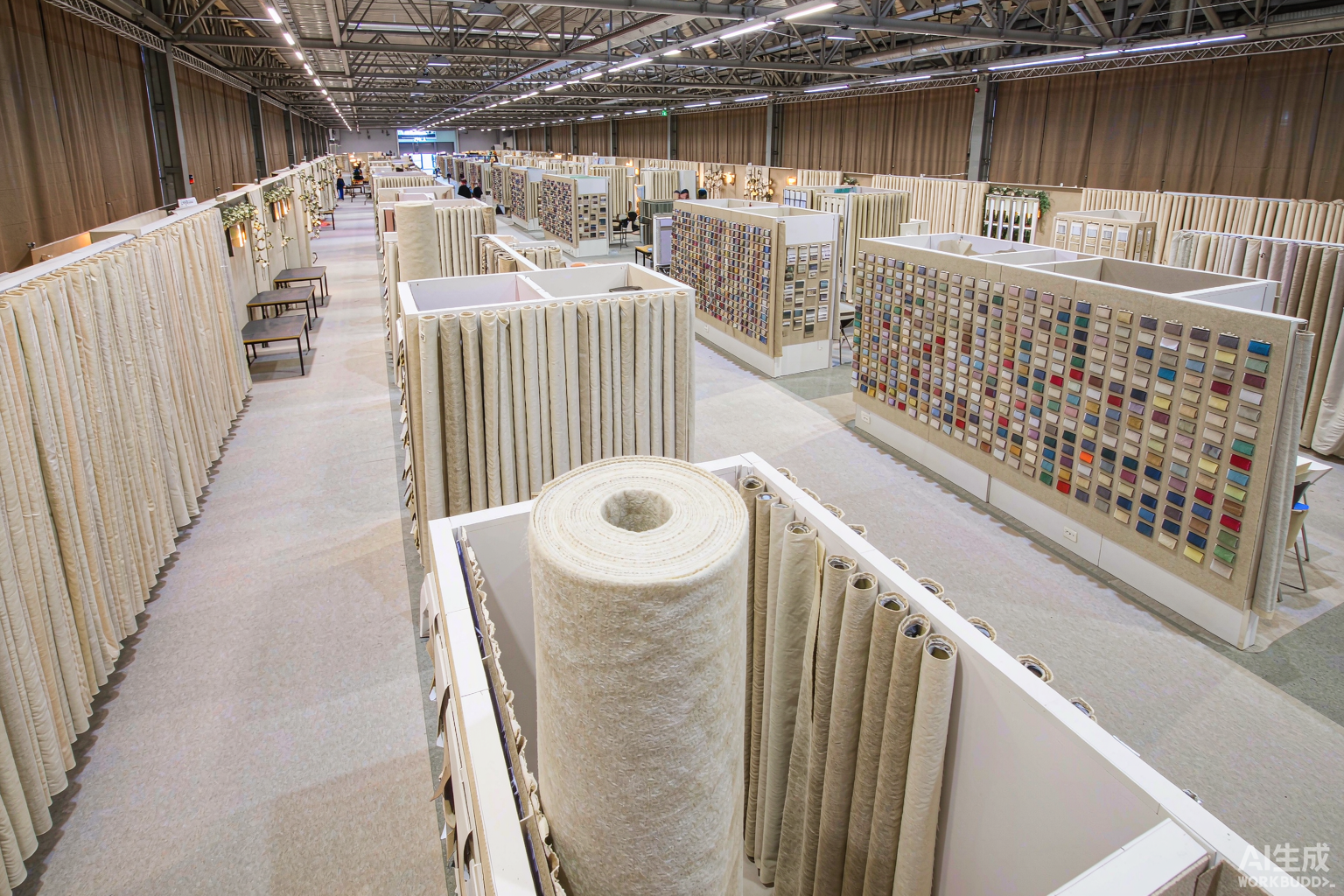
Heimtextil 2027 runs 12-15 January with the window decoration and sun protection segment moving to Halls 11.0, 12.0 and 12.1. This guide covers the layout change, visitor profile, a fabric evaluation checklist and a realistic four-day walk plan, from the buyer side and for exhibitors too.
If there is one week in the calendar that decides how a roller blind fabric supplier's year will go, it is the second week of January in Frankfurt. Heimtextil — the world's largest international trade fair for home and contract textiles — opens its doors again on 12–15 January 2027, and for anyone buying window coverings, sun protection textiles or furnishing fabric in volume, it is not a nice-to-have event. It is the single most efficient four days in the global sourcing calendar.
This guide is written from the buyer's side of the table, but it is equally useful if you are a supplier deciding whether to exhibit. We cover what actually changed in the halls, how the visitor profile really breaks down, what to walk, what to skip, and how to turn a badge scan into a container booking.
Why Heimtextil still matters for window covering buyers
Trade fairs have been declared dead roughly every year since the first online catalogue appeared. The numbers say otherwise. The most recent edition gathered roughly 3,000 exhibitors from around 148 countries and about 48,000 trade visitors. More important than the headline count is the quality filter: around 78% of visitors hold purchasing or co-purchasing authority in their company. That is a dramatically higher ratio of decision-makers than you will find at a general consumer goods fair, and it is the reason a single conversation in Frankfurt can replace six months of email threads.
For the sun protection category specifically, Heimtextil is where the upstream specification gets set. Coating chemistry, colour standards, flame retardancy approaches and weave structures that will appear in roller blind and vertical blind ranges for the following eighteen months are typically first shown here. If you buy fabric — not finished blinds, but the fabric itself — this is where you see next season's hand feel before your competitors do.
The 2027 hall layout changed — this matters more than you think
Every edition reshuffles something, and 2027 is no exception. The hall that has traditionally anchored the window decoration and sun protection segment has moved. If you are working from a hall plan you downloaded two years ago, you will waste a morning walking in the wrong direction.
| Segment | Previous location | 2027 location |
|---|---|---|
| Window decoration, sun protection | Hall 10 | Halls 11.0 / 12.0 / 12.1 |
| Upholstery and decorative fabric | Hall 4 / 5 | Unchanged |
| Bedding and bathroom | Hall 8 / 9 | Unchanged |
| Contract and hospitality textiles | Hall 4.0 / 6.0 | Unchanged |
The shift of the window decoration block into Halls 11.0, 12.0 and 12.1 is not cosmetic. It groups sun protection closer to the contract and hospitality textile blocks, which reflects how the market has actually developed: a growing share of roller blind and screen fabric volume is now specified by hotel groups, office fit-out contractors and healthcare operators rather than by retail. If your business is project-driven, the new layout puts your two most relevant floors within a five-minute walk of each other.
The 2027 edition is expected to occupy roughly 270,000 square metres with around 2,800 exhibitors and up to 70,000 visitors across the four days. The Chinese exhibiting contingent alone has exceeded a thousand companies in recent editions, concentrated in fabric, bedding and home textile accessories.
What the visitor mix tells you about where to spend your time
Understanding who else is walking the aisles is a surprisingly useful planning tool. Heimtextil's audience is not homogeneous, and the halls that matter to a wholesaler are not the halls that matter to an interior designer.
- Wholesalers, importers and distributors — the largest single group, and the one most relevant if you buy container volume. They cluster in the fabric halls and typically work with pre-booked appointment slots.
- Retail chains and buying offices — often travelling in teams of three or four, one for commercial terms, one for design, one for quality. Expect them to ask for landed cost, not FOB.
- Contract specifiers and hospitality groups — smaller in number but higher in average order value per project, and far more interested in certificates than in price per metre.
- Interior architects and designers — they influence specification upstream and are worth meeting even if they never place an order themselves.
- Press and trend media — useful for visibility, not for orders. Do not spend your prime Tuesday morning on them.
A practical implication: if you sell roller blind fabric and you have only two days, book Tuesday and Wednesday, stay in the fabric halls, and take meetings in 30-minute blocks rather than 60. The aisles are quietest in the first hour after opening — use that window for the suppliers you actually plan to negotiate with, and use the crowded midday hours for browsing.
What to actually evaluate at a fabric booth
Walking a fair without a checklist is tourism. For window covering fabric, these are the seven things worth scoring at every relevant booth, ideally in a spreadsheet you fill in on the spot rather than from memory that evening.
1. Composition and weight honesty
Ask for the actual composition, not the marketing name. The difference between a 100% polyester and a polyester-cotton blend at the same weight is a different hand feel, a different shrinkage curve and a different price. Ask for grams per square metre, and check whether the figure quoted includes the coating.
2. Coating type and thickness
For blackout and dim-out roller fabric, the coating is where the product is made or lost. Ask whether it is acrylic, polyurethane, or a foam-based system, and ask for the coating weight separately. A heavier coating usually means better opacity but also a higher risk of cracking when the fabric is rolled tightly on a narrow tube.
3. Light transmission and openness factor
For solar screen fabrics, the openness factor is the number that determines both the view-through and the shading coefficient. Ask for a measured value, not a nominal one, and ask at what angle it was measured.
4. Colour fastness to light
This is the specification that separates suppliers who understand exterior-facing applications from those who do not. Ask for the test standard and the blue wool scale rating. For fabrics facing direct sun through glass for years, anything below the relevant threshold will fade visibly, and the claim will come back as a complaint that no warranty conversation can rescue.
5. Flame retardancy approach
There is a meaningful difference between inherently flame-retardant fibres, a back-coating treatment and a topically applied finish. Each has different durability after washing, different cost, and different acceptance depending on the destination market's building code. Ask which one they are using and ask for the certificate, not a verbal assurance.
6. Roll length, tube compatibility and shrinkage
A fabric that is technically excellent but supplied only in short rolls can destroy your cutting yield. Ask for standard roll length, whether custom lengths are possible, and how the fabric behaves after being wound on a tube under tension for months. Every experienced buyer has a story about a fabric that arrived perfect and left the warehouse wavy.
7. Certificate pile
Ask for the documents before you ask for the price. The relevant set depends on destination, but a serious exporter should be able to produce them without a two-week delay. If a supplier hesitates on documentation while being extremely confident on price, that tells you something about which part of their operation is mature.
How to walk the show floor efficiently
Four days sounds generous. It is not. A realistic structure looks like this:
- Before you travel. Download the exhibitor list and mark every company whose product range touches yours. Group them by hall so you walk a logical path rather than crossing the fairground three times a day. Pre-book meetings with your top ten targets; leave the rest open.
- Day one, morning. Walk the two or three halls that matter to you end to end without stopping for long conversations. This is reconnaissance. You are building a mental map and spotting the booths that look substantive.
- Day one, afternoon. Return to the four or five booths that earned a second look. This is where you collect actual specifications and sample books.
- Day two. Pre-booked meetings, plus any new leads generated on day one. Keep a hard stop on each meeting.
- Day three. Deep dive with the two or three suppliers you are genuinely considering. Request price grids, lead times and certificate packs. Negotiate, but do not sign in the aisle — a signature made standing up is a signature you may regret sitting down.
- Day four. Wrap-up, collect outstanding samples, visit anything you missed, and write your notes up before you fly home.
One habit separates buyers who get value from those who come back with a bag of catalogues: writing the specification, the quoted price, the lead time and the salesperson's name into a single structured sheet at the booth. Memory compresses badly over four days and forty conversations — every fabric starts to look like every other fabric by Thursday.
If you are exhibiting rather than buying
The economics are different but the discipline is the same. A stand is not a shop; it is an appointment engine. Exhibitors who treat it as a shop spend four days talking to students and competitors, and leave with a stack of business cards that never converts.
- Set the meeting before the fair. The value of a booth is that it gives your existing and prospective customers a reason to be in one place. Fill the diary in the six weeks before the doors open.
- Bring the physical. Fabric buyers need to touch. A sample book on a stand converts far better than a tablet, and a blind assembled on a working tube with a real bracket shows more in thirty seconds than a brochure does in thirty pages.
- Lead with the certificate folder. For the project and hospitality buyers now grouped closer to the sun protection halls, compliance documentation is the first question. Put it on the table early rather than producing it defensively when asked.
- Qualify fast. A polite thirty-second question about destination market and annual volume tells you whether to invest ten minutes or three. Both are fine, but only if you know which you are doing.
- Follow up within five working days. The fair generates a wave of interest that decays steeply. A follow-up email with the specific specification discussed, sent while the conversation is still in the buyer's memory, performs far better than a generic newsletter in February.
The commercial rhythm around the fair
Prices discussed in Frankfurt in January often become the reference for the following season. That creates a planning rhythm worth respecting. Quotations given in the fourth quarter, before the fair, tend to be positions that get revisited. Quotations given in the six weeks after the fair tend to be the ones that hold.
There is also a logistics dimension that inexperienced buyers routinely underestimate. Heimtextil sits in early January, which means orders placed at the fair are typically produced in the first quarter and shipped in the period that overlaps with Chinese New Year. Production capacity tightens in the weeks around the holiday, and freight space does too. A buyer who wants a March shipment and only confirms the order in mid-January is already competing for a slot that may not exist. The practical answer is to confirm intent early and to keep the shipment window flexible by a couple of weeks on either side.
What to take away
Heimtextil in January 2027 will run across four days with the window decoration and sun protection segment relocated to Halls 11.0, 12.0 and 12.1. The audience is heavily weighted towards buyers with purchasing authority, and the halls are organised in a way that rewards a plan and punishes improvisation.
The buyers who leave Frankfurt with signed business do three things differently. They prepare a target list and pre-book meetings. They arrive with a specification checklist instead of a vague intention to browse. And they follow up while the conversation is still warm, rather than after the memory of it has faded.
For the sun protection fabric trade specifically, the fair remains the most concentrated moment of the year to see what the next eighteen months of specification will look like. Plan for it in the fourth quarter, not the week before departure.