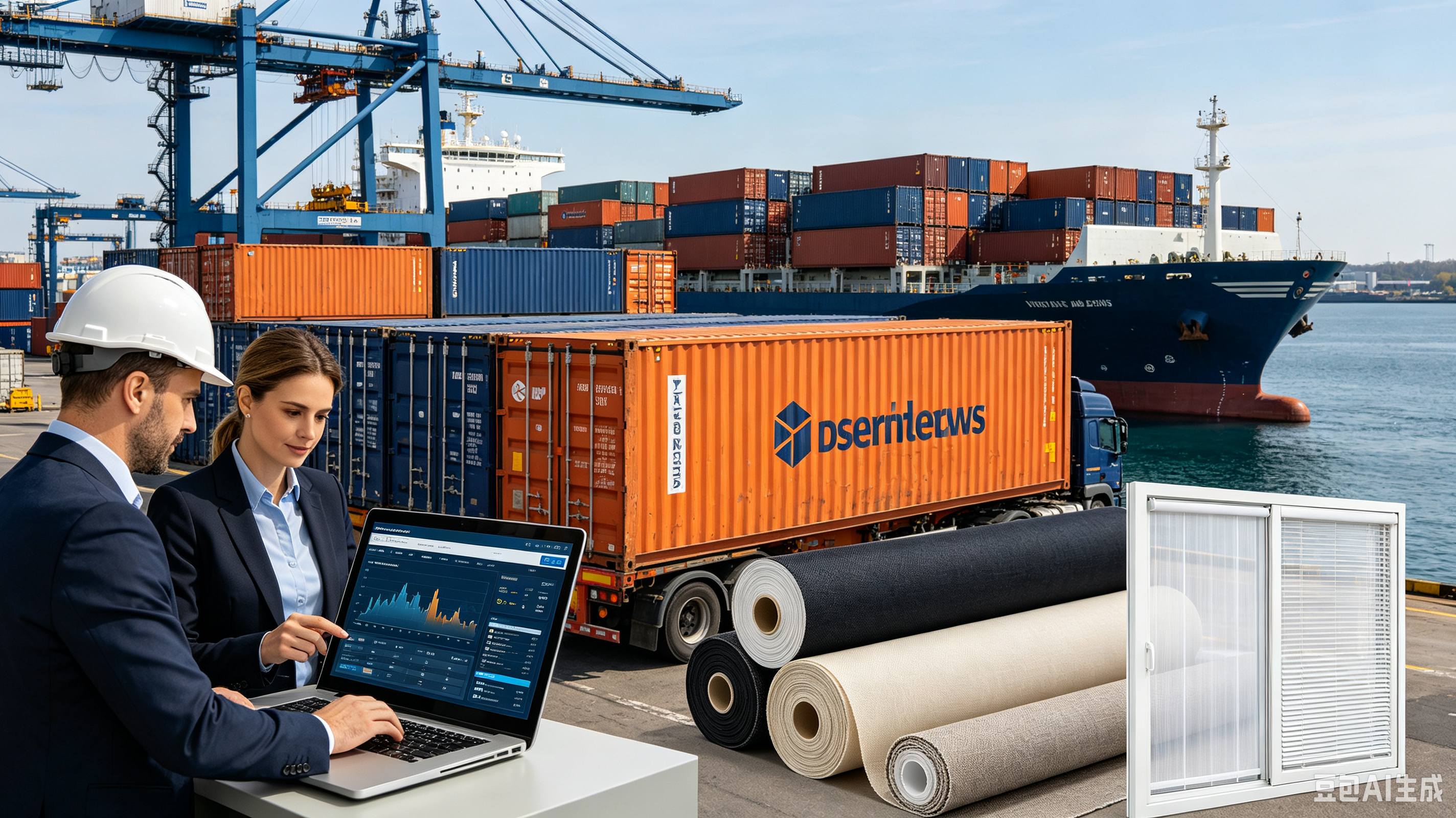
With persistent Red‑Sea shipping risks, overseas buyers of roller‑shade & sofa fabrics may source reliable Chinese suppliers via upcoming home‑textile exhibitions and adopt sea‑rail multi‑modal logistics. This article includes hot‑selling fabric list and practical purchasing tips.
New Trend of Multimodal Transport: How Roller‑Shade Fabric Buyers Break Through Red‑Sea Shipping Difficulties
In recent years, unstable shipping conditions along the Red Sea, congestion at selected ports and surcharges imposed at short‑notice have continuously drawn attention from global soft‑furnishing buyers. Cross‑border transportation cycles for roller blinds, sofa fabrics, carpets, window screens and jacquard woven fabrics have been extended with rising logistics costs. Many overseas distributors and engineering‑procurement projects are facing delivery delays and inventory shortages. By 2026, the global curtain‑fabric market has reached USD 48.73 billion. Roller‑shade fabrics have become rigid‑demand hot‑selling products in the soft‑furnishing track with a growth rate of 7.2%. Against this backdrop, sourcing reliable Chinese fabric suppliers, deploying multimodal transport schemes combining sea freight and China‑Europe Railway Express, and selecting high‑quality original manufacturers at international exhibitions have become core solutions for overseas buyers to avoid logistics risks.
I. Escalating Red‑Sea Shipping Risks Bring Structural Changes to Fabric‑Export Logistics
Latest maritime‑industry news shows that uncertainties remain over the Red‑Sea shipping lane. After rerouting around the Cape of Good Hope, voyages have been prolonged by 12‑18 days, with container freight rates, fuel‑surcharge and war‑risk insurance premiums fluctuating continuously. For bulky, low‑value textile materials such as coated roller‑blind fabric, high‑shrinkage yarn fabric and crackle‑textured sofa cloth, extended sea voyages may easily cause damp‑damaged goods and missed sales seasons. More and more buyers are no longer relying solely on ocean‑going sea transport. Instead, they are adopting composite logistics solutions including sea‑rail intermodal transport and cross‑border railway special lines, as well as transshipment via nearby ports. Central‑Asia railway routes deliver goods directly to inland warehouses in the Middle East, while short‑haul southeast‑Asia shipping routes depart from Ningbo and Shanghai. Multiple alternative routes disperse supply‑chain risks caused by single‑lane disruptions. As a trusted fabric manufacturer, Wanbo Import & Export has designed three independent alternative logistics channels for clients in the Middle East, Australia and Europe, bypassing congested ports and greatly lowering the probability of shipment delays.
II. List of Key Home‑Textile Exhibitions for the Second Half of 2026: Source Roller‑Shade & Sofa‑Fabric Factories Face‑to‑Face
Trade exhibitions remain the most‑efficient channel for overseas buyers to find dependable suppliers of roller blinds and upholstery fabrics. Several major international home‑textile fairs will be held in the second half of 2026, allowing buyers to schedule trips, inspect samples on‑site and connect directly with manufacturers:
- Texworld Paris (Aug 31 – Sep 2): Europe’s premier textile‑sourcing event. Ideal for suppliers of recycled roller‑shade fabrics and woven window screens complying with EU REACH and OEKO‑TEX environmental standards. A must‑visit for distributors targeting European markets.
- Dubai International Textile Exhibition (Nov 16‑18): The largest‑scale textile event covering North Africa and the Middle East. Demand for high‑shading roller fabrics, UV‑resistant outdoor‑sofa cloth and fire‑retardant engineering textiles is extremely strong. Perfect for bulk buyers from the Middle‑East market to source original manufacturers based in Keqiao.
- Melbourne International Home‑Textile Show (November): Australia has limited local textile‑production capacity, with over 95 % of curtain fabrics imported. Light‑weight sun‑shade roller cloth, mould‑resistant window screens and fabrics supporting small‑batch customisation rank high among on‑site enquiries. Factories offering flexible minimum‑order quantities hold strong competitive advantages within the Australian market.
During on‑site sourcing, buyers are advised to prioritise full‑category production‑capable mills. Purchasing roller‑shade fabric, sofa material, carpet cloth and jacquard decorative textiles from one supplier allows consolidated container shipments, cutting overall procurement costs by more than 18 % while removing communication overhead from managing multiple vendors.
III. Hot‑Selling Fabric Recommendations for H2 2026, Tailored for Regional Markets Worldwide
Based on Wanbo Import & Export’s global shipment statistics and exhibition inquiry trends, the following textile products are top‑performing export items and are highly recommended for autumn‑season stock‑up:
- UPF50+ High‑Shading Coated Roller‑Blind Fabric: Best‑seller for Middle‑Eastern and African markets. Thickened, heat‑insulating and anti‑ageing, perfectly suited for residential and commercial‑building engineering projects in high‑temperature zones.
- Crackle‑Texture Jacquard Decorative Fabric: Popular soft‑furnishing item across Europe and North America. Premium surface texture enables multi‑purpose use for roller blinds, sofa upholstery and wall decoration.
- Water‑Based Odour‑Free Recycled‑Polyester Sun‑Shade Cloth: Essential product for EU markets. Low‑carbon and eco‑friendly, compliant with EU Carbon‑Border‑Adjustment‑Mechanism requirements and green‑procurement standards.
- High‑Shrinkage‑Yarn Semi‑Transparent Window‑Screen Fabric: Hot‑seller for Australia and Southeast‑Asia markets. Lightweight, excellent draping performance, flexible for small‑batch replenishment, the preferred stocking choice for cross‑border‑e‑commerce dealers.
- Flame‑Retardant Composite Woven Engineering Fabric: Top choice for hotel, office‑building and large‑scale commercial‑construction projects. Certified against multiple international fire‑safety standards, suitable for long‑term bulk supply contracts.
IV. Practical Cooperation Guide for Overseas Buyers Partnering With Chinese Fabric Suppliers
- Lock dual‑logistics solutions in advance: Agree on one primary sea‑shipping route plus one railway‑based backup scheme before confirming orders. Switch transport channels immediately whenever Red‑Sea‑lane disruptions or port congestion emerge, securing on‑time delivery.
- Select original factories supporting flexible small‑batch quick‑re‑order service: Under current market conditions, flexible‑volume orders starting from 500 metres have increased 29 % year‑on‑year. Well‑suited for cross‑border sellers and small‑and‑medium‑sized wholesalers testing new‑product lines while lowering inventory risks.
- Regionalised stock‑planning and differentiated product‑sourcing: Prioritise heat‑resistant high‑shading textiles for Middle‑Eastern markets; eco‑friendly recyclable fabrics for Europe; mould‑proof lightweight sun‑shade materials for Australia. Match local climate‑related and regulatory requirements precisely to boost sales performance.
- Carry out virtual factory‑audit verification after exhibitions: After initial negotiations at trade fairs, schedule online video inspections of weaving, coating and quality‑control workshops to verify real‑production capacity and avoid middle‑man mark‑ups.
Conclusion
Against the background of volatile maritime‑shipping conditions and rising global demand for soft furnishings, roller‑blind fabric procurement has moved beyond pure price‑competition. Overseas buyers can effectively avoid logistics delays and capture the peak sales season at the end of 2026 by sourcing reliable suppliers at second‑half‑year international exhibitions, adopting sea‑rail multimodal‑transport export solutions, establishing long‑term partnerships with full‑category original manufacturers such as Wanbo, and selecting hot‑selling fabrics optimised for local‑market requirements.