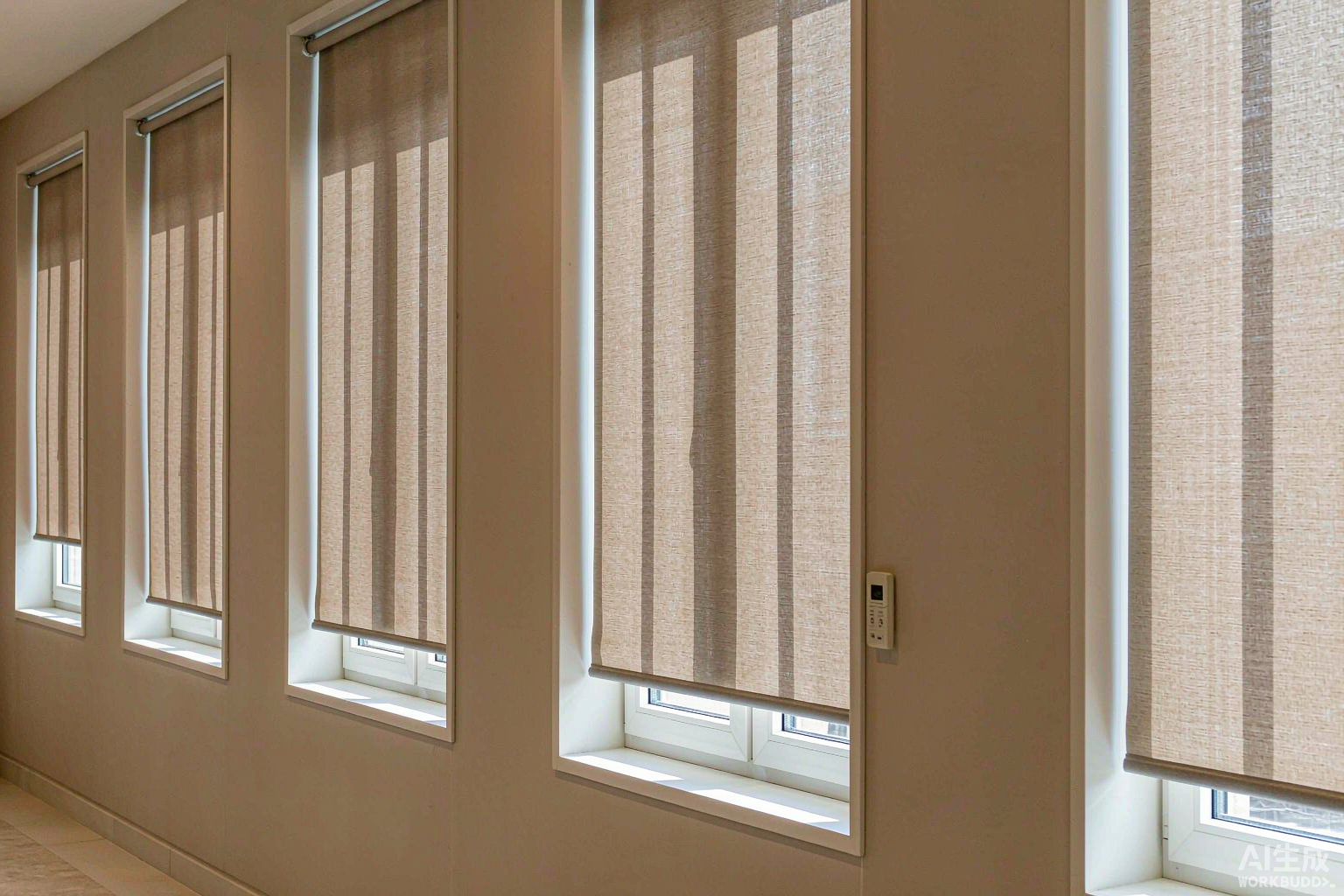
Selling the same roll of fabric to a retailer and to a construction project are two entirely different businesses. Following the real sequence of a project, this guide unpacks sampling, performance figures, pricing model, delivery rhythm and installation coordination, with a checklist at the end.
If you have ever supplied shading fabric into a hotel, an office tower or a hospital, you have probably noticed something: the same roll of cloth sold to a retailer and sold to a project are two entirely different businesses. Retail asks whether the colour looks good and the price is competitive. Projects ask whether the thing will pass handover inspection. That single word — inspection — sets both the barrier to entry and the margin in project work, and it explains why plenty of competent fabric suppliers fall flat the moment they touch a construction project.
This article skips the trends and goes straight to practice. We follow a project in the order it actually happens, and lay out the traps a fabric supplier hits at each stage.
The real difference between project and retail business
Start with the premise, because everything that follows is derived from it.
Retail is cash for goods, the transaction closes and the relationship ends. A project involves multiple parties, a long timeline, and liability that can be traced back for years. A single hotel guest room shading installation involves the owner, the design institute, the general contractor, the facade subcontractor, the soft furnishing contractor — and only then you, the fabric supplier. Every day you are not on site, your fabric is being judged by someone else.
- The decision chain is long. In retail one buyer decides. In a project the designer sets the colour, the owner sets the budget, the contractor sets the delivery date and the supervisor sets the acceptance criteria. Any one of them saying no sends you back to the start.
- The time scales are mismatched. Retail might be two weeks from order to dispatch. A project might be eight months from sampling to bulk, with the quantity revised three times along the way because the construction schedule moved.
- The liability window is long. Retail ends at delivery. A project carries a warranty period and a service life after handover. If the fabric fades or distorts during those years, the phone call comes to you.
- The cost of failure is high. A bad retail batch costs you a few thousand in returns. A bad project batch can mean reworking hundreds of rooms, plus a claim for schedule losses.
Stack those four together and the conclusion is that the core of project business is not making good fabric. It is making fabric that can be traced, documented and defended.
Gate one: sampling. This is where most suppliers die
Project sampling is not cutting a swatch off a colour card and posting it. Real project sampling means the design institute hands you a colour reference or a physical piece, and asks you to reproduce that colour on a specified fabric at a specified weight — and to keep it consistent across the thousands or tens of thousands of metres that follow.
Six questions you must settle at the sampling stage
- Are we matching to a colour card or to a physical sample? A card is a print, a physical piece is real cloth. A small difference between them becomes a large difference in bulk. Insist on matching to the physical piece and keep that piece as the sealed reference.
- What colour tolerance is allowed? Do not accept "as close as possible". Require it stated in writing, with the standard used for judgement and the permitted grade difference. A colour clause without a quantified tolerance is not a clause.
- Who holds the sealed sample? That sample becomes the basis of every future dispute. Ideally each side keeps a signed reference and it is explicitly agreed which one governs.
- Single dye lot or split lots? Large projects often cannot be dyed in one run. Locking a single dye lot sharply reduces colour variation risk but stretches the lead time. That is a trade-off to make early, not late.
- What happens on a repeat order? A hotel may need fabric for a few extra rooms after opening. If the repeat comes two years later, can you reproduce that colour? The retention plan needs to be considered at sampling time.
- How are sampling cost and lead time handled? Free sampling is normal in this industry, but state the conditions up front — for example, credit against an order above a certain quantity.
One point deserves emphasis on its own: the more verbose the conversation at sampling stage, the fewer the disputes at bulk stage. Many suppliers agree to everything in order to look cooperative, and then the bulk arrives wrong and both sides suffer. Professionalism is not agreeing to everything. It is putting the uncertainties on the table early.
Gate two: performance figures. Projects look at things retail never asks about
A retail customer asks whether the fabric blocks light. A project asks what the light blocking rate and shading coefficient are, and by what test method. Those are two different languages. Here is the core set a supplier must have ready for project work.
Light and heat
- Light blocking and light transmission rate, normally required under verifiable test conditions rather than by eye.
- Shading coefficient and solar heat gain coefficient. These are key inputs in building energy calculations. Office projects care about them intensely because they feed directly into cooling load and energy performance assessments.
- UV blocking rate. Hospitals, museums and spaces displaying artwork will specify this explicitly.
Durability and safety
- Colour fastness — to light, to washing and to rubbing. Light fastness matters most in applications facing glass over the long term, and is the figure low-cost suppliers most often blur.
- Tensile and tear strength. Determines whether the fabric survives years of rolling and tension. Narrow-width roller blinds place particularly high demands on weft strength.
- Dimensional stability — shrinkage after washing or heat exposure. Fabric with high shrinkage starts curling at the edges within months of installation.
- Flame retardancy. Mandatory for hotels, hospitals, cinemas and public transport spaces. Note that accepted standards differ by market, and the same test may not be recognised in another region.
- Antibacterial and anti-mould performance. Required by hospitals and care facilities in humid regions, especially where coated surfaces are prone to mould growth.
Environmental and compliance
This block has moved from a bonus to an entry requirement over the past two or three years. European building and procurement practice increasingly demands verifiable chemical and sustainability documentation from the supply chain, and a fabric without the paperwork does not even qualify to bid. Compliance files are not marketing material for the client. They are mandatory contents of the tender package.
Gate three: quotation. Project pricing is a different model
This is where fabric suppliers most often lose money. Retail pricing is a price per metre. Project pricing has to be a complete delivery scope. Get the model wrong on the same fabric and the margin can swing by well over ten points.
| Quotation element | Retail logic | Project logic |
|---|---|---|
| Price basis | Unit price per metre | Consumption per square metre × waste factor × unit price |
| Waste | Ignored | Cutting waste must be included, typically several percent |
| Width matching | Not a concern | Whether roll width matches finished drop height drives utilisation directly |
| Packing | Standard packing | Rolled, labelled and cartoned to project specification, often split by floor |
| Logistics | To port | May require direct delivery to site including unloading and counting |
| Payment | Advance or against bill of lading | Commonly staged: advance, shipment, then acceptance |
| Warranty | Usually not addressed | Warranty period and scope of responsibility stated explicitly |
A very practical warning: underestimating the waste factor is the single biggest cause of project losses. A roll looks like a clean hundred metres in the factory, but cut to the actual guest room window height it may only yield ninety windows, with the rest going to offcuts. Quote on ideal consumption and you work for free.
Width is the other common problem. The project gives you a fixed window height. If your roll width does not align with that height, utilisation collapses. In some cases re-specifying the roll width is worth more than cutting the price — and that is exactly where a fabric supplier can add professional value rather than just discounting.
Gate four: delivery rhythm. Projects fear late far more than expensive
There is a saying in project circles: arriving on time matters far more than saving ten dollars. Because a fabric that arrives a day late stops the facade going up, stops the soft furnishing being closed out, pushes back inspection and drags the whole schedule. That cascade costs vastly more than the price difference on the fabric.
So a professional fabric supplier does three things on a project.
- Break the lead time into milestones. Do not give a single "forty-five days". Give the dyeing completion date, the weaving completion date, the finishing completion date and the packing completion date. The project needs schedulable information, not a reassurance.
- Warn proactively. Any factor that could cause delay — raw material, capacity, dyestuff, holiday shutdown — must be raised early. What projects allow is early warning, not concealment.
- Build in buffer. Compress the committed delivery date internally by a few days to leave room for the unexpected. That is not dishonesty, it is professionalism.
Pay particular attention to holidays. Production and freight tighten noticeably around Chinese New Year, and a great many project delivery milestones fall in exactly that window. If the factor is not priced into the production plan before it starts, you discover the shortfall at the deadline, and by then no remedy is fast enough.
Gate five: installation coordination. The stage suppliers most often overlook
Many fabric suppliers consider their responsibility finished at the port of discharge. On a project, a small problem during installation is very often traced back to the fabric itself.
- Edge curling and waving. Appearing after installation, this is usually attributed to insufficient tension or setting in the fabric, even when the actual cause is the roller tube diameter or improper installed tension. Without a technical briefing before installation, that responsibility is very hard to untangle.
- Edge fraying or unravelling. Directly related to cutting method and edge finishing process. Projects often require a specific edge treatment, which must be confirmed at quotation stage.
- Colour under artificial lighting. A colour chosen by a designer in daylight can look entirely different once installed under warm interior lighting. Experienced suppliers proactively ask the client to confirm under the actual lighting environment.
- Cleaning and maintenance instructions. Clear guidance should be handed over at delivery. When the project later damages the fabric with the wrong cleaning agent, the call still comes to the supplier.
None of this looks like the fabric supplier's responsibility, but the ones who do it well proactively provide technical briefing documents and even installation guidance. That is not unpaid labour. It is cutting off rework risk before it materialises.
The long game in project business
Finally, the more fundamental question: why is it worth doing project work seriously at all?
The first project is usually hard — long cycle, many requirements, and margins that do not look better than retail. The value sits downstream.
- Client stickiness is very high. Once a hotel group has used your fabric in its first property, the second and third often follow directly, because your specification is already written into their design standard.
- Repeat demand is steady. Chain brands open new properties every year, and refurbishment of existing ones is demand too. Once a project client is working well, the orders keep coming.
- The barrier becomes a moat. When your product enters a hotel group's approved supplier list, a competitor replacing you is not just a matter of price — they have to go through the qualification process again.
- Brand endorsement. Delivering a well-known hotel or office tower is a case study that stays valid for years. That is often worth more than the margin on the order itself.
So the right approach to project work is not "take one job, bank one profit". It is "make the first project a reference, then replicate it". That may mean investing more service effort, leaving pricing room, or accepting a thinner margin on the first job. From the second year onward, the return clearly outruns pure retail.
A project-stage checklist for fabric suppliers
Compressed into something you could pin above a workbench:
- At sampling: confirm who holds the sealed sample, the quantified colour tolerance, and the colour retention plan for repeat orders.
- Organise performance figures into a deliverable document pack grouped as light and heat, durability and safety, and environmental and compliance — not scattered across email threads.
- Quotation must include waste factor, width matching, packing, logistics, payment structure and warranty terms.
- Break lead times into milestones, warn proactively, keep internal buffer, and factor in holidays.
- Provide technical briefing and cleaning instructions to remove the installation-stage risk up front.
- Treat the first project as a reference build. The goal is entering the client's approved supplier list, not the margin on that one order.
Project business, at its core, is trading one exceptionally well-executed delivery for a long relationship. The fabric is only the ticket in. What keeps you in the room is the certainty of your delivery.