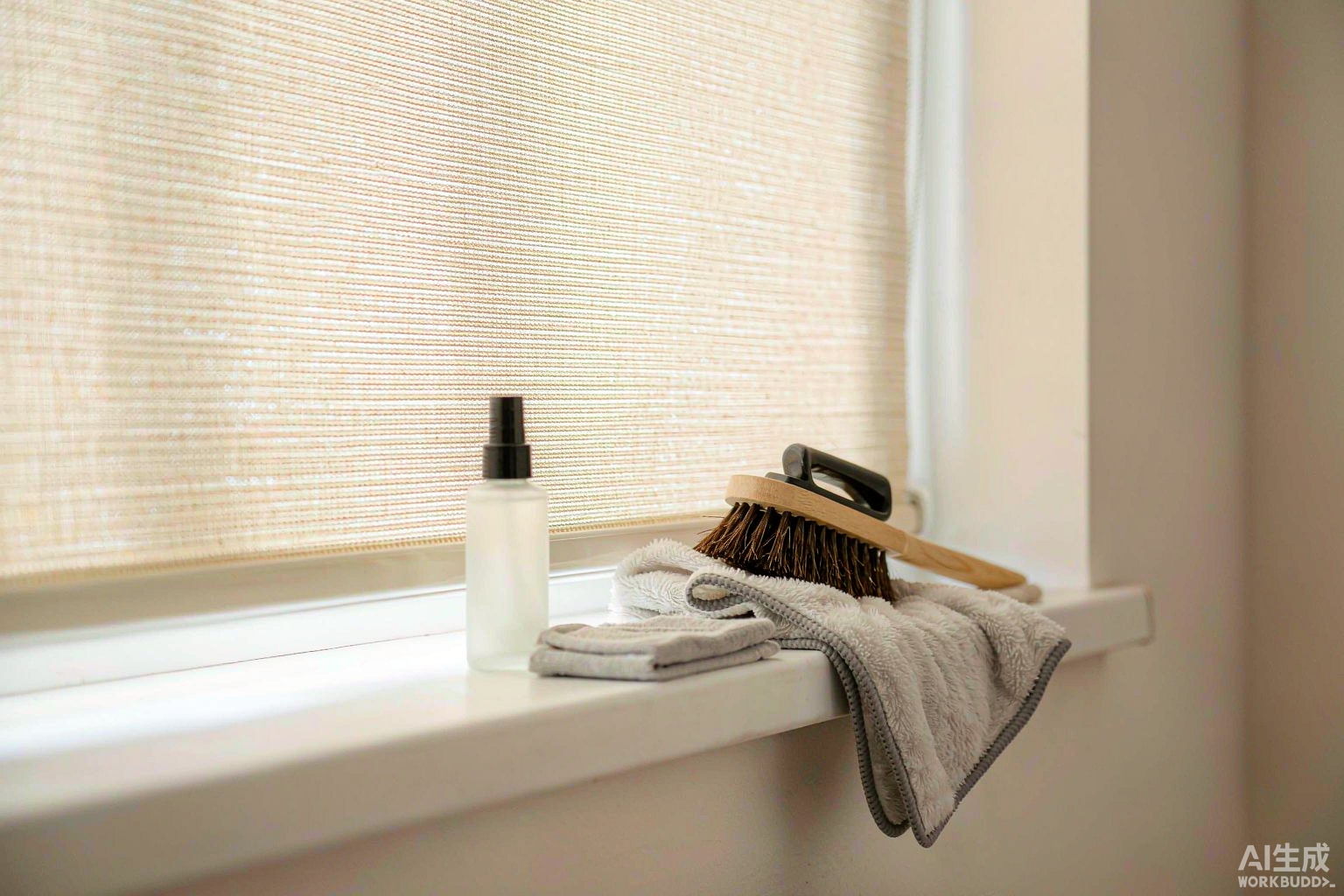
A fabric that leaves the factory fully compliant can still be ruined in the field by the wrong cleaning method, and the customer remembers the supplier, not their own mistake. This guide sets out the cleaning tolerance of the four common constructions, the full dry-dusting and wet-cleaning procedures, treatment for six common stain types, six things never to do, and the care documentation, fastness test reports and packaging labels a buyer should demand from the supplier.
Most buyers put all their attention on factory-side numbers — fabric weight, blackout rating, colour fastness — and skip the one factor that most directly drives repeat orders: how the end customer is actually supposed to clean and care for the fabric. A fabric that leaves the factory perfectly compliant can still end up mouldy, faded or distorted in the field because of a wrong cleaning method. And what the customer remembers is not “I used the wrong product” — it is “this supplier's fabric is no good”.
For a distributor this feeds straight into three metrics: complaint rate, the word-of-mouth that comes from product life, and whether care can be packaged as a paid value-added service. Here is the whole picture, from the ground up.
1. Identify the construction first, then decide how to clean it
The cleaning tolerance of a roller blind fabric is fundamentally determined by its construction, not by its price. The four common types behave very differently:
- Coated blackout fabric (three-layer sandwich) — base cloth, white blackout coating, face layer. The most tolerant of the four and can be wiped with a damp sponge. But the coating dislikes prolonged soaking and strong solvents: soaking makes it blister and delaminate, which is the single most common “the customer washed it and ruined it” case.
- Sunscreen fabric (PVC-coated fibreglass yarn) — an open-weave structure that resists dirt, wiping and mould. It can be damp-wiped, and once fully unrolled even rinsed with a gentle hose stream and then air-dried in shade. But prolonged contact with strong solvents hardens and embrittles the PVC skin, which changes the openness factor and the fabric's recovery.
- Uncoated fabric (cotton-linen, plain-woven polyester, sheers) — a natural handle but the most delicate. Dry dusting only is the recommendation; wet cleaning tends to shrink it, distort it and leave water marks.
- Honeycomb, pleated and multi-layer composites — the pleated structure traps dust heavily, and once wet the pleats almost never recover their set. Vacuum dusting only.
If the buyer or the end customer cannot determine the construction, treat it as dry-dusting only. That is the never-wrong floor, and it is the first line worth putting into your customer service script.
2. Routine dusting: technique matters more than tools
Around 80% of real-world roller blind cleaning needs are dusting, not washing. Four points:
- Unroll the blind fully before dusting. Dusting a partly rolled blind pushes dust into the inner layers of the roll, where it accumulates.
- Work top-down with single-direction light strokes. Use a static duster, a soft brush or a vacuum soft-brush attachment — never scrub back and forth.
- Keep the vacuum on low power. Strong suction distorts the yarns of an open-weave fabric and loosens a non-woven base cloth.
- Recommended frequency: every 2–4 weeks for ordinary office and residential use; weekly for street-facing windows, buildings next to construction sites, or high-dust regions.
3. Wet cleaning: when it is allowed and how to do it
Only coated blackout fabric and sunscreen fabric are suitable for wet cleaning, and the sequence below must be followed:
- First run a small patch test in an inconspicuous area — typically the fabric edge at the tube side — to confirm no colour bleeding and no coating blistering before treating the full width.
- Use warm water with a neutral detergent at a very low concentration, comparable to a mild dishwashing liquid. Alkaline detergents, laundry powder and chlorine- or oxygen-based bleach are not permitted.
- Wipe with a soft sponge or microfibre cloth using light pressure, working top-down. No rubbing, no wringing, no brushing.
- Immediately afterwards, wipe off residual detergent with a clean damp cloth. Detergent left to dry leaves a shiny film on the surface.
- Air-dry fully unrolled in the shade. No direct sunlight, no hot air, no drying against a wall. Rolling up a blind that is not completely dry is the number one cause of mould.
4. Treat stains according to type
The critical variable is speed — beyond roughly 24 hours most stains set permanently. Common types:
- Oil and fingerprints — neutral detergent with warm water and light pressure, working from the edge inwards to stop the stain spreading.
- Water marks and limescale haze — common in hard-water regions. Wipe with diluted white vinegar (roughly 1:10), then rinse immediately with clean water. Do not leave it standing.
- Mould spots — improve ventilation and dehumidification first, then follow the wet-cleaning sequence above. Do not use chlorine bleach: it strips colour and damages the coating. Mould that keeps returning is a humidity problem in the environment, not a fabric defect, and the customer should be told so.
- Coffee, tea and soft drinks — blot immediately with a dry cloth, then treat with neutral detergent and warm water under light pressure.
- Pen marks and adhesive residue — dab with a high-strength alcohol wipe, on coated blackout and sunscreen fabric only, then rinse with clean water. Not permitted on uncoated fabric.
- Paint and glue splatter — do not reach for paint thinner yourself. Solvents dissolve the coating and the PVC skin. Refer these to professional cleaning.
5. The six things never to do
- Never machine-wash or spin-dry — a roller blind is not a removable garment, and the drum will tear yarns and coating.
- Never use bleach — both chlorine and oxygen bleaches cause fading and coating failure.
- Never tumble-dry and never iron — heat shrinkage distorts the fabric, changes the openness factor and can make the coating stick to itself.
- Never use acetone, ammonia, lacquer thinner or other strong solvents.
- Never use a stiff brush, steel wool or the abrasive side of a scouring pad.
- Never soak for long periods — this is the leading cause of coated fabric being written off.
6. Recommended cleaning schedule
This table can go straight into the customer-facing product documentation: routine dusting every 2–4 weeks; wet cleaning every 6–12 months or as soiling requires; deep cleaning — full take-down or a professional service — every 2–3 years; and for high-traffic settings such as offices, hotels and schools, on a six-month cycle. It is worth stressing that a well-maintained roller blind typically lasts three to five years longer, which is a value the customer can actually perceive.
7. What a buyer should demand from the supplier
If you are an importer or distributor, writing the following into your purchase requirements removes a large amount of after-sales friction in one go:
- A cleaning and care instruction sheet for the specific colour reference, with confirmation that translated versions are available for your target market (English, Arabic, French, German and so on).
- A cleaning-agent compatibility statement — what may be used and what will attack the coating.
- Colour fastness to washing and to rubbing test reports (ISO 105-C series, ISO 105-X12). These are the objective basis for saying “this can be wet-cleaned”, rather than a salesperson's verbal assurance.
- Anti-mould and anti-bacterial finishing documentation where applicable, including whether AATCC 30 type mould-resistance testing has been carried out.
- Dimensional stability data after washing, stating whether shrinkage occurs and over what range.
- A care label suitable for attaching to the packaging, worded consistently with the instruction sheet.
8. Turning care into a business
Cleaning and care is more than a few paragraphs of documentation. For a distributor it carries at least three commercial benefits: a branded care guide is a low-cost, high-perception differentiator; proactive care reminders measurably reduce claims; and with European regulations such as the ESPR placing increasing weight on product durability and repairability, a supplier who can hand over a complete care guide is already delivering part of the compliance evidence.
In its shading fabric export business, Shaoxing Wanbo can supply market-matched multilingual care instructions, test reports and packaging label solutions for overseas buyers, so that the after-sales stage is largely de-risked before the container ships. If you are assembling product documentation for a particular market, send the requirements over and we can work from there.