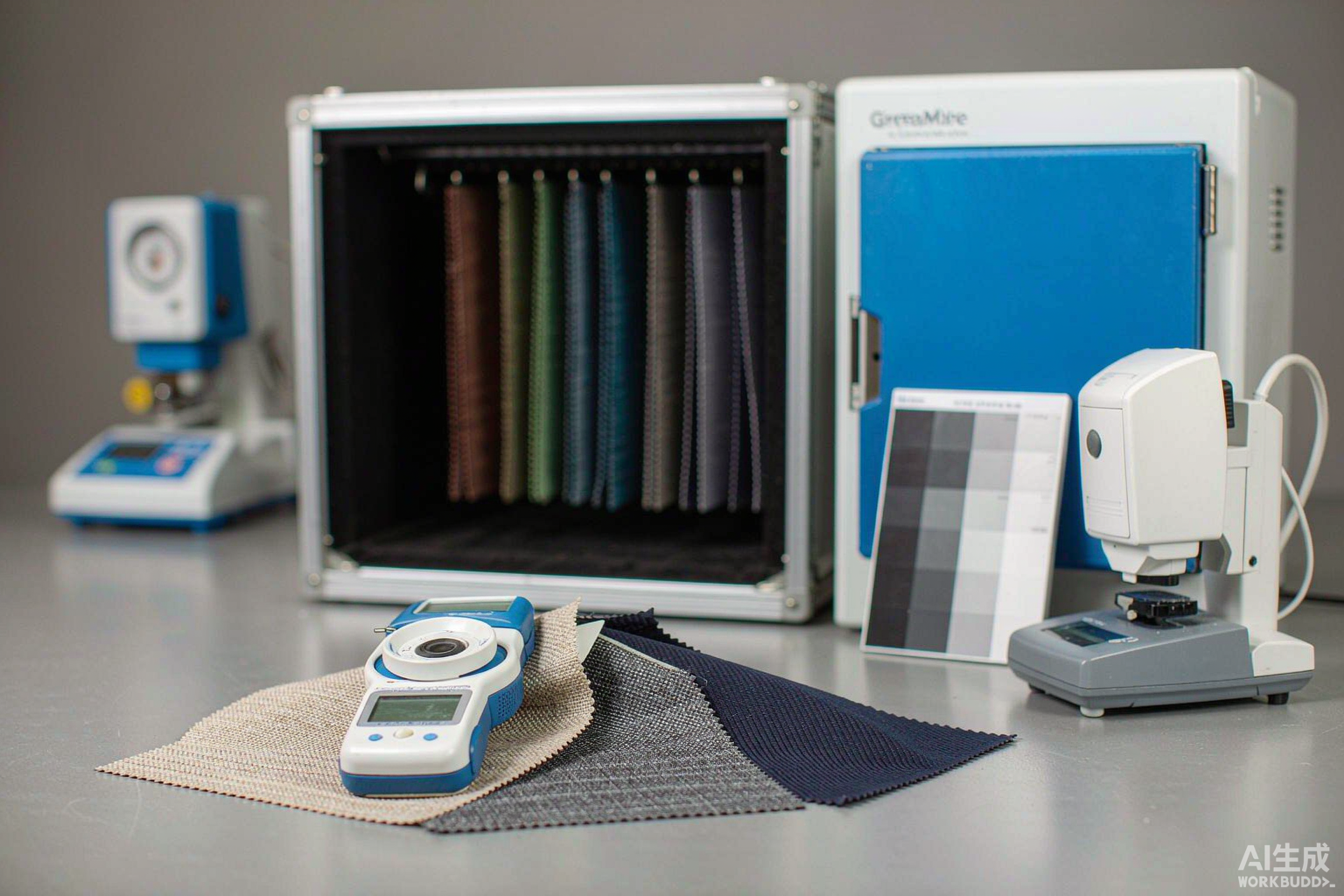
Roller blind fabric colour control guide, covering dye-lot variation, batch sampling, third-party testing and dispute handling.
In cross-border sourcing of soft furnishing textiles such as roller blind fabric, window screens and sofa fabric, colour difference and colour fastness remain the quality dispute categories with the highest claim rates. The reason is practical: fabric is a large-area installed product. If curtains, roller blinds and cushions in the same room come from different production batches, even a slight colour deviation is amplified by natural light into a difference the human eye detects immediately. End consumers tolerate colour inconsistency far less than they tolerate issues with dimensions or hand feel. Once a batch colour deviation occurs, overseas buyers face a chain reaction of full-batch returns, rework, schedule delays and brand reputation damage. Leveraging the complete dyeing and finishing infrastructure of the Keqiao textile cluster in Shaoxing, Wanbo provides overseas buyers who prioritise quality consistency with an integrated colour management solution covering sampling, dye-lot variation control and batch reference retention.
First, clarify several concepts that are easily confused. Colour difference (ΔE) refers to the colour deviation between two samples under a standard light source. The industry commonly reads CIELAB ΔE values using Datacolor or X-Rite spectrophotometers; the smaller the ΔE, the closer the match. Apparel fabric generally requires ΔE ≤ 1.0, while large-area home textile fabric should be held to ΔE ≤ 0.8, and engineering projects with multiple curtains in one space may require ΔE ≤ 0.5. Dye-lot variation specifically refers to colour differences between different dye vats, and it is the primary source of colour deviation. Colour fastness refers to the stability of colour against external influences, covering washing, rubbing (dry and wet), light, perspiration and water spotting. Of these, colour difference determines "does it look consistent", while colour fastness determines "does it stay consistent over time" — and the latter typically only surfaces six to twelve months into use, making claims far harder to pursue.
Roller shade fabric has particular characteristics in colour management that buyers should understand in advance. First, colour fluctuation introduced by coating processes. Shading fabric is typically a base cloth plus coating structure, and the thickness, uniformity and drying temperature of the coating — acrylic, PU or PVC — can subtly shift the final colour. The same base cloth may show visually distinguishable differences under different coating processes. Second, the coupling between shading rate and colour. Because blackout and semi-blackout fabrics contain different levels of white or black filler in the coating, the same colour code cannot achieve identical colour across different shading grades. Buyers must specify "which shading grade's standard sample governs the colour". Third, light fastness is a hard specification. Curtains and roller blinds are exposed long-term to intense light at windows, and for markets such as the Middle East, Australia and Southeast Asia where UV is strong, fabric with light fastness below grade 5 (per ISO 105-B02 blue scale) may fade visibly within a year. Fourth, colour differences caused by material variation. Polyester, recycled polyester (rPET), fibreglass and blended base cloths differ in dye uptake, and recycled materials may introduce base-tone deviation from raw material source fluctuation — deviation that is harder to control in volume production.
Controlling colour difference and fastness must start at the front end of the production process. Buyers can agree on the following control points with suppliers. First, standard sample confirmation. Before volume production, both parties use a physical colour card or approved swatch as the standard sample and record baseline ΔE and Lab values with a spectrophotometer, avoiding future disputes based on visual comparison alone. The standard sample should be prepared in duplicate, one copy held by each party and marked with the confirmation date. Second, fixed dye formula. Require suppliers to lock the dye formula and auxiliary brand for the confirmed order and not substitute them arbitrarily. If substitution is necessary, advance notice and a swatch from the new formula must be provided for approval. Third, batch dyeing and dye-lot number management. Arrange the same order in a single vat or adjacent vats where possible, and mark the dye-lot number on each fabric roll. When large orders require splitting across vats, pack and label by dye lot so the end installer can use the same lot within one space. Fourth, retained samples through the dyeing and finishing process. Require suppliers to retain swatches from the corresponding batch at the dyeing, coating and setting stages, with retention of no less than 12 months after order delivery, serving as the basis for later quality disputes.
The inspection stage is the practical checkpoint for quality control. Buyers should specify the following test items and standards. One, colour difference testing per GB/T 8424 or ISO 105-J03, measured with a spectrophotometer under D65 standard illuminant, with a ΔE report submitted for each batch. Two, colour fastness to rubbing per ISO 105-X12, with both dry and wet rubbing required to pass; dark fabrics warrant particular attention on wet rubbing ratings. Three, colour fastness to light per ISO 105-B02, with grade 5 or above recommended for outdoor or window-adjacent applications. Four, colour fastness to washing per ISO 105-C06, mandatory verification for washable roller blinds and sheer products. Five, fastness to water spotting and perspiration, applicable in high-frequency cleaning scenarios such as hotels and healthcare. Testing may be supported by third-party reports from suppliers (SGS, Intertek, BV) or independently re-tested by the buyer at the destination port or a third-party laboratory. Contracts should clearly state how non-conforming re-test results are determined and who bears the cost.
Packing, storage and transport also affect colour performance, and this part is frequently overlooked. First, light-blocking packaging. Fabric rolls should use light-blocking film or a black inner liner to prevent surface fading from sun exposure during long ocean voyages, especially for light and vivid colourways. Second, moisture protection. When fabric moisture content remains high after dyeing and finishing, colour migration can occur — particularly where dark polyester meets light colour blocks — so fabric must be properly conditioned and desiccants added. Third, avoid mixed-load contamination. Different colours and materials should be wrapped separately to prevent dark fabric from staining light fabric under high temperature and humidity. Fourth, segregated storage. Store fabric of the same batch and dye lot in separate zones with labels to avoid mixed-batch shipment, which would leave the end installer using different dye lots without knowing it.
Should a colour difference or fastness dispute actually arise, the formality of the handling process directly determines the scale of loss. The following path is recommended:
- Secure evidence on site: photograph under a standard light source (or midday natural light) immediately upon receipt, placing the standard sample beside the disputed fabric, and retain complete unboxing footage and packaging marks;
- Submit for testing and determination: commission a mutually recognised third-party laboratory (SGS, Intertek, BV) to test against the contracted standard, obtain a written report stating the test method and conclusion;
- Establish responsibility: determine whether the issue is production-side colour deviation, fading from moisture during transport, or improper end use — this directly determines who bears the cost;
- Tiered resolution options: for minor deviation (ΔE within acceptable range) negotiate a price allowance; for moderate deviation, request matching fabric to be produced or partial rework; for serious failure to match the standard sample, follow the contract's return and replacement terms;
- Retain data for feedback: record the batch number, ΔE data and problem stage in the supplier quality file as a basis for screening and price negotiation in the next order cycle.
Practical advice for overseas buyers: write colour management into your process rather than relying on goodwill. Standard sample first, batch sample retention, third-party testing, dye-lot management — get these four right and the vast majority of colour disputes will be resolved before shipment. It is also worth recognising that colour consistency essentially reflects a supplier's dyeing and finishing control capability, not merely its inspection capability. A factory that can consistently control dye-lot variation is usually also more reliable on lead time, packaging and customs compliance.
Leveraging the Keqiao cluster's dyeing and finishing infrastructure and its own colour management system, Wanbo provides overseas buyers with standard sample confirmation, dye-lot batch management, retained sampling and third-party testing coordination across roller shade fabric, window screens, sofa fabric and carpet fabric — keeping colour consistency within contracted limits from sampling through shipment and helping buyers reduce quality disputes and after-sales cost.