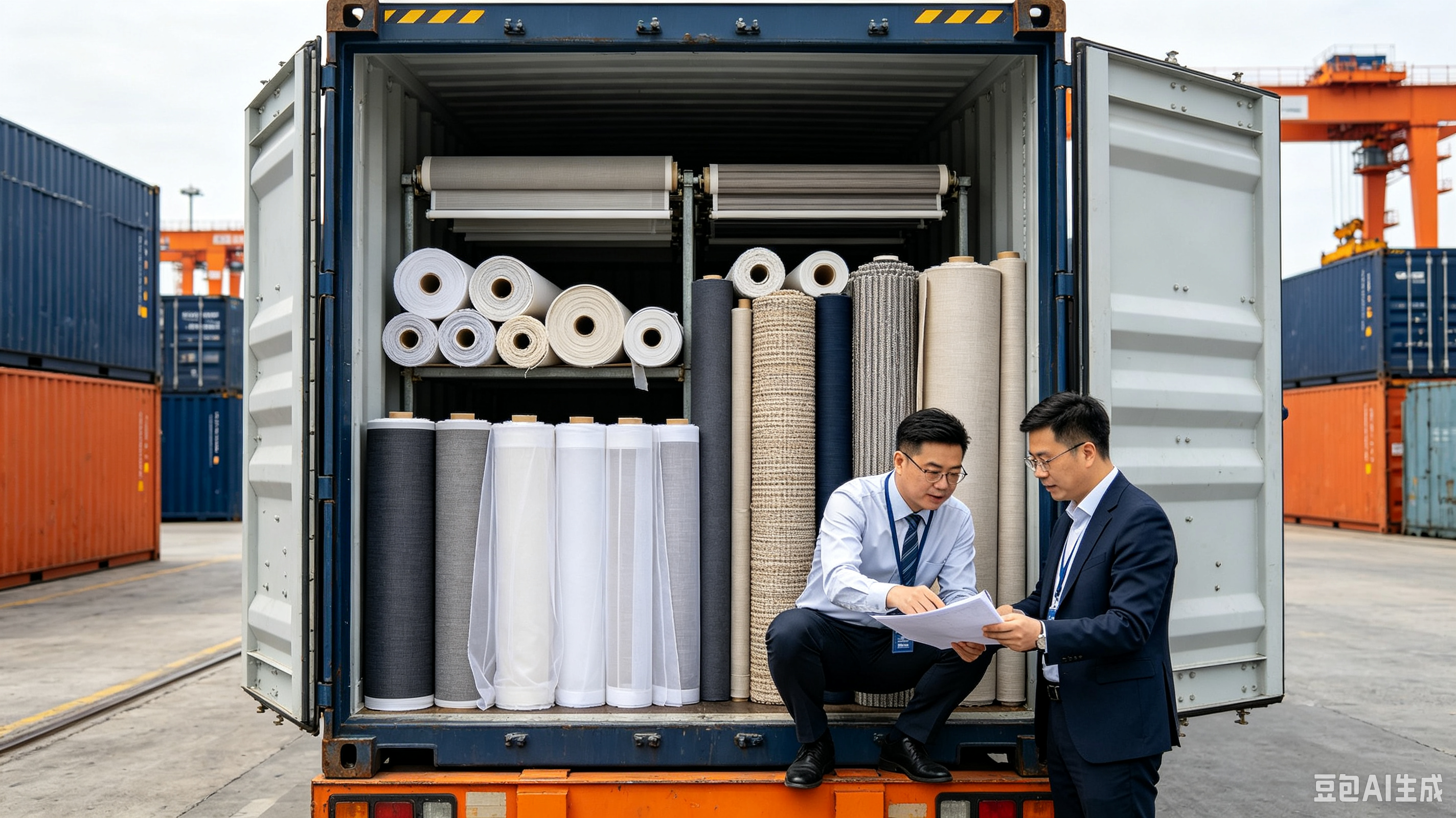
Rising ocean‑freight cost for roller blind fabrics. Covers trade‑fair sourcing, roll‑splitting, mixed loading, packaging and hot‑selling fabrics.
In 2026, surcharges in the ocean‑shipping market keep fluctuating. Unstable operations in the Red Sea and some transshipment ports cause ocean‑freight rates and war‑risk surcharges to continuously squeeze profit margins for overseas curtain importers. Many buyers only compare per‑metre purchasing prices of fabrics while ignoring differences in container‑loading efficiency brought by fabric roll diameters, packaging methods and mixed‑container matching. Even for the same 40HQ high‑cube container, actual loadable metres can vary by 20‑30% under different fabric and packaging solutions, directly pushing up allocated ocean‑logistics costs per metre. Coated roller‑shade fabrics, high‑shrinkage‑yarn window screens, jacquard upholstery fabrics and woven curtain fabrics fall into light‑bulk cargo. Roll‑up diameter, roll‑split length and outer‑packaging thickness are core factors determining container utilisation rates. Targeted at overseas buyers, this article explains container‑loading calculation methods, how to evaluate suppliers’ loading plans during trade‑fair sourcing, sea‑freight packaging optimisation measures and mixed‑container matching strategies. It also recommends hot‑selling fabrics with compact rolls favourable for higher container utilisation and delivers complete export solutions from Chinese original manufacturers.
From the shipping‑market perspective, a standard 40HQ high‑cube container features a theoretical volume of around 67 CBM. Home‑textile fabrics belong to light‑bulk cargo with no weight‑limit constraints; volume space becomes the primary bottleneck. Many suppliers deliver goods in extra‑large rolls by default. Excessively big single‑roll diameters waste massive inner‑container space. Some buyers place orders from multiple factories, resulting in inconsistent roll specifications across different suppliers and poor mixed‑container efficiency. Together with rerouting caused by geopolitical tensions, overall ocean‑freight rates remain high. Every 10‑percent drop in container utilisation triggers an obvious rise in unit logistics costs for fabrics. When shipping space is tight, wasted space equals direct procurement‑budget losses. Many buyers receive competitive fabric quotations at trade fairs, yet actual allocated shipping costs exceed expectations, largely because roll‑up and split‑roll parameters affecting container loading are overlooked.
Overseas buyers in the second half of the year can assess suppliers’ container‑loading and packaging supporting capabilities on‑site via professional trade fairs. Istanbul Eurasia Home Textiles Exhibition in October covers Central‑Eastern‑European and Middle‑Eastern markets. Numerous Chinese manufacturers of roller‑shade fabrics, upholstery fabrics and carpet base fabrics attend. Attendees can compare real‑world roll diameters of various fabrics and enquire about split‑roll schemes and standard roll lengths. November’s HTSE Home Textiles Show in New York targets North‑American markets, ideal for America‑focused importers. Buyers can verify roll dimensions and reference cubic‑metre loading data face‑to‑face, compare packaging craftsmanship among different factories and select original manufacturers capable of optimising split‑roll settings for higher container utilisation.
Five key verification points for container‑loading efficiency when vetting suppliers at exhibitions. First, obtain actual roll‑up parameters for target fabrics: standard roll metreage, roll diameter and single‑roll volume, instead of merely referring to theoretical figures. Second, confirm support for flexible roll‑splitting: whether single‑roll lengths can be adjusted according to container types to shrink roll diameters without damaging fabrics and boost loading quantities. Third, inspect factory‑standard outgoing packaging and check whether stretch‑film thickness is reasonable; overly thick packaging unnecessarily occupies container space. Fourth, enquire about practical multi‑item mixed‑container experience and layout plans for combining roller‑shade fabrics, window‑screen fabrics and upholstery fabrics inside one container. Fifth, request real‑site photos of previous shipments to confirm real loaded quantities and reject purely theoretical paper‑based values.
Practical export workflow covering loading optimisation and sea‑shipping for roller‑shade and soft‑furnishing fabrics for overseas buyers. At the pre‑order stage, write roll‑diameter and split‑roll‑length requirements into purchase confirmation documents. Calculate loadable metres in advance for 20GP and 40HQ container types. For fabric selection and roll‑splitting: within the scope permitted by downstream‑processing requirements, reasonably split large‑size rolls to shrink outer roll diameters and reduce inner‑container gaps. Do not blindly pursue 100‑metre extra‑large rolls for coated roller‑shade fabrics, as oversized roll diameters will severely reduce container utilisation. Mixed‑container strategy: for multi‑category orders from one single supplier, rationally combine coated roller‑shade fabrics, high‑shrinkage‑yarn window‑screen fabrics, lightweight woven fabrics and upholstery fabrics. Arrange hard and soft rolls alternately to fill vacant container space and amortise full‑container ocean‑freight expenses.
Packaging & shipment phase: apply moderate stretch‑film wrapping to guarantee moisture‑proof performance without adding excessive packaging thickness. Fit corner protectors at both ends of fabric rolls to prevent extrusion damage during ocean transit, and avoid over‑thick hard cardboard. Before shipment, require suppliers to provide container‑loading layout simulations for estimated actual loaded volume. Adopt dual‑port backup plans with Shanghai and Ningbo as alternatives to evade congestion‑related delays at a single port. Note that loading optimisation must never compromise product quality. Do not over‑compress fabric rolls for higher loading capacity, which may cause indentations on coated fabrics or wrinkles on window‑screen fabrics and trigger quality‑related issues upon arrival at destination ports.
Recommended foreign‑trade hot‑selling fabrics with neat rolls suitable for high‑efficiency container loading:
- Standard semi‑blackout coated roller‑shade fabric: compact grey‑fabric base, supports flexible roll‑splitting with controllable roll diameters. Mainstream choice for hotel and office engineering projects. Wanbo adjusts split‑roll schemes according to container types, supplies complete flame‑retardant versions and delivers stable bulk shipments.
- Solid‑colour high‑shrinkage‑yarn window‑screen fabric: lightweight texture with small roll‑up volume and high per‑container loaded metreage. Strong repurchase demand among home‑furnishing retailers across Europe, America and Australia, sufficient spot‑stock supply.
- Light‑weight ice‑crack jacquard upholstery fabric: medium weight with moderate roll diameters. Popular among soft‑furnishing retailers, supports flexible roll‑splitting and fits mixed‑container shipments together with roller‑shade fabrics.
- Solid‑colour plain‑woven curtain fabric: smooth fabric surface and tidy roll‑up shape. Large‑volume shipments to Middle‑Eastern and Southeast‑Asian markets with strong mixed‑container compatibility.
- Economical outdoor UV‑resistant woven base fabric: tight fabric weave and neat roll formation. Rising project demand across the Middle East and South Africa, convenient for container layout and loading.
As an original fabric‑export manufacturer, Wanbo’s product portfolio covers coated roller‑shade fabrics, high‑shrinkage‑yarn fabrics, ice‑crack jacquard fabrics, upholstery fabrics, window screens and carpet base fabrics. Well‑acquainted with roll‑diameter and volume parameters of various fabrics, Wanbo provides split‑roll optimisation suggestions tailored to buyers’ selected container types and designs layout plans for multi‑category mixed‑container loading. On the premise of zero fabric indentations and qualified moisture‑proof protection, Wanbo improves real‑world container utilisation rates and cuts per‑metre allocated ocean‑shipping costs. It also copes with shipping volatility on routes such as the Red Sea and guarantees efficient order delivery for overseas clients.