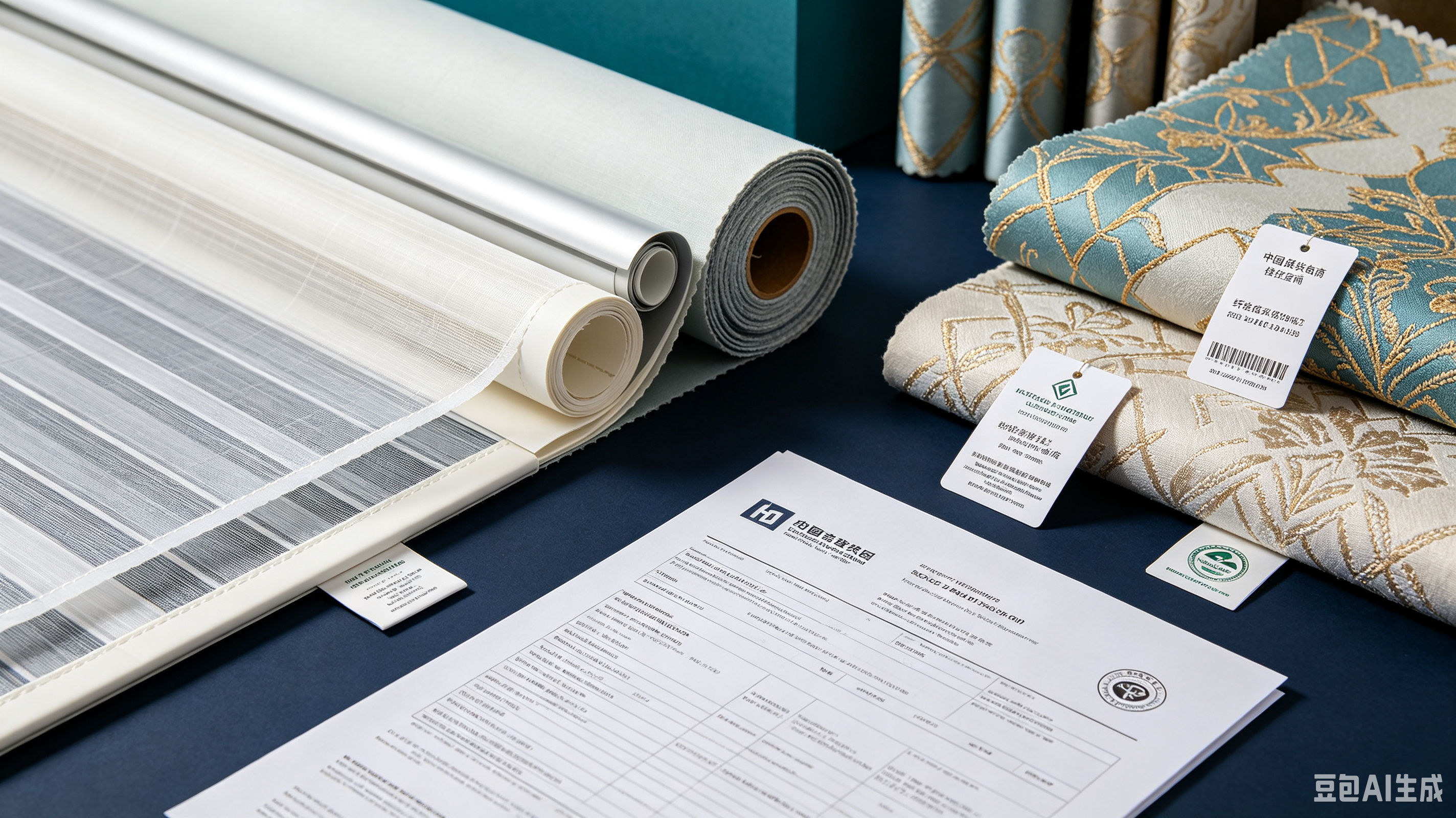
Stricter label rules cause customs detention for roller blind fabrics. Covers trade‑fair sourcing, label check, shipping risk control and compliant hot fabrics.
In 2026, textile labelling and trace‑ability regulations keep tightening across global regions. The EU GPSR (General Product Safety Regulation), Saudi SASO label controls and Australia ACCC consumer‑product supervision have successively been upgraded. Many overseas curtain importers sourcing coated roller‑shade fabrics, window screens and upholstery fabrics only focus on physical fabric performance while ignoring roll labels, shipping marks, fibre‑composition markings and multi‑language trace‑ability information. As a result, goods are detained at customs upon sea‑arrival, returned or subject to market‑product recalls. Coupled with Red‑Sea‑route disruptions and trans‑port‑port congestion, any return shipment will incur heavy economic losses from war‑risk surcharges, round‑trip ocean freight and ware‑housing penalties. Targeted at overseas buyers, this article breaks down mandatory labelling and trace‑ability requirements for different destination markets, explains how to verify suppliers’ labelling capabilities at trade fairs, provides customs‑clearance risk‑control solutions for sea shipments, recommends hot‑selling fabrics compliant for multi‑region export, and delivers practical complete solutions from Chinese fabric suppliers European U....
Multiple real‑world foreign‑trade cases have emerged in recent years: fabrics fully meet quality standards, yet containers get detained merely due to wrong fibre‑composition statements on roll labels, missing importer information or absence of official‑language texts for target countries. EU regulations demand clear percentage‑based fibre‑composition marking for roller‑shade and upholstery fabrics, plus EU‑based responsible‑party information, CE marking and relevant REACH declarations. Markets of Saudi Arabia and UAE in the Middle East enforce mandatory bilingual labels in Arabic and English, where origin, material composition and care instructions are indispensable. The Australian market does not accept direct reuse of EU CE documents and applies its local consumer‑goods labelling system. Many traders only supply bare fabrics without custom‑made compliant roll‑labels and outer‑carton shipping marks. When importers re‑apply labels after goods arrive, costs rise sharply; furthermore, re‑labelling upon arrival is not recognised in some countries and will directly trigger non‑compliance judgements.
On the shipping side, geopolitical conflicts force rerouting of certain sea lanes and extend container turnaround cycles. If containers are detained over labelling violations, port detention may last 30‑60 days, generating hefty terminal and container‑detention fees. Return‑to‑origin shipments bring additional war‑risk surcharges, and project‑based orders may also trigger liquidated damages for contract breach. Labelling and trace‑ability are not optional add‑ons but hard prerequisites for customs clearance and end‑market sales. Overseas buyers must evaluate label compliance during supplier screening instead of waiting until bulk‑goods production finishes.
Overseas buyers may leverage international exhibitions in the second half of the year to audit suppliers’ supporting capacity for compliant labelling. The autumn sub‑show of Frankfurt Heimtextil in October, the world’s largest home‑textile trade fair, hosts numerous original Chinese manufacturers of roller‑shade fabrics, upholstery fabrics and carpets. Buyers can inspect sample‑label styles on‑site and enquire about custom‑labelling services for different national requirements. November’s EXPO TEXTIL Mexico City, a Latin‑American textile exhibition targeting Central‑and‑South‑American markets, allows America‑focused buyers to meet fabric producers and verify lead‑times for roll‑labels, carton marks and trace‑ability documents face‑to‑face.
Five key compliance‑verification points when selecting suppliers at exhibitions. First, inspect physical roll‑sample labels on‑site to confirm the factory possesses in‑house roll‑label printing capacity rather than only supplying paper sample books. Second, for target fabrics, enquire whether labels can be customised in required languages and content according to EU, Middle‑Eastern and Australian market rules. Third, cross‑check supporting label‑related documents: fibre‑composition reports, flame‑retardant & eco‑certificates and certificates of origin, ensuring certificate model numbers exactly match those printed on fabric labels. Fourth, clarify whether label‑and‑mark‑making fees are included within quotations to avoid unexpected extra charges later. Fifth, request real‑life photos of past bulk‑order labels shipped to corresponding markets to validate verbal commitments.
Practical export workflow for roller‑shade & soft‑furnishing fabrics covering labelling, trace‑ability and sea‑shipping for overseas buyers. At order initiation, clearly inform suppliers of destination‑import countries, provide full local regulatory check‑lists for labelling, and embed labelling clauses within purchase contracts to divide liabilities for detention or return risks caused by label non‑compliance. During production, validate label drafts (text, composition, languages and trace‑ability data) in full before mass‑production commences. Pre‑shipment inspection: randomly pull fabric rolls to verify physical labels, cross‑reference outer‑carton shipping‑mark information, and guarantee full consistency among carton marks, roll labels and official documents.
For sea‑logistics, adopt a dual‑port shipment backup plan with flexible switching between Shanghai and Ningbo to mitigate single‑port operation delays. Insert label‑compliance liability clauses into sales contracts to contain losses from port detention. For packaging: apply moisture‑proof stretch‑film for coated roller‑shade fabrics and high‑shrinkage‑yarn window‑screen fabrics; laminate roll‑labels to prevent smudging or peeling caused by long‑distance ocean humidity which may compromise destination‑port inspections.
Hot‑selling foreign‑trade fabrics compatible with multi‑country label‑compliance requirements:
- Commercial full‑blackout coated roller‑shade fabric: woven‑base coating technology, widely used in hotel & office projects. Wanbo provides supporting EU CE and Middle‑Eastern flame‑retardant reports and supports multi‑language roll‑label customisation; strong demand for engineering orders.
- High‑shrinkage‑yarn sheer window‑screen fabric: mainstream home‑retail item with simple stable fibre composition convenient for labelling. High repurchase rates across European, American and Australian markets.
- Ice‑crack jacquard upholstery fabric: mature jacquard craft for soft‑furnishing retail with stable patterns. Compatible with country‑specific labels and trace‑ability documents, a popular choice among cross‑border retailers.
- Solid‑colour woven curtain fabric: simple composition, suitable for high‑volume shipments to Middle‑Eastern and Southeast‑Asian markets. Fast bilingual‑label customisation and sufficient spot‑stock availability.
- Outdoor UV‑resistant sun‑shade woven fabric for courtyards and outdoor roller‑shades. Growing project demand in the Middle East and South Africa, complete test reports and label services supplied together.
As an original fabric‑export manufacturer, Wanbo’s product portfolio covers coated roller‑shade fabrics, high‑shrinkage‑yarn fabrics, ice‑crack jacquard fabrics, upholstery fabrics, window screens and carpet base fabrics. Well‑versed in labelling‑and‑trace‑ability regulations including EU GPSR, Middle‑East SASO and Australia ACCC, Wanbo customises multi‑language roll‑labels and outer‑carton shipping‑marks for target markets, ensuring full data alignment among physical fabrics, labels and test documents. Experienced with Red‑Sea‑related shipping risks, Wanbo helps overseas buyers avoid detention and recall losses stemming from label non‑compliance and guarantees smooth customs clearance & delivery of orders.