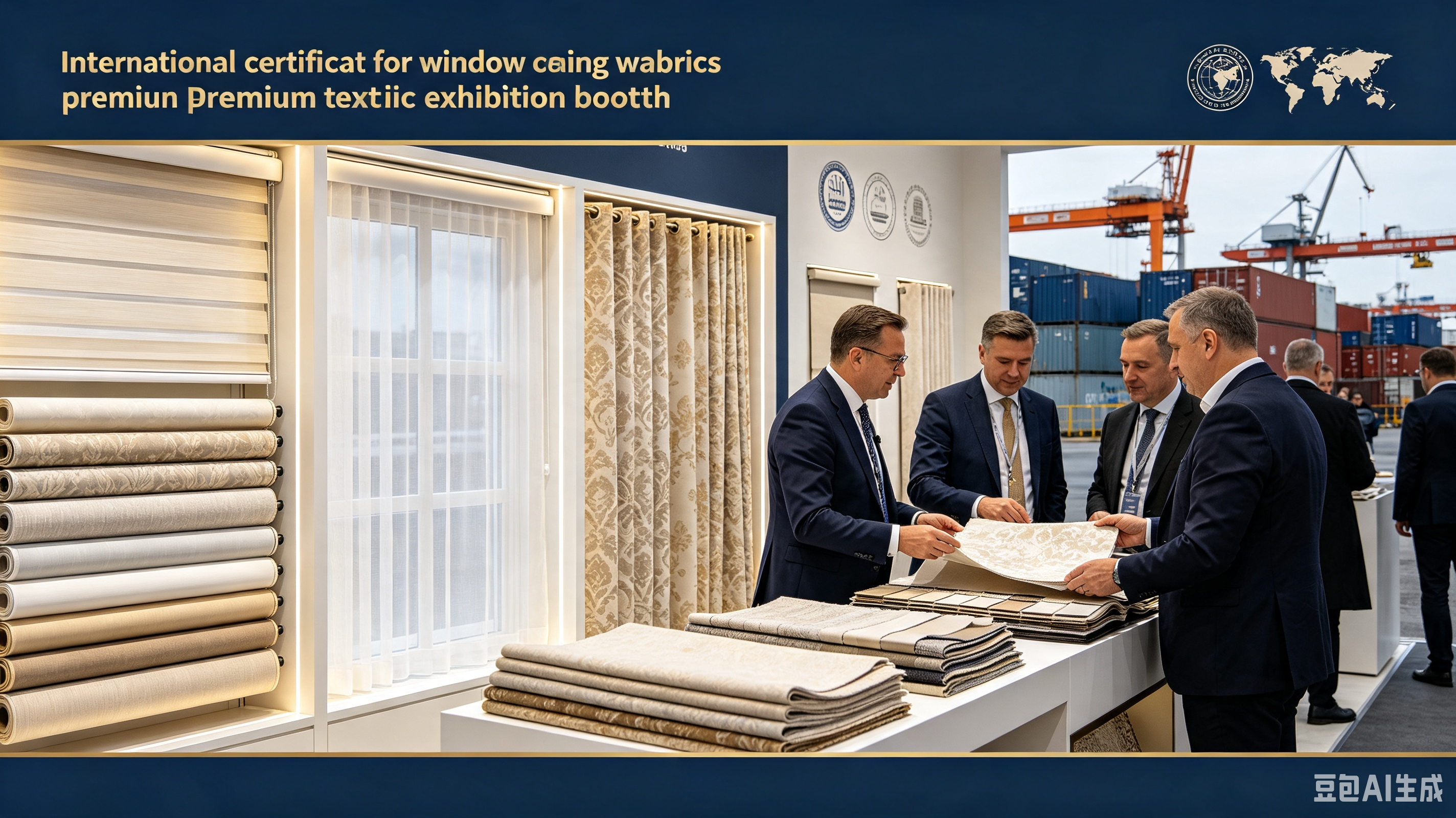
Break‑down of certifications for roller blind fabrics, sourcing pitfalls & eco‑friendly hot fabric recommendations.
roller shade fabrictextile import certificationfire retardant fabriceco‑friendly blind fabricwindow covering sourcing
In 2026, regulations on green‑building and eco‑friendly textiles are being rapidly implemented worldwide. New EU‑REACH rules, Middle‑Eastern safety standards for indoor construction materials and updated Australian flame‑retardant requirements have come into force one after another. Environmental certifications have evolved from a bonus advantage into a mandatory threshold for sun‑shade fabrics entering overseas markets. The latest industry survey shows that 63% of engineering purchasers across Europe and the Middle‑East treat complete compliance certificates as their primary screening requirement when selecting suppliers for roller‑blind and curtain fabrics. Fabrics lacking relevant certifications, even at low prices, will be excluded from tender lists for hotels, commercial real‑estate and government‑led green‑building projects.
Many overseas buyers discover shortages of flame‑retardant or hazardous‑substance test reports only after placing orders. Upon arrival at destination ports, goods may face customs delays, detention or even return‑shipment, resulting in heavy ocean‑freight and port‑storage losses. Shaoxing Wanbo Import and Export is deeply rooted in Keqiao’s textile industry. Our core‑product portfolio includes water‑based eco‑coated roller‑blind fabrics, high‑shrinkage‑yarn fabrics, jacquard woven fabrics, window gauzes and sofa‑upholstery fabrics. We can arrange a full range of international testing and certifications on demand. Targeting different overseas markets, this article breaks down mandatory‑certificate checklists for roller‑blind sun‑shade fabrics, common compliance pitfalls and top‑selling fabrics suitable for green‑building projects, delivering a practical compliance‑based procurement guide for overseas buyers.
I. Core Access‑Requirement Certifications for Sun‑Shade Fabrics in Key Target Markets
1. European‑Union Market
To gain smooth access to European home‑decoration, hotel and engineering channels, roller‑blind sun‑shade fabrics require two essential documents: OEKO‑TEX Standard 100, screening for heavy metals, allergenic dyes and other hazardous substances within textiles; and a REACH SVHC (Substances of Very High Concern) test‑report to eliminate chemical‑compliance risks. Commercial‑engineering projects additionally demand an EN 13773 flame‑retardant certificate to qualify for public‑building tenders such as office towers and hotels. Water‑based eco‑finished coated fabrics are strongly recommended. Oil‑based coatings tend to release harmful substances under high temperatures and are being rejected by a growing number of EU purchasers.
2. Middle‑Eastern Markets (Saudi Arabia, UAE, Qatar)
Due to intense year‑round solar radiation across the Middle‑East, two evaluation criteria stand out: light‑fastness test‑reports and flame‑retardant certifications. Saudi Vision 2030 has triggered massive construction of new hotels and commercial complexes. Engineering tenders generally require roller‑blind fabrics to achieve a colour‑fastness rating ≥ Grade 4 and meet local building‑fire‑safety standards. Many buyers overlook indoor‑air‑quality testing. Poor‑quality coatings may release unpleasant odours in hot, enclosed spaces, sharply increasing after‑sales complaints from end‑users.
3. Australia & New‑Zealand Markets
Fire‑safety standards AS/NZS 1530.2 and AS/NZS 1530.3 represent non‑negotiable entry requirements. Sun‑shade fabrics without these flame‑retardant reports cannot be deployed within public‑building projects and carry extremely high risks of customs inspection failure. Outdoor roller‑blind fabrics must also pass UV‑ageing‑resistance testing to withstand Australia’s strong ultraviolet climate conditions.
4. North‑American Market
NFPA 701 flame‑retardant testing for commercial‑grade textiles and California TB‑117 standards are frequently audited for US‑based projects. High‑end LEED‑certified green‑building projects prioritise sun‑shade fabrics carrying Greenguard eco‑certification, which helps buildings earn green‑rating credits.
II. Common Compliance Pitfalls Encountered by Overseas Purchasers
- Expired‑certificate trap: Some suppliers provide outdated test‑reports or reuse certificates issued to other factories. Before confirming orders, always verify factory‑name, fabric‑item code and test‑issue‑date printed on documents; most certifications remain valid for 1‑2 years.
- Passing sample, reformulated bulk‑goods risk: Eco‑friendly coatings are applied on lab‑submitted samples, yet low‑cost raw‑materials replace the original formula during mass‑production, leaving finished‑goods unable to pass import‑country inspections. It is recommended to add clauses into procurement contracts requiring bulk‑production fabrics to maintain the exact‑same formulation as tested samples, with optional retesting before shipment.
- Mismatched‑certificate categories: A flame‑retardant certificate issued for sofa‑upholstery fabric cannot validate compliance for roller‑blind sun‑shade material. Each fabric category and distinct coating formulation requires its own independent test‑report; cross‑category certifications are not recognised by customs authorities.
- Overlooking high‑temperature container risks for eco‑fabrics: Hot sealed‑container conditions during ocean transit can trigger volatile emissions from low‑grade coated textiles. Water‑based eco‑coated roller‑blind fabrics demonstrate superior thermal stability, lowering the probability of failing destination‑port random inspections.
III. Differences Between Integrated Source‑Factories and Intermediaries in Certification Services
Trading intermediaries can mostly supply certificates attached to ready‑stock fabrics and rarely support custom‑tailored special‑item testing for clients. Fully‑integrated source‑factories, by contrast, can purpose‑manufacture fabrics suited to buyers’ target‑export markets and arrange third‑party‑laboratory testing on request.
Shaoxing Wanbo Import and Export arranges targeted testing programmes covering OEKO‑TEX, flame‑retardancy, UV‑resistance, colour‑fastness and other indicators according to clients’ export‑destinations. Our product‑line includes coated roller‑blind fabrics, ice‑crack‑textured materials, jacquard‑woven textiles, window gauzes and sofa‑upholstery fabrics. Multiple items adopt water‑based eco‑coating technology, delivering excellent light‑blocking and thermal‑insulation performance while satisfying global green‑compliance requirements. Mixed‑container shipments combining multiple fabric‑types are available to reduce per‑unit ocean‑logistics costs.
IV. Top‑Selling Fabrics Recommended for Overseas Green‑Building Projects
- Water‑based full‑blackout coated roller‑blind fabric: Engineering best‑seller for EU and Middle‑Eastern markets, free from pungent odours. Its eco‑coating resists high temperatures without releasing hazardous substances and can be supplied with a complete suite of environmental and flame‑retardant reports.
- Recycled‑polyester semi‑blackout woven sun‑shade fabric: Trending eco‑friendly home‑decoration material across Europe, woven from recycled yarns. Well‑suited for LEED and BREEAM green‑building certifications, enabling higher profit margins.
- High‑light‑fastness jacquard roller‑blind fabric: Preferred material for outdoor and villa‑construction projects throughout the Middle‑East and North‑Africa, resisting long‑term sun‑fading and meeting colour‑fastness specifications.
- Eco‑friendly waterproof sofa‑upholstery fabric: Ideal for apartment‑soft‑furnishing packages. Can be consolidated in one container alongside roller‑blind fabrics, expanding one‑stop‑sourcing ranges and improving container‑loading efficiency.
- High‑shrinkage plain‑colour roller‑blind fabric: High‑volume retail‑channel product, featuring smooth, stable fabric quality and manageable testing‑expenses, perfectly suited to large‑scale retail‑focused orders.
Conclusion
Within the 2026 international sun‑shade‑fabric trade landscape, price‑driven competition has shifted toward compliance‑driven competition. When sourcing suppliers for roller‑blind, curtain and sofa‑upholstery textiles, overseas purchasers should not verify certifications only once cargo reaches destination‑ports. Clarify required‑certificate checklists at the initial inquiry‑stage and embed compliance terms into purchase contracts. Prioritise cooperating with source‑factories capable of custom‑testing arrangements and water‑based eco‑coating processes. This strategy avoids severe financial losses caused by customs detention and return‑shipment, while enabling buyers to successfully secure a growing volume of global green‑building soft‑furnishing project‑orders.