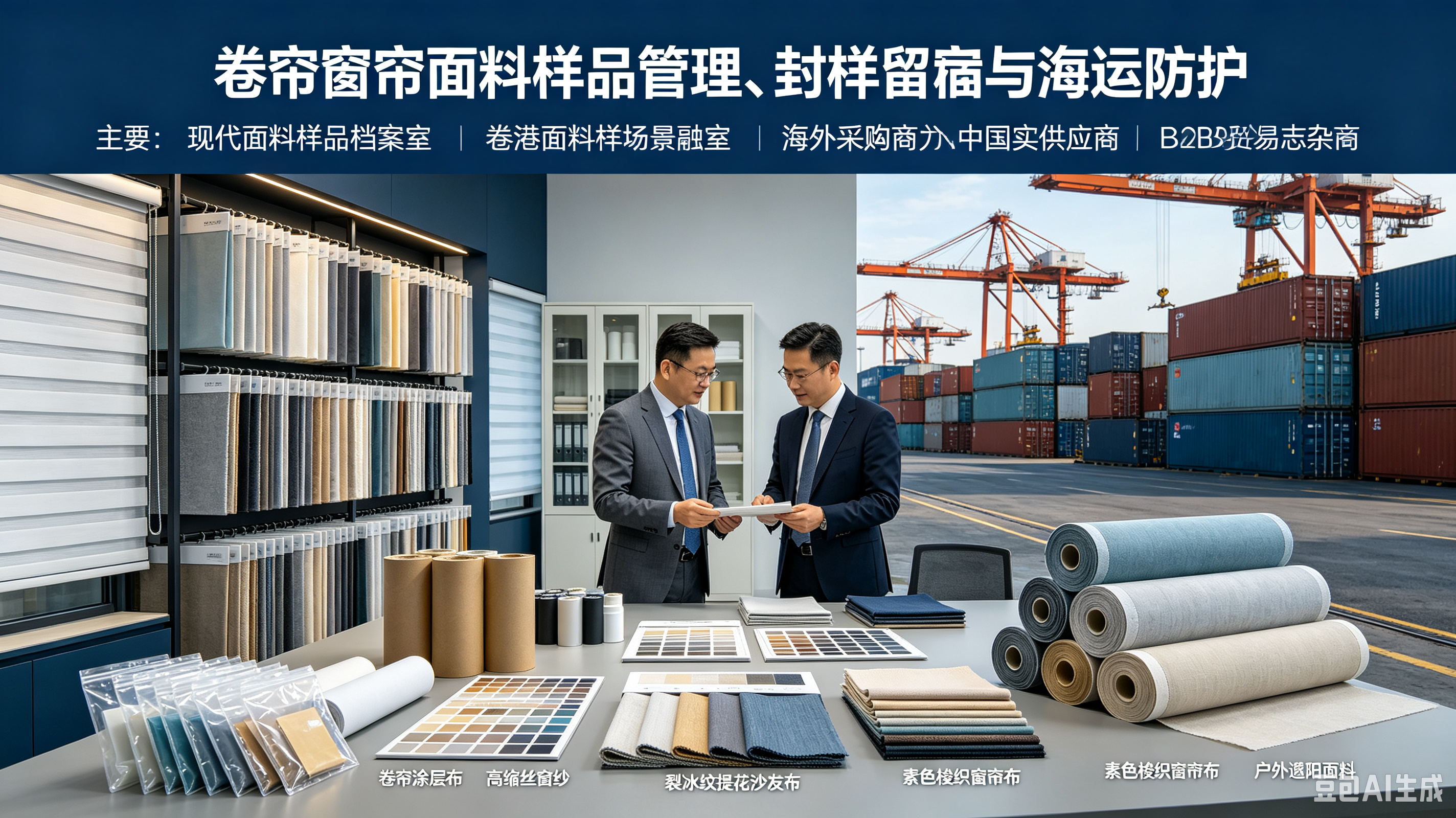
Fabric sample sealing and retention, trade fair sample selection, ocean sample packing, avoid bulk goods inconsistency disputes.
In the 2026 soft furnishing foreign trade industry, inconsistency between samples and bulk goods remains the top source of quality disputes troubling overseas buyers. Many importers select coated roller fabrics, high‑shrinkage yarn window screens and ice‑pattern jacquard upholstery fabric samples at trade fairs, place orders after confirming colour, shading performance and hand feel, yet receive bulk fabrics with massive deviations in fabric weight, texture and coating effect compared to samples, triggering rework, rejection and compensation claims. Non‑standard sample management, missing retained samples and damage during sample delivery constitute the core causes. Meanwhile, during international courier and sea sample shipments, wrinkles, stains and rolled edges on fabric swatches will directly affect clients’ judgment of factory capacity. Combining practical sample selection at trade fairs, official sample sealing specifications and logistics protection tips for international sample delivery, together with Wanbo’s best‑selling fabric recommendations, this article helps overseas buyers build a standardized fabric sample control procedure.
Common sample risks encountered by overseas buyers: premium exclusive samples displayed at fairs while yarns and coating formulas are altered for mass production; only paper colour cards kept without complete sealed fabric rolls for comparison in disputes; samples delivered by ordinary courier without moisture‑proof protection, resulting in dampness and deformation during transit; repeated orders sharing outdated samples without separate retained swatches for different batches; some suppliers refusing third‑party notarized sample sealing, leaving no valid arbitration evidence once trade disputes arise.
Logistics pain points under different sample delivery scenarios: small colour card swatches sent by international courier tend to develop folds and indentations; several‑metre large fabric rolls shipped via LCL sea freight risk extrusion when mixed with heavy cargo; long transit times on routes such as the Red Sea cause mould growth on samples due to container moisture; incomplete documentation for samples incurs high customs clearance fees and detention charges at destination ports.
International home textile fairs in the second half of the year serve as vital channels to inspect on‑site sample management capabilities. At the October Keqiao Autumn Home Textiles Fair and November Heimtextil Frankfurt, when contacting suppliers, buyers shall evaluate factory sample archive management besides checking colour and hand feel. Five verification points to assess supplier sample management competence at exhibitions. First, confirm whether the factory maintains an independent sample archive with long‑term classified storage by order number, fabric item and production batch. Second, inspect the sealing procedure on site; verify mutually signed sealed samples by buyer and seller, with preserved physical swatches plus visual records. Third, ensure consistent performance among mini swatches, medium samples and full‑size samples, and confirm exhibition display samples are not specially manufactured prototypes. Fourth, enquire about sample packaging solutions; confirm long and short fabric rolls are protected by dedicated paper tubes and sealed with moisture‑proof film. Fifth, clarify the sample revision mechanism: whenever buyers adjust fabric weight, coating or colour, retained samples shall be updated instead of reusing outdated versions.
Practical procedures for fabric sample control, sealing and sample delivery logistics. At the pre‑order stage after fabric selection at trade fairs, buyers must obtain physical fabric swatches of no less than 0.5 metres alongside colour cards; both parties seal samples separately and retain one set each. The contract shall stipulate that bulk fabrics must match sealed samples in weight, shading property, hand feel and colour fastness, with clear deviation tolerance and quality liability clauses defined.
During production, retain pre‑production samples, confirmation samples and shipping samples. Collect shipping samples before despatching each mass production batch, to be sent with goods or separately to buyers. Protection for sample transportation: roll long fabric samples onto rigid paper tubes to avoid folding creases; pack colour card sets inside sealed moisture‑proof bags; prepare separate proforma invoices marked “samples of no commercial value” for international shipments to reduce destination port tax risks. For large sample consignments by sea, pack fabric rolls individually, avoid mixing with heavy cargo and prioritise direct shipping routes to minimise transit damage.
Recommended foreign trade best‑selling fabrics (Wanbo)
- Blackout Coated Roller Fabric: core fabric for engineering projects. Colour cards, 0.5m confirmation swatches and full‑roll shipping samples available. Uniform coating and high consistency between bulk goods and samples, in strong demand for Middle Eastern and European engineering projects.
- High‑Shrinkage Yarn Sheer Window Screen Fabric: translucent texture, lightweight for sampling. Paper tube rolled delivery prevents creases, popular within residential retail channels.
- Ice‑Pattern Jacquard Upholstery Fabric: three‑dimensional textured material; samples intuitively display pattern effects, a hit for boutique resorts and high‑end residential interior decoration.
- Solid Colour Woven Curtain Fabric: foundational fabric series with abundant colour options. Fast small‑batch sampling, suitable for recurring replenishment orders.
- Outdoor UV‑Resistant Woven Sunshade Fabric: outdoor engineering textile. Simple on‑site UV resistance tests can be conducted on samples, widely adopted for courtyard projects in Australia and the Middle East.
Wanbo operates a standardised sample archive, specialising in roller fabrics, window screens, upholstery fabrics and outdoor woven sunshade textiles. We implement standardised full‑set sealing procedures covering colour cards, confirmation samples and bulk shipping samples, with all swatches independently filed and preserved long‑term. International samples are delivered in paper tube moisture‑proof packaging to guarantee intact arrival for overseas buyers. We support rapid sampling and customised fabric parameter adjustment, ensuring consistency between mass production goods and confirmed samples, lowering trade disputes caused by discrepancies between samples and bulk shipments and enabling stable soft furnishing procurement for overseas importers.