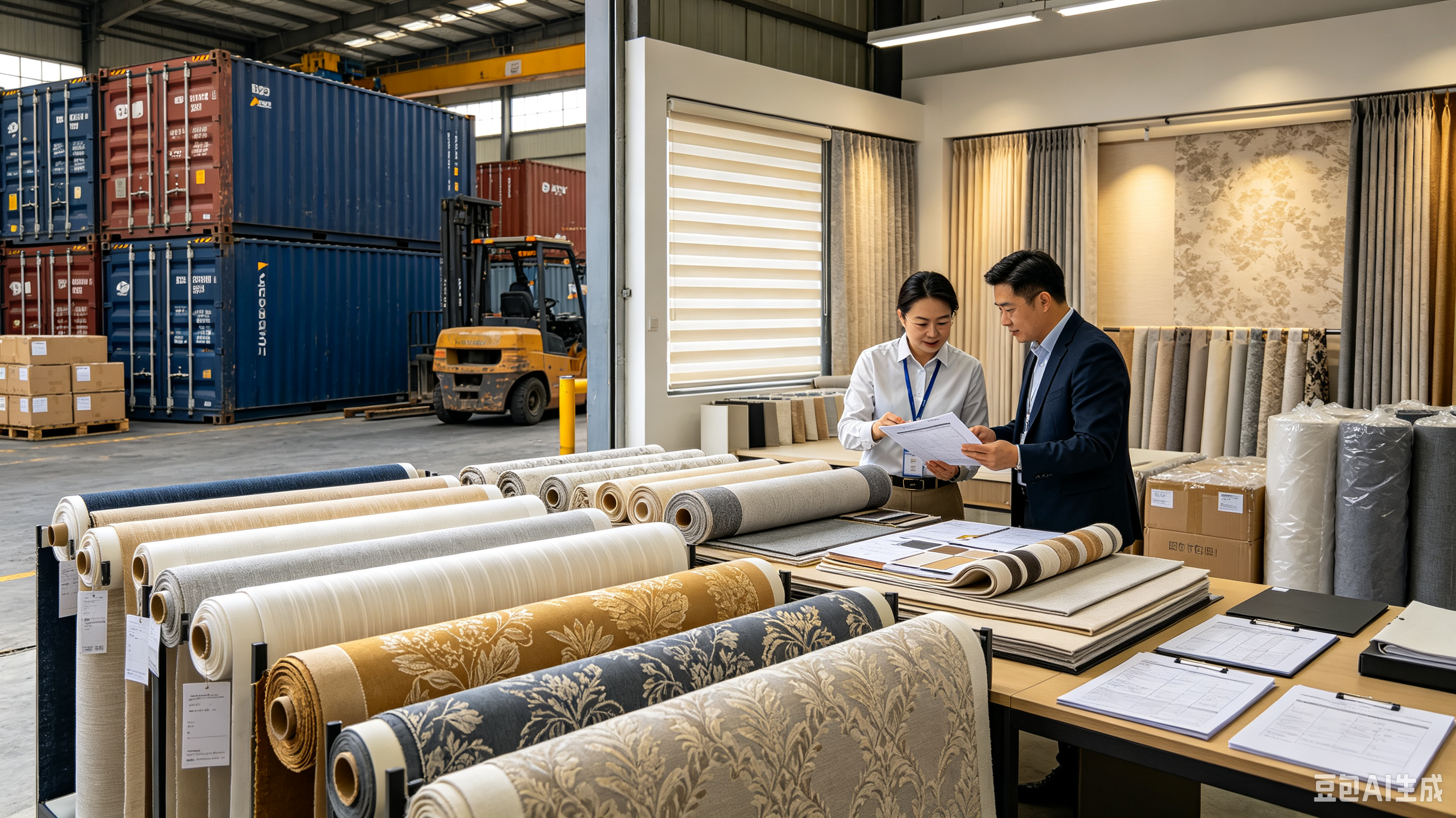
Small‑batch buyers face MOQ & LCL risks. Covers trade‑fair sourcing, flexible trial‑order strategy, shipping avoidance and hot‑selling fabrics.
In the 2026 overseas home‑textile market, small‑and‑medium soft‑furnishing distributors, cross‑border DTC brands and local home‑decoration stores generally prefer small‑batch & frequent replenishment orders to reduce inventory‑overstock risks. Most traditional original factories impose high minimum‑order‑quantity (MOQ) requirements for single‑colour items, creating high barriers for custom‑made coated roller‑shade fabrics, ice‑crack jacquard fabrics and woven upholstery fabrics. Coupled with disruptions on Red‑Sea shipping routes, issues such as LCL (Less‑than‑Container‑Load) cargo loss, joint‑container detention and hidden destination‑port surcharges occur frequently, further amplifying logistics uncertainties for small‑order purchases. Many overseas buyers face a dilemma: large‑volume stock‑up ties up substantial capital, while small‑batch sourcing encounters obstacles including high MOQs, unstable quality and delayed deliveries. Targeted at overseas small‑and‑medium‑sized buyers, this article analyses flexible trial‑order procurement strategies, key checkpoints for screening small‑order‑capable factories at trade fairs, risk‑avoidance measures for LCL shipping and sea‑air multimodal transport, recommends hot‑selling fabrics suitable for trial‑order modes, and delivers complete practical solutions from Chinese fabric suppliers.
Current industry pain points: constrained by dye‑vat and loom production scheduling, many weaving factories set single‑colour MOQs of 800‑1500 metres for custom fabrics, making large‑volume direct orders difficult for new‑entrant importers. Blindly bulk‑stocking goods will severely tie up capital once local fashion trends shift and roller‑shade or upholstery‑fabric inventory becomes unsaleable. Sourcing small quantities solely from traders leads to unstable fabric batch performance, missing test certificates and slow after‑sales response. On the logistics side, most small orders are shipped via LCL. LCL goods are loaded inside one container together with cargo from dozens of other shippers. If other goods inside the container have declaration violations, your compliant fabrics may still get detained collaterally. Multiple loading‑unloading operations easily cause roll extrusion damage and coating scratches, together with lengthy and complicated claim‑settlement procedures. LCL shipments via Red‑Sea lanes also incur war‑risk surcharges and high destination‑port devanning fees, driving up unit logistics costs for small orders.
Overseas buyers in the second half of the year can identify original suppliers supporting flexible small‑batch trial‑production through international trade fairs. November’s Frankfurt Heimtextil, the world‑largest home‑textile trade fair, features Chinese factories displaying stock fabrics and small‑batch customisation solutions, where buyers may discuss MOQ policies on‑site. October’s Keqiao Autumn Home Textiles Fair gathers local manufacturers from the Keqiao industrial cluster. Many factories have dedicated stock‑inventory production lines for overseas small‑and‑medium buyers. Attendees may inspect physical stock rolls and consult mixed‑colour combined‑order rules, to distinguish high‑threshold large‑order‑oriented factories from flexible‑supply manufacturers.
Five key verification points when screening suppliers capable of small‑batch trial‑orders at trade fairs. First, clearly differentiate stock‑inventory fabrics from custom fabrics requiring re‑dyeing & re‑weaving. Enquire about minimum order metres for stock items and MOQ for custom‑developed styles. Second, confirm mixed‑colour combined‑order policies: whether multiple colours and categories can be merged to lower single‑colour MOQ, and whether roller‑shade fabrics, window‑screens and upholstery fabrics can be scheduled together. Third, verify quality‑control standards for small orders: whether small‑batch productions adopt the same grey fabrics, dyestuffs and coating formulas as bulk orders, to prevent quality downgrades for small lots. Fourth, learn about logistics solutions for small‑order shipments: protective packaging for LCL cargo, cargo‑insurance options and alternative sea‑air multimodal‑transport routes. Fifth, request shipment records of existing small‑order clients to validate real‑world performance and filter out factories that only prioritise large orders and indefinitely postpone small‑order lead‑times despite verbal promises.
Practical procurement & sea‑shipping workflow of flexible small‑batch trial‑orders for overseas small‑and‑medium buyers. From the order‑strategy perspective: prioritise stock fabrics for new‑product trial sales to lower MOQ barriers. If custom colours or patterns are required, adopt multi‑colour multi‑category combined orders to raise total ordered metres, satisfy factory production‑scheduling requirements and reduce purchasing pressure per individual item. At the sampling stage, physical confirmation samples must be obtained and sealed before trial‑order placement. Subsequent small‑batch bulk goods must strictly match sealed samples to avoid raw‑material substitution for small‑lot production.
Logistics risk mitigation. Two preferred combined schemes for small‑orders. For low‑value stock small‑orders: evaluate cargo value, exercise caution with standard LCL service, purchase sufficient cargo insurance, apply reinforced corner protectors and moisture‑proof lamination for fabric rolls to avoid extrusion and scratching. For higher‑value trial‑orders: prioritise sea‑air multimodal transport to balance lead‑time and cost, and evade collateral‑detention risks associated with pure LCL shipments. If LCL is unavoidable, obtain full breakdowns of all destination‑port charges in advance to guard against hidden surcharges. Logistics contingency plan: keep Shanghai and Ningbo as alternative departure ports; reserve sufficient time buffers for Red‑Sea‑bound shipments. Fully collect test reports and certificates of origin. Small orders shall also be furnished with complete customs‑clearance documents; never simplify paperwork merely because of low order volume. After market validation via trial orders, shift to full‑container large‑volume replenishment, balancing market‑test risks and procurement costs.
Recommended foreign‑trade hot‑selling fabrics for small‑batch trial‑orders:
- In‑stock standard blackout coated roller‑shade fabric. Wanbo maintains multi‑colour stock inventory, supports small‑batch ordering with optional flame‑retardant grades. Ideal for quick trial sales by retail stores, featuring stable batch‑to‑batch performance and good sea‑transport damage resistance.
- Solid‑colour high‑shrinkage‑yarn window‑screen fabric. Ample stock available with consistent drape and light‑transmittance. Frequently trialled by home‑decoration stores across Europe, America and Australia; fast sampling and replenishment turnaround.
- In‑stock classic ice‑crack jacquard upholstery fabric. Mature fixed patterns with no need for new weaving mould development. Suitable for small‑and‑medium importers testing high‑end soft‑furnishing markets. Small‑order quality remains consistent with bulk‑production lots.
- In‑stock solid‑colour plain‑woven curtain‑fabric series. Rich colour portfolio, strong demand for small‑and‑medium orders from the Middle East and Southeast Asia. Supports combined‑order purchasing across multiple colours.
- In‑stock economical outdoor UV‑resistant sun‑shade woven fabric. Preferred for outdoor‑project trial orders in the Middle East and South Africa. Complete UV‑resistance test reports supplied together with goods.
As an original fabric‑export enterprise based in Keqiao, Wanbo’s product portfolio covers coated roller‑shade fabrics, high‑shrinkage‑yarn fabrics, ice‑crack jacquard fabrics, upholstery fabrics, window screens and carpet base fabrics. We maintain separate stock‑inventory production lines and custom‑production lines. Ready‑stock fabrics support flexible small‑batch trial‑orders; multi‑category multi‑colour combined‑order options help lower MOQ thresholds. Small‑lot and bulk productions follow identical quality‑control standards. Full sets of sealed‑sample documentation, test certificates and certificates of origin are provided. Protective LCL packaging, cargo‑insurance advice and alternative sea‑air multimodal‑transport logistics plans are also available. Wanbo helps overseas small‑and‑medium buyers conduct market testing via small orders, evade inventory overstock and various LCL‑shipping risks, and enables seamless transition to full‑container large‑volume exports after successful trial‑sales validation.