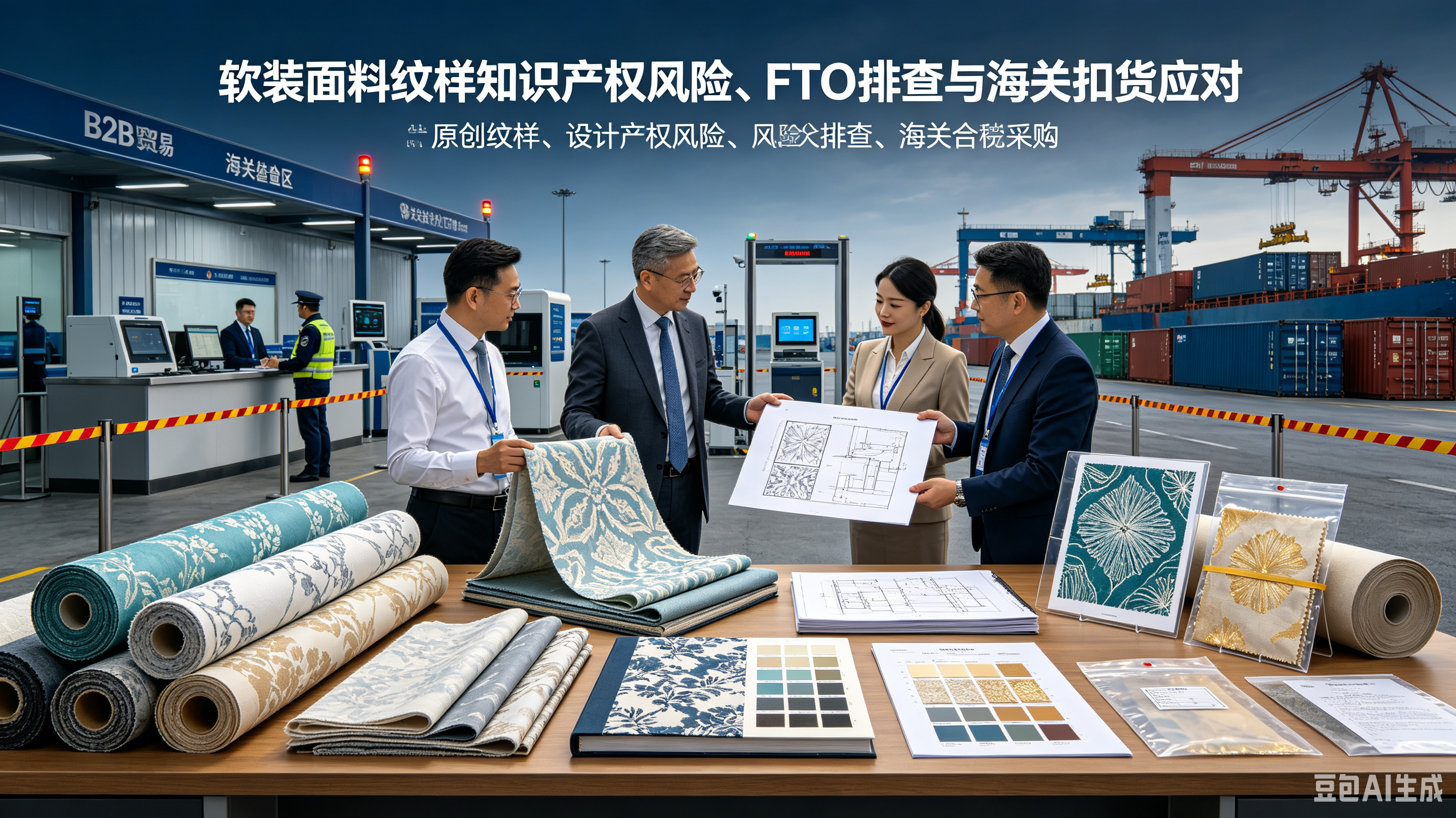
Fabric pattern IP risk check, trade fair supplier design verification, FTO search, ocean detention handling and compliant textiles.
In 2026, customs authorities across Europe, America and the Middle East have intensified inspections on industrial design copyright and design patents for textiles. Jacquard roller fabrics, ice‑textured fabrics, printed upholstery fabrics and distinctive sheer window screens stand out as high‑risk categories for infringement. Many overseas buyers place orders for fabrics with popular patterns after viewing them at international trade fairs, only to face customs detention after shipment and temporary injunctions initiated by brand owners. Importers suffer multiple losses including fines, goods destruction and sales channel blockage. Numerous buyers hold the misconception that “minor alterations to patterns avoid infringement”. In reality, fabrics with textures, jacquard structures or printed patterns that bear substantial similarity to valid overseas design patents and copyrighted works carry infringement risks. Coupled with higher inspection frequencies on Red Sea shipping routes and prolonged sea detention periods, full container loads may be detained for a long time once intellectual property disputes arise, incurring enormous container detention and warehousing costs. This article covers FTO freedom‑to‑operate screening for fabric procurement, on‑site supplier qualification verification at trade fairs, and emergency response measures for goods detained due to infringement during sea transport. Recommendations for Wanbo’s legally compliant fabrics with original patterns are also included to help overseas buyers evade legal risks associated with intellectual property in soft furnishing fabric imports.
Typical intellectual property risk scenarios in soft furnishing fabric foreign trade: suppliers directly replicate copyrighted textures and patterns created by overseas designers and sell products after slightly adjusting colours; popular replicated ice‑texture and jacquard fabrics are displayed at exhibitions without disclosing design ownership to buyers; during custom fabric cooperation, written agreements on pattern copyright ownership are absent, allowing suppliers to resell identical patterns to third parties; buyers receive infringing fabrics which get intercepted by customs upon export or destination clearance; importers distribute infringing fabrics unknowingly, drawing terminal retailers into litigation with platform delisting and heavy compensation claims as consequences. Under overseas legal frameworks, unaware procurement cannot serve as a defence against liability. As consignees, importers bear primary legal responsibility.
The two major international home textile exhibitions in the second half of the year form the first line of defence against intellectual property risks. At the October Keqiao Autumn Home Textiles Fair, domestic fabric manufacturers showcase new patterns for roller fabrics, upholstery fabrics and sheer screens. The November Heimtextil Frankfurt exhibition is a key venue monitored closely by overseas brand rights holders for rights enforcement, with repeated incidents including on‑site exhibit seizure and booth complaints. Buyers must establish intellectual property verification awareness during sample selection at fairs and refrain from placing orders simply because they favour trending patterns.
Five core verification points to select suppliers with original designs and compliant intellectual property at trade fairs. First, enquire about pattern origins and distinguish in‑house original designs, licensed patterns and replicated copies; request suppliers to provide design drafts and creation date evidence. Second, for popular textured, jacquard and printed fabrics, confirm suppliers can support FTO freedom‑to‑operate searches targeting destination markets. Third, verify registered design patents and copyright certificates valid in relevant regions and confirm the rights remain in force. Fourth, during order negotiations, confirm suppliers are willing to sign non‑infringement guarantee agreements which specify that suppliers shall assume corresponding liabilities for detention and fines caused by pattern infringement. Fifth, for newly developed custom fabrics, document in writing the transfer of pattern copyright and design patents to buyers to prevent suppliers from reselling fabrics featuring identical patterns to others.
Practical compliance, order and shipping solutions for intellectual property when purchasing overseas roller soft furnishing fabrics. At the pre‑order stage, conduct FTO risk screening for target ice jacquard, special coated textured and printed fabrics. Prioritize fabrics with original patterns and avoid widely circulated replicated trending designs. Do not rely on verbal “safe and risk‑free” assurances from suppliers; retain written intellectual property commitment documents for key orders.
Add special intellectual property clauses to commercial contracts: clarify pattern ownership and liability allocation for infringement, specify the responsible parties for detention charges, fines and legal fees arising from customs detention and lawsuits; stipulate that suppliers are obligated to promptly provide supporting evidence for defence and arrange goods replacement if fabrics are suspected of infringement.
Production and shipment phase: suppliers archive original pattern design files while buyers back up samples and communication records. Recheck commodity descriptions and fabric specifications before sea shipment to prevent accidental loading of infringing fabrics. Once customs intellectual property detention occurs at loading or destination ports, submit written explanations within statutory time limits, contact suppliers for original design proof, and actively negotiate with rights holders to shorten detention duration and reduce extra losses.
Recommended compliant foreign trade best‑selling fabrics with original patterns (Wanbo)
- Original Textured Blackout Coated Roller Fabric: Independently developed surface texture with no conflicts with existing design patents. Suitable for both commercial and residential projects, with stable shipments for roller blind projects across Europe and the Middle East.
- Original High‑Shrinkage Yarn Textured Sheer Fabric: Exclusive woven texture design with translucent appearance, popular in residential retail channels. Complete traceable design documentation available.
- Original Ice‑Texture Jacquard Upholstery Fabric: Independently optimised pattern structure, distinct from generic replicated versions on the market. Mainstream fabric for boutique resort and hotel interior decoration; minor pattern customisation supported.
- Minimalist Original Solid Colour Woven Curtain Fabric: Plain base fabric free of graphic copyright risks, ideal for large framework orders with stable lead times.
- Original Textured UV‑Resistant Outdoor Woven Sunshade Fabric: Designed for outdoor courtyard projects with proprietary surface texture, helping avoid design patent disputes for outdoor textiles.
Wanbo focuses on exporting functional soft furnishing fabrics from Keqiao, specialising in roller coated fabrics, high‑shrinkage yarn sheers, jacquard upholstery fabrics and outdoor sunshade textiles featuring predominantly self‑developed original patterns. Full design archives are preserved for all new patterns, and we support customers with FTO risk screening. Intellectual property compliance guarantee contracts can be signed to clearly define liabilities for infringement. Well versed in domestic and overseas customs intellectual property inspection regulations for textiles, we assist buyers in archiving shipment documents and sample materials, lowering risks of cargo detention over pattern issues during long‑distance sea transport and enabling compliant import operations of curtain and soft furnishing fabrics for overseas buyers.