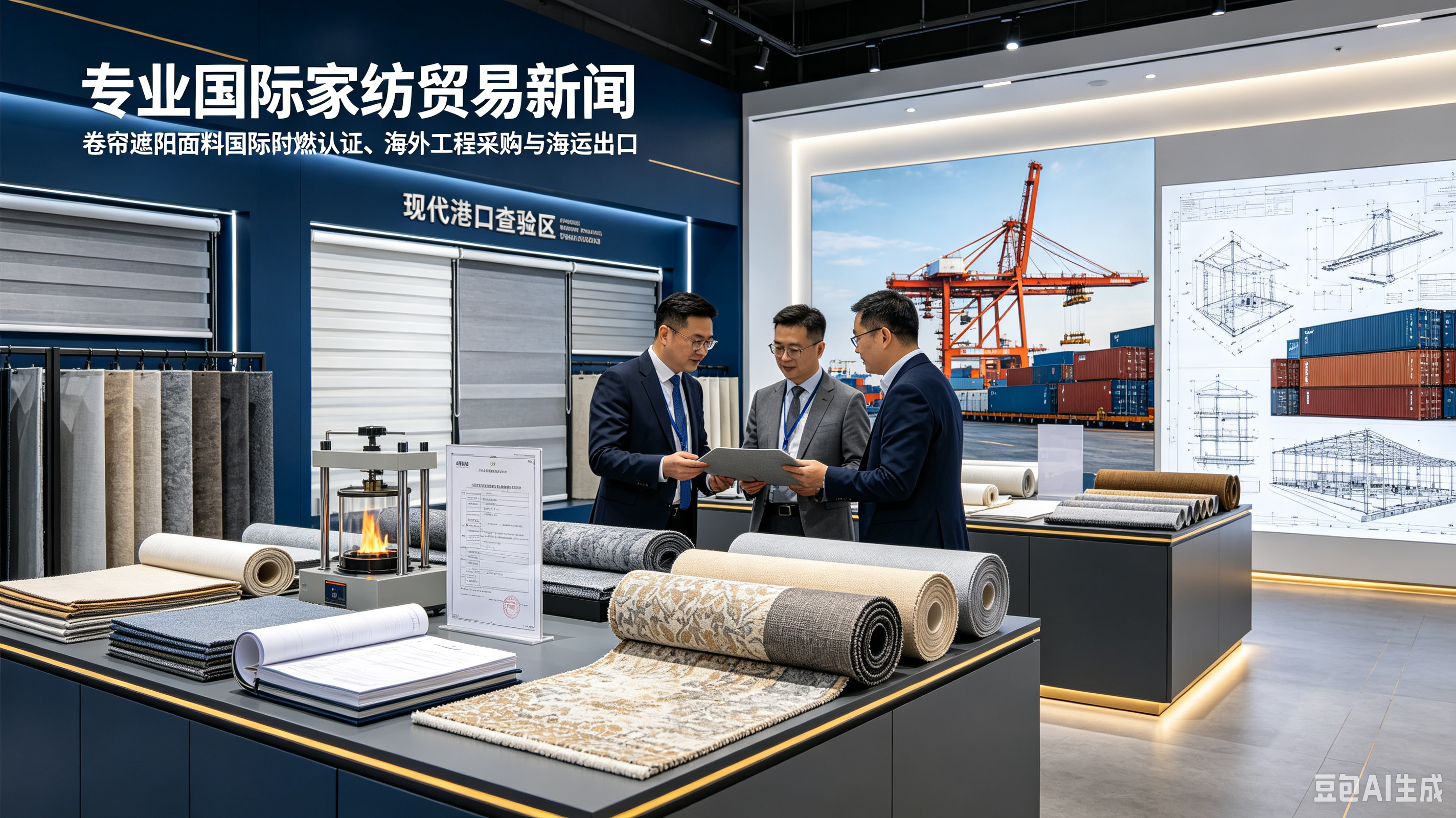
Global flame retardant standard differences of roller fabric, supplier sourcing in exhibitions, flame retardant woven coated fabrics for sea export.
Flame retardant requirements for soft furnishing fabrics such as roller shades, window screens and upholstery fabrics used in global commercial buildings, hotels and hospitals continue to tighten. Each country and region enforces independent flame retardant testing standards. Non-compliant certifications will lead to cargo detention upon arrival at the port or direct disqualification from project tenders. This has become the most common compliance pitfall for overseas buyers sourcing Chinese sunshade fabrics. Coupled with unstable Red Sea shipping routes and port congestion in some regions, returning shipments due to unqualified certifications will not only incur high detention fees and ocean freight costs, but also delay construction cycles of engineering projects and trigger cascading losses.
For overseas purchasers, professional international home textile and sunshade exhibitions are the preferred channel to verify the strength of flame-retardant fabric suppliers on-site. Heimtextil Frankfurt, R+T International Sunshade Exhibition and Dubai International Home Textile & Sunshade Exhibition are the three largest global events with the highest concentration of engineering buyers. When contacting factories at exhibitions, buyers should not only inspect fabric appearance. For ice crack textures, jacquard, high shrinkage yarn and woven coated roller shade fabrics, they need to check the original flame retardant certificates for target markets on-site, and distinguish lab sample reports from bulk production reports. Many ordinary fabrics pass testing at the sample stage, yet suffer unstable flame retardant performance after mass production and fail to meet engineering acceptance standards.
Flame retardant standards vary drastically across target markets, which must be confirmed prior to procurement. European engineering fabrics commonly adopt EN13773 and German B1 grade flame retardancy; commercial projects in the US mandate NFPA701, while California enforces additional flame retardancy and heavy metal restrictions; the Australian market follows the AS1530 series standards; hotel projects in Saudi Arabia and the UAE in the Middle East require flame retardant certificates recognised by local authorities. A frequent mistake made by buyers is using EU flame retardant reports to bid for US or Middle Eastern projects, which will be rejected by customs or project owners upon cargo arrival. Wanbo Fabrics provides custom flame-retardant finishing according to different export destinations. The full range of fabrics including roller shades, window screens, upholstery fabrics and carpets supports complete flame retardant and environmental test reports for corresponding markets, with batch test documents delivered with each shipment to suit project bidding and customs inspection.
At the supply chain operational level, purchasers selecting suppliers need to focus on confirming whether the factory possesses stable mass production capacity for flame-retardant fabrics. During the production of flame-retardant coated fabrics, coating thickness and additive ratio will directly affect flame retardant effects. Some small manufacturers only produce qualified samples, while flame retardant performance degrades during mass production. It is recommended that buyers arrange third-party on-site sampling inspection of bulk fabric rolls after identifying prospective factories at exhibitions, instead of merely relying on self-issued factory test reports.
Regarding ocean export logistics plans, flame-retardant fabrics are mostly functional coated woven textiles with large roll volumes. Separate container loading plans are recommended. When flame-retardant fabrics are shipped in mixed containers together with ordinary fabrics, classified marking should be completed, and fabric attributes and flame retardant grades should be clearly stated in documents to avoid customs inspection delays. Given volatile sailing schedules on Red Sea routes, engineering orders should reserve a buffer period of approximately 20 days. Complete sample testing and bulk sampling inspection in advance to avoid certification problems discovered shortly before shipment.
Recommended best-selling fabrics:
- NFPA701 Flame Retardant Full Blackout Coated Roller Shade Fabric: Bestseller for North American commercial engineering, 100% shading rate, wash-resistant flame retardancy, with rising demand in hotel and office building projects
- EN13773 Flame Retardant High Shrinkage Yarn Semi-Transparent Window Screen: Popular item for European office projects, light transmission with privacy protection, stable woven technology and support for large-volume export
- B1 Grade Flame Retardant Ice Crack Texture Upholstery Fabric: Hot-selling supporting fabric for high-end hotel soft furnishing, unique ice crack texture, dual compliance of flame retardancy and low formaldehyde, can be shipped in mixed containers together with roller shade fabrics
- AS1530 Flame Retardant Woven Carpet Fabric: Popular product for Australian commercial complexes, wear-resistant and flame retardant, ideal for one-stop soft furnishing procurement
- Middle Eastern M1 Flame Retardant Jacquard Blackout Roller Shade Fabric: Popular for engineering projects in Saudi Arabia and the UAE, high temperature resistant and suitable for hot climates in the Middle East, with sharply rising overseas buyer inquiries
When sourcing at exhibitions, overseas buyers should prioritise Chinese suppliers capable of one-stop supply of multi-category fabrics including roller shades, window screens, upholstery fabrics and carpets, who can customise flame retardant and environmental certifications as required. This reduces communication costs with multiple suppliers, unifies product quality standards, and arranges consolidated LCL or FCL shipments uniformly to cut logistics operating costs and inspection risks. Clarify liability allocation for invalid certifications and unqualified testing in contract clauses to minimise compliance risks in import trade.