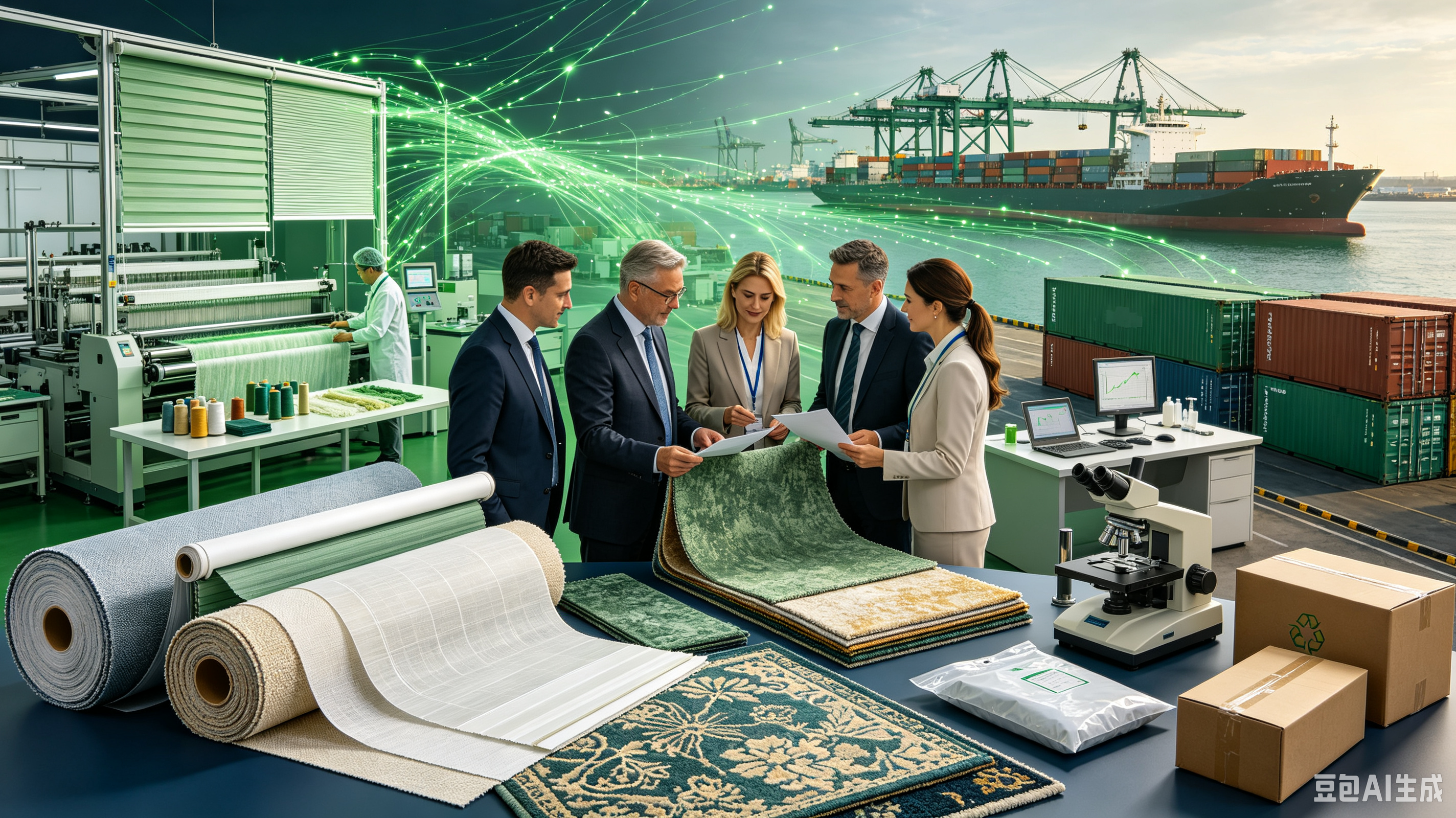
Roller fabric sourcing guide under EU green rules, low carbon supplier selection, exhibition sourcing, sea freight risk control.
The rollout of the EU ESPR Ecodesign Regulation and DPP Digital Product Passport continues to reshape global home textile procurement logic. A growing number of large soft furnishing engineering contractors and home furnishing chain brands across Europe and the Middle East have listed full life-cycle carbon footprint and raw material traceability of fabrics as mandatory thresholds for purchasing woven fabrics such as roller blind fabrics, window screens, sofa fabrics and carpet fabrics. In the past, overseas buyers only focused on light blocking rate, flame retardancy and fabric unit price. Today, low-carbon compliance documents and recycled raw material certificates carry equal weight with quality test reports. When sourcing Chinese fabric suppliers, overseas buyers must verify supply chain traceability capabilities besides fabric hand feel, color fastness and delivery lead time. Leveraging the advantages of Shaoxing’s textile industrial cluster, Wanbo has developed a low-carbon fabric product line supported by complete traceability documents to meet green procurement requirements in markets including the EU and Australia.
From the perspective of international shipping, port congestion and transit delays on the Red Sea route still occur intermittently. Coupled with EU carbon-related import declaration requirements, maritime carbon emission data is also incorporated into product carbon footprint accounting. Many buyers overlook the fact that fabric carbon footprint covers not only factory production, but also full-chain records of raw material spinning, dyeing and ocean shipment to destination ports. If suppliers cannot provide complete traceability documents, even fabrics passing quality inspection may fail DPP data submission upon arrival and face risks of port detention, cargo seizure and order cancellation. Therefore, when screening suppliers, overseas buyers should include maritime logistics plans and transportation carbon emission statistics in preliminary evaluation, and prioritize one-stop fabric manufacturers integrating fabric production, export customs declaration and low-carbon shipping solutions.
Professional international fabric exhibitions serve as core channels to inspect low-carbon fabrics and supplier traceability capabilities on site. At Heimtextil and R+T shows, the sustainable green fabric zones attract rising attention year by year. Numerous Chinese textile enterprises showcase recycled-fiber roller blinds, eco-coated fabrics, recyclable window screens and low-carbon sofa fabrics. During on-site visits, buyers should not merely check fabric samples. Key documents to verify include ISO14067 carbon footprint reports, GRS recycled fiber certificates, raw material traceability records and chemical control inventories. Meanwhile, buyers may enquire about factory wastewater and energy consumption management systems. Many suppliers claim to supply "eco-fabrics" verbally yet fail to provide full batch-specific certificates, which represents typical greenwashing risks that buyers need to avoid. During exhibition negotiations, buyers can directly request carbon data of various fabric categories, including ice-crack jacquard fabrics, high-shrinkage yarn window screens, functional coated roller blind fabrics and engineering carpet fabrics, to compare carbon emission indicators and quotations among manufacturers and select stable long-term low-carbon suppliers.
In terms of fabric selection, multiple low-carbon soft furnishing fabrics have become hot-selling items targeting the overseas green procurement market. First, recycled polyester coated woven fabric for roller blinds woven from recovered PET raw materials with available GRS certificates, stable shading performance, strong demand in office and hotel engineering projects, and far lower carbon footprint than conventional chemical fiber roller blind fabrics, making it the top choice for European engineering procurement. Second, high-shrinkage yarn recycled window screen with UV resistance and excellent air permeability, suitable for home retail markets. Its lightweight property cuts shipping weight and reduces carbon emissions in transportation. Third, low-carbon ice-crack jacquard sofa fabric featuring unique ice crack texture and low-water-consumption dyeing technology, ideal for high-end boutique homestay and villa soft furnishing projects with considerable product premium potential. Fourth, eco-friendly flame-retardant carpet fabric adopting low-VOC finishing processes, often purchased in bundles together with roller blind fabrics; one-stop supply is widely favored by engineering contractors. Fifth, bio-based modified coated roller blind fabric that reduces petroleum-based raw material consumption, catering to large overseas brands focusing on ESG concepts as an emerging high-potential category.
Buyers need to establish a standardized verification process when sourcing low-carbon fabrics from suppliers. First, at the exhibition or online sourcing stage, clarify market compliance requirements with suppliers and confirm they can issue batch-specific carbon footprint and traceability documents. Distinguish between "enterprise-wide certificates" and "single-product batch certificates"; only batch reports corresponding to individual orders can be used for EU DPP declarations. Second, arrange sample testing. Besides routine color fastness, tensile strength and flame retardant tests, environmental indicators shall be inspected simultaneously to check restricted substances including PFAS, heavy metals and harmful dyes. Before formal order placement, specify liability allocation in contracts for losses arising from destination port detention caused by incomplete traceability documents or unqualified environmental indicators.
For low-carbon fabric orders, extra operational points apply to maritime export. First, packaging optimization: replace plastic inner cores with recyclable paper tubes to cut single-use plastic packaging and comply with EU green packaging rules. Second, route planning: assess carbon emissions of different sea routes and strike a balance among transit time, freight rates and carbon data. When the Red Sea route becomes unstable, prepare alternative shipping lanes and retain logistics documents as supporting proof of transportation segments for full-life-cycle carbon footprint. Third, container loading: rationally arrange fabric roll layout to raise container utilization rate and reduce logistics carbon emissions allocated per unit fabric. Meanwhile, implement moisture-proof protection to prevent coated fabric deterioration caused by dampness.
Practical recommendations for overseas soft furnishing buyers:
- Exhibition Sourcing: Prepare green fabric procurement lists in advance, mark required certifications (GRS, ISO14067, OEKO-TEX, etc.), collect samples and certificate copies on site, schedule online factory audits and inspect environmental treatment facilities in weaving and coating workshops;
- Raw Material Traceability Verification: Request fiber origin certificates and information from spinning and dyeing mills from suppliers. Focus on verifying whether recycled fiber content matches values stated on certificates, and guard against certificate reuse and mismatched batches;
- Phased Procurement: Prioritize small-batch trial orders to complete the full workflow of production, customs declaration, ocean shipment and destination customs clearance, validate the effectiveness of the full traceability documents for customs and brand audits, and scale up orders after successful verification;
- Long-term Supply Chain Maintenance: Agree with suppliers on annual carbon footprint data updates, track updates of EU regulations, and adjust fabric formulas and documentation in advance to avoid trade barriers brought by new regulatory rules.
Green and low-carbon performance is no longer a marketing gimmick but an entry threshold to access markets such as the EU. By selecting Chinese fabric suppliers with complete traceability capabilities, overseas buyers can obtain cost-effective roller blind, window screen, sofa and carpet fabrics while meeting brand ESG targets and circumventing green trade barriers. Wanbo delivers one-stop supply of various low-carbon woven, jacquard and coated soft furnishing fabrics, covering sample development, carbon documentation preparation, customs declaration and supporting export shipping solutions, helping overseas buyers successfully tap into soft furnishing markets across Europe, the Middle East and Australia.