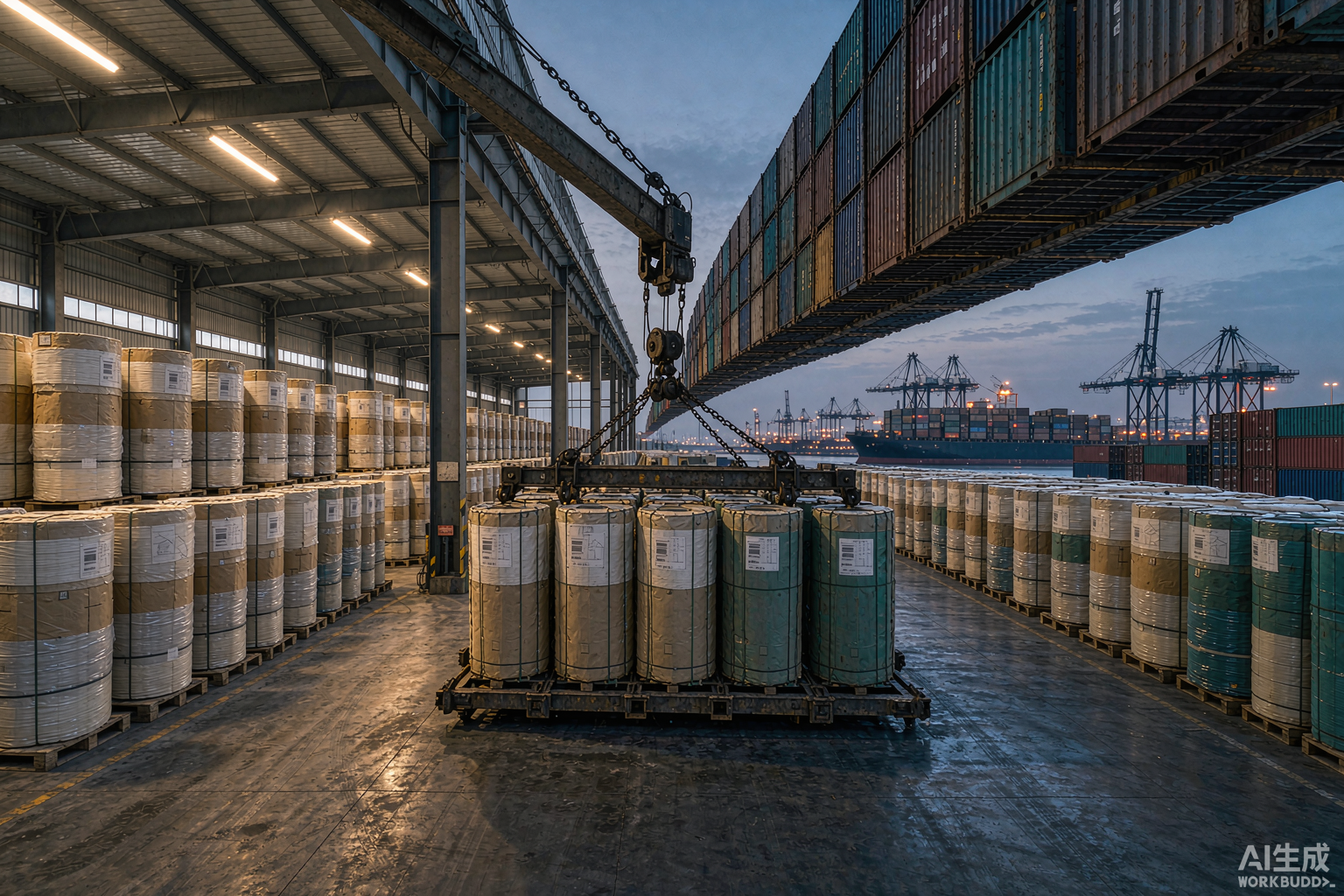
Peak season space crunch guide for roller shade fabric, covering booking timing, alternative routes and ocean freight cost control.
From August to November each year, global container shipping enters its traditional peak season. Retailers in Europe and North America restock for Christmas and Black Friday, while engineering projects across the Middle East and Australia rush to complete delivery before year end. Demand for shipping space is released in a concentrated burst. For soft furnishing textiles such as roller shade fabric, window screens and sofa fabric — bulky, lightweight and of moderate value — peak season space shortages bring not just higher freight rates, but loss of control over delivery schedules. Overseas buyers who follow off-season booking rhythms easily get stuck at the shipping stage, causing project delays, warehouse overflow and claims from end customers. Leveraging the Keqiao textile cluster in Shaoxing and long-term carrier relationships, Wanbo provides overseas buyers with peak-season space locking and one-stop export logistics solutions.
First, understand the real causes of peak-season space shortages. One, capacity contraction. To control costs, shipping lines have continuously adjusted effective capacity through blank sailings, service mergers and slow steaming, leaving limited extra vessels available in peak season. Two, demand pulses. Restocking orders from Europe and North America, engineering orders from the Middle East and transshipment orders from Southeast Asia overlap in the same window, consuming available space within a short period. Three, structural imbalance. Textile shipments concentrate at a handful of Chinese base ports in East and South China, and competition for space on popular routes — European base ports, the Red Sea and Middle East lane, and the US West Coast lane — is especially fierce. Four, sudden disruptions. Red Sea security conditions, Panama Canal water levels and port worker strikes can turn a balanced capacity situation tight overnight. Together, these four factors mean peak-season booking has shifted from "who offers the better price" to "who secures space first".
The core logic of peak-season booking is moving the time window earlier. In off-season, booking one week ahead is enough. In peak season, the cycle must stretch to three or four weeks, and 5 to 6 weeks for certain high-demand routes. Buyers should work backwards from the factory production schedule: fabric weaving takes 15 to 25 days, coating, setting and finishing 7 to 12 days, inspection and packing 3 to 5 days, plus 2 to 4 days of inland transport to port. That means the booking action must start at least 30 days before the planned sailing date. When signing contracts with suppliers, write the "booking start time" and "closing and cut-off time" in as explicit clauses rather than leaving them for last-minute coordination by the logistics team.
There are several workable paths to lock space. First, annual framework agreements. Sign an annual or semi-annual agreement with a carrier or major freight forwarder specifying a minimum quantity commitment (MQC) for peak season. This is the most reliable approach and suits buyers with stable shipment volumes. Second, early rate locking. Spot rates fluctuate sharply week by week in peak season; locking a fixed rate 4 to 6 weeks ahead avoids last-minute surcharges, though buyers must accept the risk of terms that lock rate but not space. Third, parallel carrier allocation. Do not concentrate all orders with one shipping line; split them across two or three carriers in a 6:4 or 5:3:2 ratio so alternatives remain available when one is fully booked. Fourth, space block booking. For confirmed engineering project orders, consider booking full containers or a fixed container volume, trading a modest price premium for certainty — generally better than scrambling for space later. Fifth, long-term customer priority. Bind with long-term suppliers and let them use their carrier relationships to secure space, which is often more effective than a buyer approaching a forwarder at short notice.
Route selection also needs advance planning in peak season. European base ports — Rotterdam, Hamburg and Antwerp — face the tightest space, but transshipment via Mediterranean ports followed by inland transport can be evaluated. The Red Sea and Middle East lane is affected by security conditions, so prepare a dual plan covering both "Red Sea" and "Cape of Good Hope" routing in advance, and calculate the timing and freight gaps between them. For the US West Coast lane, East Coast or Gulf of Mexico ports can serve as alternatives. Australia and New Zealand lanes are relatively stable in peak season, but note that Australian biosecurity quarantine imposes additional requirements on wood and plant-based packaging materials for textiles. For the China-Europe direction, China-Europe Railway Express is an effective supplement to ocean freight. Although unit freight cost is higher than sea, railway offers timing certainty — typically 18 to 25 days to Europe — which often backstops project delivery when ocean space is exhausted.
Cost control cannot focus on ocean freight alone. Comprehensive peak-season logistics cost includes several easily overlooked components. First, surcharges, including Peak Season Surcharge (PSS), Bunker Adjustment Factor (BAF), Low Sulphur Surcharge (LSF) and Port Congestion Surcharge (PCS). These frequently stack up in peak season, so every item must be confirmed when quoting. Second, Demurrage and Detention. Peak-season port congestion delays container pickup and return, and free time is often insufficient — apply in advance to extend the free container usage period. Third, re-booking and shut-out fees. Missing a sailing requires re-booking, and the resulting costs and time loss fall on the cargo owner. Fourth, storage and capital occupation. Cargo stranded at port or in factory warehouses ties up capital and adds storage expense. Budgeting these hidden costs in advance is the only way to calculate a true landed cost.
For the roller shade fabric category specifically, several peak-season shipping points apply. First, high volumetric weight ratio. Fabric rolls are "light cargo": the volume occupied for a given weight far exceeds that of dense goods, so loading efficiency directly affects unit freight cost. Replacing plastic inner cores with recyclable paper tubes, optimizing roll diameters and flattening packaging can raise container utilization. Improving the load of one 40HQ by 10% reduces unit freight cost by close to 10%. Second, LCL consolidation. Buyers with small to medium batch sizes can consider LCL consolidation, or combine roller shade fabric with window screens, sofa fabric and carpet fabric into one container, improving utilization while cutting per-container cost. Third, moisture protection is essential. Longer transit times and more transshipment in peak season mean greater day-night temperature variation inside containers, producing container rain. Once coated roller blind fabric absorbs moisture, mildew spots and coating separation appear. Install desiccants inside the container, wrap goods in moisture barrier film, and define moisture damage liability standards explicitly in the contract. Fourth, standardized shipping marks. Port operations move fast in peak season, and unclear shipping marks, container numbers or barcodes easily cause misdelivery or short shipment. Standardize outer carton markings and keep loading photos on file.
Practical peak-season stocking recommendations for overseas buyers:
- Lock the plan 3 months ahead: Work backwards from end sales or project milestones, share the full-quarter shipment plan with suppliers in advance, and specify monthly container volume, target route and latest sailing date;
- Book and lock rates 4 to 6 weeks ahead: Confirm the booking start milestone with suppliers, and put rate validity, free container usage period and surcharge lists in writing rather than relying on verbal commitments;
- Prepare dual-route contingency plans: For sensitive lanes such as the Red Sea and Europe, calculate timing, freight and risk exposure for both primary and backup routes, so you can switch immediately when the primary route is fully booked;
- Split shipments to spread risk: Divide large orders into 2 to 3 batches to avoid putting everything on one vessel; a single delayed batch then will not disrupt the overall delivery rhythm;
- Keep buffer time: Reserve 15 to 20 days of logistics buffer before the end delivery milestone to absorb space shortages, re-booking and customs delays;
- Build a logistics ledger: Record booking date, vessel and voyage, sailing date, arrival date and actual costs for every batch, providing data to refine next peak season's budget and strategy.
Peak-season space shortages are essentially a cyclical supply-demand mismatch that cannot be fully solved by scrambling for space at the last minute. However, their impact can be minimized through advance planning, resource locking, risk diversification and precise cost accounting. Overseas buyers who choose fabric suppliers with mature export logistics capabilities can obtain cost-effective roller shade fabric while gaining one-stop support in space coordination, customs documentation, moisture-proof packaging and consolidation optimization. Leveraging the Keqiao industrial cluster and a stable network of carriers and forwarders, Wanbo delivers a full-chain solution for overseas buyers — from fabric sampling, production scheduling and booking with locked rates, through customs declaration and ocean freight, to destination port delivery — helping you maintain a stable supply chain rhythm even in peak season.