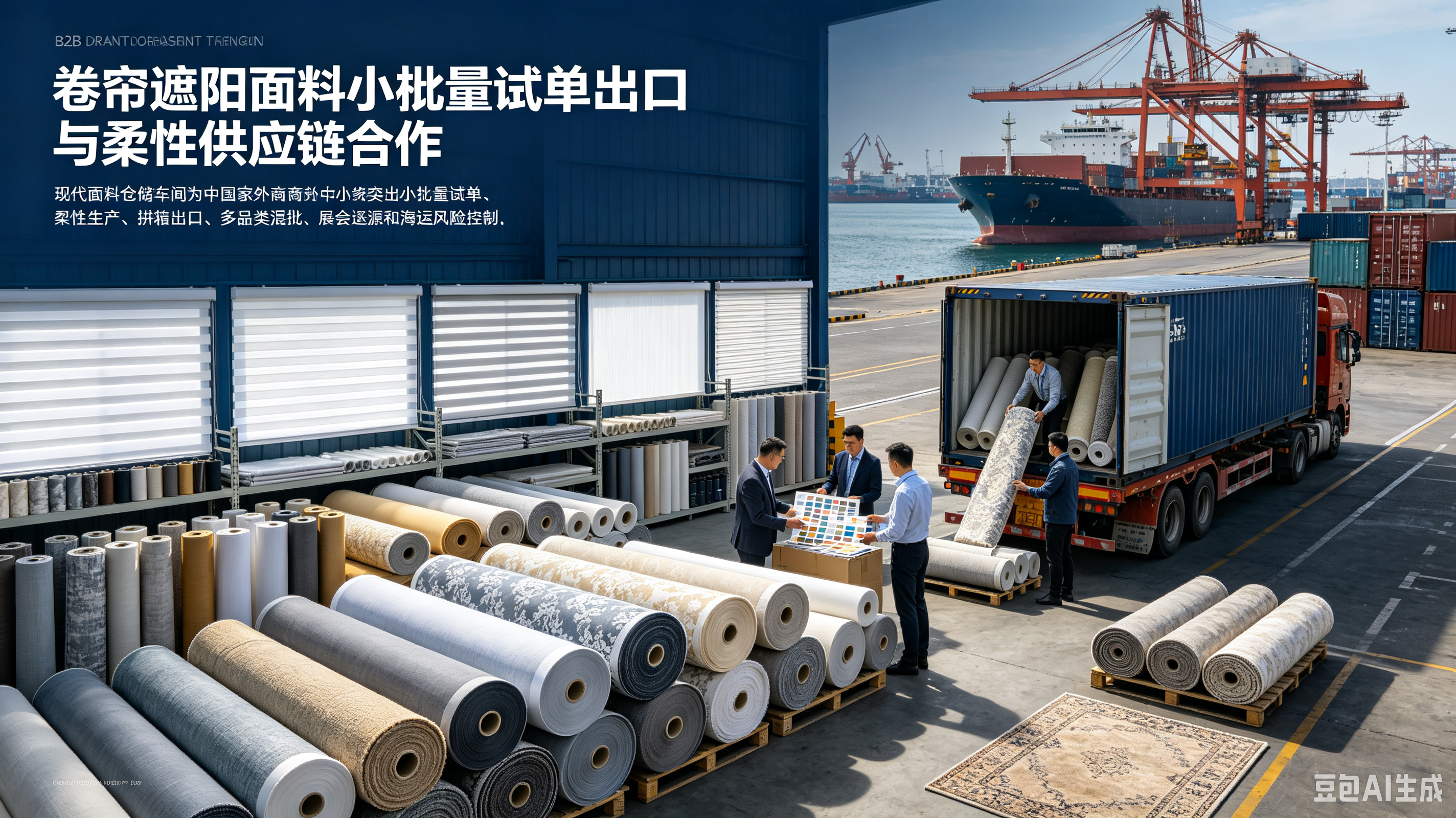
Roller fabric small trial export, flexible supply chain for buyers, include exhibition sourcing, sea freight risk control, hot fabric recommendation.
In recent years, the purchasing habits of overseas small and medium-sized soft furnishing engineering contractors and home retailers have undergone obvious changes. In the past, overseas customers preferred one-time full-container bulk purchases of woven fabrics such as roller blind fabrics, window screens, sofa fabrics and carpet fabrics. Nowadays, a large number of buyers tend to place small-batch trial orders to first test market feedback, measured fabric performance and local end-user acceptance, and scale up orders only after stable sales are confirmed. For overseas buyers, finding reliable Chinese fabric suppliers capable of small-batch production, fast delivery and multi-category sampling has become a core procurement pain point. Domestic fabric manufacturers (Wanbo) leverage mature production capacity for ice-crack jacquard fabrics, high-shrinkage yarn fabrics and functional coated fabrics to build flexible production solutions that precisely meet overseas small-order demands.
From the perspective of international logistics, the Red Sea route still faces irregular shipping delays, freight fluctuations and port berthing queues. If buyers stock large quantities of goods at one time, cargo stuck at ports will tie up substantial capital, incur high detention charges, and cause quality losses including fabric moisture damage, coating aging and wrinkling. The small-batch trial order model can greatly reduce capital pressure and maritime risks. Buyers may start with small trial orders via LCL consolidation shipment to cut inventory backlog, and verify the whole supply chain, including supplier sampling lead time, fabric color difference control, packaging protection, completeness of customs declaration documents and smooth customs clearance at destination ports.
International fabric exhibitions serve as ideal channels to source suppliers with flexible supply chains. At top global industry events such as Heimtextil and R+T, overseas buyers can inspect factory strength face to face, touch physical products including roller blind coated fabrics, ice-crack jacquard woven fabrics, high-shrinkage yarn window screens and fire-retardant engineering sofa fabrics on site, and verify color cards, fire resistance reports and UV resistance test certificates. During exhibition negotiations, buyers need to confirm several core capabilities of suppliers: Minimum Order Quantity (MOQ), sampling cycle, support for mixed batch orders (combined shipment of roller blind fabrics, sofa fabrics and carpet fabrics in one order), and flexibility to adjust coating processes and fabric grammage according to customized requirements. Many small and medium buyers tend to overlook mixed batch capability. Purchasing a single fabric category separately usually comes with high MOQ thresholds, while multi-category fabric suppliers like Wanbo support combined production and consolidated container shipment of different soft furnishing fabrics, perfectly matching customers with small-batch trial orders.
In terms of fabric selection, several best-selling fabric items are recommended for the overseas small-order market. First, ice-crack jacquard roller blind fabric with unique ice crack texture, combining decorative effect and basic light blocking, suitable for high-end residential and boutique homestay projects with strong design features and high end-market premium potential. Second, high-shrinkage yarn sheer window screen with excellent draping property and UV resistance, popular in European, American and Middle Eastern home retail markets; its lightweight feature lowers consolidation shipping cost. Third, fire-retardant coated woven fabric for roller blinds, a must-have staple for engineering projects such as hotels, office buildings and public facilities, requiring complete fire resistance certification. Fourth, outdoor UV-resistant sofa fabric for patio furniture with outstanding weather resistance, witnessing rising orders in Australia and South Africa in recent years. Fifth, short-pile engineering carpet fabric, often supplied in packages together with roller blind fabrics; many soft furnishing buyers prefer one-stop bundled procurement.
When placing small-batch trial orders with suppliers, buyers must confirm compliance documents in advance. Standards vary greatly across regions. For the EU market, attention should be paid to ESPR Ecodesign Regulation and DPP Digital Product Passport requirements. For the Middle East market, fire resistance and UV test reports are priorities. The Australian market enforces mandatory weathering test standards for sunshade fabrics. Full sets of test documents should be requested at the trial order stage to avoid detention or return of goods upon arrival at destination ports due to missing documents and resulting huge losses.
Regarding maritime shipping, LCL consolidated cargo is more vulnerable to extrusion and moisture damage. Buyers shall agree on fabric export packaging standards with suppliers: fabric rolls using rigid paper tube cores, wrapped with PE waterproof film externally and further protected by woven bags, with roll ends labelled with fabric model, color code and batch number. Meanwhile, sufficient desiccants are recommended inside containers to prevent mildew caused by container rain. Given the unstable shipping situation on the Red Sea route and multiple transit nodes for LCL cargo, buyers may negotiate alternative shipping routes with suppliers, prioritize routes with stable transit time and reserve sufficient lead time to avoid construction schedule delays.
Practical recommendations for overseas buyers:
- At the exhibition sourcing stage, prepare fabric requirement lists in advance, specifying categories of roller blinds, window screens and sofa fabrics, grammage, light blocking rate, fire rating and estimated order quantity, to directly contact factories on site, and schedule on-site factory audits or online workshop video inspections;
- Confirm pre-production samples first. Do not start mass production until color, hand feel and coating effect are fully verified to reduce rework losses in trial orders;
- Clearly define quality standards, inspection milestones, compensation clauses and optional third-party inspection options within trial order contracts;
- Review performance after trial order completion, evaluate end-market sales feedback, logistics lead time and comprehensive costs, then gradually scale up order volume.
The small-batch flexible supply chain model is reshaping the global import and export trade pattern of soft furnishing fabrics. Overseas buyers no longer bear heavy risks of large inventory stockpiles. Chinese fabric manufacturers can continuously deliver differentiated best-selling fabrics relying on mature weaving, jacquard and coating technologies. Wanbo provides one-stop solutions including sampling, small-batch production and consolidated container export for roller blind fabrics, window screens, sofa fabrics and carpet fabrics, catering to diversified overseas markets including residential retail and commercial engineering projects, and helping overseas buyers steadily expand local soft furnishing businesses.