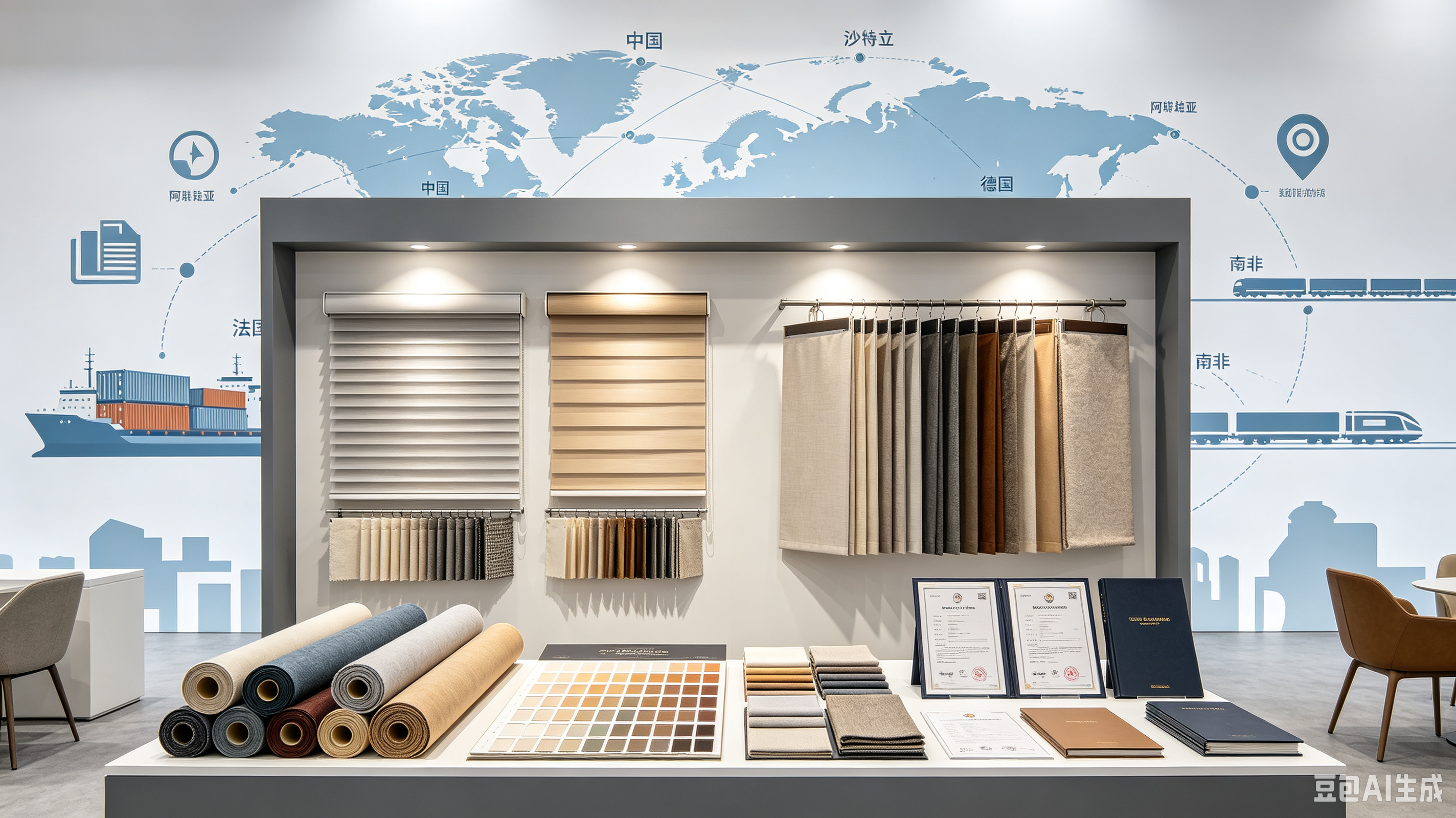
2026 international exhibitions show dual growth in demand for roller shade fabric and sofa fabric. Global buyers are paying more attention to Chinese suppliers’ R&D, factory capacity, certifications, stock availability and sea export solutions.
roller shade fabricsofa fabric sourcingchina textile suppliersea freight exportglobal textile exhibition 2026
In 2026, new structural shifts are emerging in global textile procurement. On one hand, driven by persistent high temperatures, building energy-saving policies and outdoor space renovation, demand for roller sunshade fabrics continues to grow. On the other hand, with the recovery of markets for hotels, apartments, residences, commercial spaces and outdoor furniture, sofa fabrics, furniture upholstery fabrics and decorative textiles have also become key categories attracting overseas buyers. Though these two types of products serve different application scenarios, they point to one core trend: overseas clients are shifting from "sourcing goods" to "seeking long-term stable suppliers".
According to recent large-scale international textile, window covering and furniture fabric exhibitions, roller sunshade fabrics, blackout roller cloth, solar screen fabrics, outdoor awning fabrics, sofa fabrics, waterproof furniture fabrics and decorative cloth have generated a high volume of inquiries. Importers, engineering contractors, soft furnishing wholesalers and furniture brands especially from the Middle East, Europe and Africa pay more attention to Chinese suppliers’ product R&D capacity, production stability, test certifications, spot inventory and marine export solutions.
Combining new trends in international procurement for 2026, this article focuses on two popular categories: roller sunshade fabrics and sofa fabrics, offering overseas buyers a comprehensive guide to China supply chains and sea freight exports.
I. Why Are Roller Sunshade Fabrics and Sofa Fabrics Gaining Simultaneous Attention from Overseas Markets in 2026?
Roller sunshade fabrics and sofa fabrics seem to belong to different product categories, yet they are frequently evaluated together by overseas buyers. The reason is that both are closely related to architectural decoration, interior soft furnishing, outdoor spaces and living comfort.
Firstly, sustained global heat boosts demand for shading solutions. Roller blinds, solar screen fabrics and outdoor awning fabrics can effectively lower indoor temperatures and reduce air-conditioning energy consumption, resulting in strong demand across the Middle East, Africa, South Asia and parts of Europe.
Secondly, renovations of hotels, apartments and commercial spaces fuel demand for sofa fabrics. Alongside tourism recovery, commercial space upgrading and residential soft furnishing renewal, orders for upholstery materials for sofas, dining chairs, outdoor furniture, booth seating and public areas are on the rise.
Thirdly, international exhibitions promote the trend of one-stop procurement. A growing number of overseas buyers hope to compare window covering fabrics and furniture fabrics within the same exhibition period, lowering supplier development costs and improving purchasing efficiency. Therefore, Chinese factories capable of supplying multi-category fabric solutions gain stronger competitive advantages at exhibitions.
II. Hot Exhibition Category 1: Which Roller Sunshade Fabrics Deserve Overseas Buyers’ Attention?
Feedback from recent exhibitions shows that popular directions for roller sunshade fabrics remain centered on functionality, safety and weather resistance.
1. High Heat Insulation Solar Roller Fabric
High heat insulation solar roller fabric suits high-temperature markets in the Middle East and large construction projects. It effectively blocks ultraviolet rays, reduces heat penetration indoors and improves building comfort. For hotels, office buildings, commercial complexes and residential projects, such fabrics generally require stable shading rates, thermal performance and flame retardant test reports.
2. Eco-friendly Flame Retardant Blackout Roller Fabric
Eco-friendly flame retardant blackout roller fabric draws wide attention in European markets and hotel projects. European clients impose strict requirements on environmental protection, flame resistance and safety standards. Low formaldehyde, sound & heat insulation and flame retardant certifications often serve as basic procurement conditions. This fabric is suitable for hotel renovation, office fit-outs, apartment projects and restocking for soft furnishing stores.
3. Outdoor Waterproof Anti-UV Awning Fabric
Outdoor sunshade fabrics are in clear demand in Africa, Southeast Asia and parts of the Middle East. Venues including shops, restaurants, resorts, scenic spots and parking lot entrances require fabrics resistant to sunlight, rain, humidity and sandstorms. Featuring waterproofing, weather resistance and anti-aging properties, outdoor waterproof anti-UV awning fabrics are ideal for long-term outdoor application.
4. Silent Thickened Blackout Base Fabric for Roller Blinds
The silent thickened blackout base fabric for roller blinds is a globally popular universal product. Suitable for home decoration, hotels, offices, apartments and electric roller blind systems, it enjoys broad market acceptance. For small and medium wholesalers, this fabric boasts wide application scenarios and fast inventory turnover, making it ideal for trial orders and restocking as regular bestseller.
III. Hot Exhibition Category 2: Which Sofa & Furniture Fabrics Have Strong Export Potential?
Demand for sofa and furniture fabrics is shifting from conventional decorative cloth toward functional and scenario-oriented products. Instead of focusing merely on patterns, overseas buyers pay greater attention to wear resistance, stain resistance, waterproofing, flame retardancy, eco-friendliness and durability.
1. High Abrasion Resistant Sofa Fabric
High abrasion resistant sofa fabric fits hotels, apartments, restaurants, offices and high-frequency usage spaces. Such fabrics need outstanding wear resistance to withstand daily friction and long-term service. For engineering orders, suppliers are normally required to provide test reports covering abrasion cycles, color fastness and physical performance.
2. Waterproof & Stain Resistant Furniture Fabric
Waterproof & stain resistant furniture fabric suits households, restaurants, children’s areas and commercial booth seating. It limits liquid penetration and stain residue, lowering subsequent maintenance costs. This fabric enjoys strong demand across Europe, North America, the Middle East and parts of Africa.
3. Outdoor Furniture Upholstery Fabric
Outdoor furniture upholstery fabric is designed for outdoor sofas, lounge chairs, dining chairs, terrace furniture and resort projects. It must feature sunlight resistance, waterproofing, anti-UV performance, mildew resistance and color fastness. Weather resistance of outdoor furniture fabrics is particularly critical for markets in Africa, the Middle East and Southeast Asia.
4. Flame Retardant Decorative Sofa Fabric
Flame retardant decorative sofa fabric is suitable for hotels, apartments, public buildings and commercial spaces. Many countries enforce flame retardancy requirements for textiles used in public venues. Clients, especially for European and Middle Eastern projects, usually request complete flame retardant test reports.
IV. How Do Overseas Buyers Select Chinese Suppliers at Exhibitions?
Exhibitions deliver massive volumes of information; buyers can easily be attracted by samples and quotations, yet the overall capability of suppliers ultimately determines order success.
1. Check whether the product portfolio matches target markets
Demand for fabrics varies significantly across regions. The Middle East prioritizes thermal insulation, flame retardancy and weather resistance; Europe emphasizes environmental standards, flame retardancy and safety; Africa values durability, waterproofing and cost performance; furniture brands focus on patterns, functionality and stable delivery.
2. Verify genuine factory production capacity
Qualified suppliers should possess core capabilities including weaving, coating, finishing and testing, rather than acting solely as middlemen resourcing goods. Suppliers who can provide factory photos, workshop videos, sample rooms, color card catalogues and quality control procedures demonstrate a more solid supply chain foundation.
3. Confirm consistency between exhibition samples and bulk goods
Exhibition samples are elaborately displayed. The real test lies in whether mass-produced goods maintain consistent color, GSM, hand feel, abrasion resistance and functional indicators. Buyers should request samples from different batches, pre-production samples and test reports to avoid quality disputes later.
4. Check availability of complete export documentation
Documents including certificates of origin, test reports, invoices, packing lists and manifests must be prepared in advance. Incomplete paperwork may cause customs clearance delays, increased port storage fees and even prevent cargo collection.
5. Assess capacity to offer diversified logistics solutions
Fluctuations on the Red Sea route remind overseas buyers that reliance on a single sea freight route carries risks. Reliable suppliers can provide multiple options: ocean freight, railway transport, sea-rail intermodal transport and air freight, and offer reasonable suggestions based on destination, cargo volume and urgency.
V. How Can Overseas Buyers Stabilize Supply Chains Amid Volatile Sea Freight Exports?
The current international trade environment remains complex. Fluctuating ocean freight rates, sailing schedules, port congestion and transit delays may disrupt textile exports. Buyers should mitigate risks from five aspects.
1. Adopt mixed procurement of multiple product categories
If demand for a single category fluctuates sharply, buyers can purchase related goods such as roller sunshade fabrics and sofa fabrics simultaneously, improving container loading rate and cutting unit logistics costs.
2. Deploy combined multi-route transportation
Do not rely all orders on one single shipping route. Sea freight can be used for regular restocking; railway or air freight for urgent orders; space booking and shipment schedules can be planned ahead for long-term engineering orders.
3. Lock inventory of regular bestsellers in advance
High heat insulation solar roller fabric, eco-friendly flame retardant blackout fabric, outdoor waterproof awning fabric, high abrasion resistant sofa fabric and waterproof stain-resistant furniture fabric are widely accepted standard categories. Pre-locking inventory reduces risks of price hikes and delivery delays during peak seasons.
4. Establish formal sample confirmation procedures
Before placing formal orders, buyers should confirm colors, hand feel, functional indicators, packaging standards and lead times. Sample confirmation effectively minimizes bulk goods risks especially for first-time cooperation.
5. Select factories for long-term stable cooperation
Long-term cooperative suppliers are more willing to reserve production capacity, prioritize space booking, stabilize quotations and provide after-sales support. Compared with frequently switching suppliers, partnering with a capable comprehensive Chinese factory helps lower long-term procurement costs.
VI. How Do China Export Solutions Improve Procurement Efficiency for Overseas Buyers?
For overseas buyers, a China export solution means far more than "shipping goods overseas". It represents a full supply chain service covering product selection, sampling, production, testing, space booking, customs clearance and after-sales service.
A stable textile export solution should include:
- Recommend roller sunshade fabrics and sofa fabrics according to target markets;
- Supply color cards, sample books and test reports;
- Support spot supply of regular best-selling fabrics;
- Support customization of special specifications, patterns and functional treatments;
- Provide multi-channel logistics: sea freight, railway transport, sea-rail intermodal transport;
- Prepare complete export documents;
- Track cargo transportation status;
- Handle color difference, product damage, repeat orders and after-sales matters.
For Middle Eastern clients, priority should be given to thermal insulation, flame retardancy, weather resistance and alternative railway transport solutions; For European clients, priority should be given to environmental standards, flame retardancy, small-batch mixed wholesale and sea-rail intermodal transport; For African clients, priority should be given to waterproofing, abrasion resistance, weather resistance and stable long-distance ocean routes; For furniture brands and soft furnishing wholesalers, priority should be given to sofa fabric patterns, functionality, delivery cycles and flexible trial order policies.
Conclusion
In 2026, international textile procurement is entering a phase where supply chain stability carries greater weight. Although roller sunshade fabrics and sofa fabrics belong to different categories, their growth is jointly driven by building energy-saving initiatives, hotel renovations, outdoor space upgrades and residential soft furnishing renewal.
For overseas buyers, future competition extends beyond products; it is competition over supply chain capacity, logistics solutions and supplier management skills. When screening Chinese factories at exhibitions, focus on product matching degree, production capacity, certifications, sample consistency, spot inventory and diversified logistics plans.
After exhibitions, overseas buyers should start with sample confirmation, then verify quality, lead time and service via small trial orders, and gradually build long-term stable cooperative relationships within China supply chains.