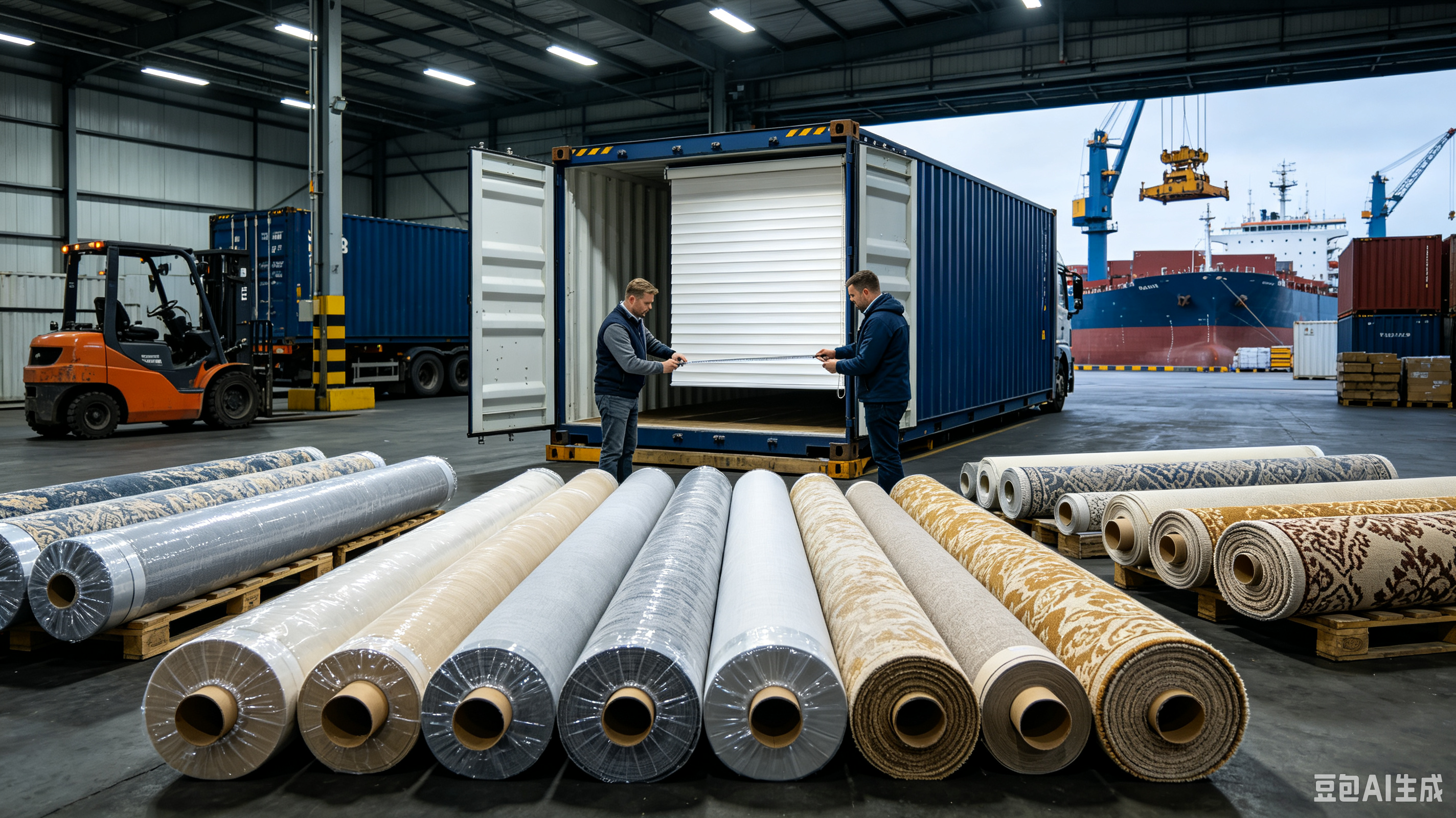
Standard export packaging design for roller fabric, supplier selection at exhibitions, woven coated fabrics to reduce sea freight damage.
When overseas buyers import woven soft furnishing fabrics such as roller shades, window screens, upholstery fabrics and carpets, they often overlook the cascading impacts brought by standardized export packaging design. Improper roll diameters, paper tube specifications and outer protective packaging will not only waste space inside containers and raise per-unit ocean freight costs, but also cause fabric creases, rolled edges and coating scratches during bumpy long-distance sea transportation and port handling operations, and even render entire fabric rolls scrapped. Coupled with labor shortages and rough handling operations at some global ports, together with volatile sailing schedules on Red Sea and Mediterranean routes, cargo damage will lead to lengthy cargo detention and return & replacement cycles, directly disrupting project delivery plans for overseas wholesalers and engineering contractors. Therefore, fabric export packaging solutions have become a key hard indicator that overseas buyers must evaluate when selecting Chinese suppliers at exhibitions.
Heimtextil Frankfurt, R+T International Sunshade Exhibition and Dubai International Home Textile Exhibition serve as ideal venues for overseas buyers to inspect fabric factories’ packaging solutions. When checking samples of coated roller shade fabrics, high shrinkage yarn window screens, ice-crack textured upholstery fabrics and jacquard woven fabrics at exhibition sites, buyers may, besides verifying basic properties including shading performance, UV resistance and colour fastness, directly request actual shipment roll samples from suppliers to compare different inner diameters of paper tubes, outer roll diameters and stretch film wrapping methods. Many small fabric factories only focus on fabric quality with random packaging plans. Uneven roll diameters of every fabric roll create massive gaps after loading into containers; a 20GP container can hold fewer fabric rolls, indirectly pushing up the allocated ocean freight cost per metre of fabric. Professional factories can uniformly control roll length and roll diameter according to buyers’ requirements to achieve standardized rolling and maximize container volume utilization. Wanbo Fabrics provides a full set of customized standardized solutions for rolled packaging, labels and outer packaging for customers in different overseas markets. Paper tube sizes and length per roll can be adjusted to match local market habits, suitable for both FCL and LCL sea shipments.
Standardized packaging design consists of three core dimensions: substrate protection inside rolls, outer protection and identification system. First, selection of inner paper tubes. Coated roller shade fabrics are heavy and require high-strength thickened paper tubes to prevent paper tubes from collapsing under the self-weight of long fabric rolls and causing fabric wrinkles. Lightweight high shrinkage yarn window screens may adopt light-duty paper tubes to reduce overall container weight and save ocean freight. Second, outer protective structure. Each fabric roll is fully wrapped with PE moisture-proof film on the inner layer to isolate condensation moisture inside containers; the outer layer is fixed with stretched wrapping film to avoid loose fabric rolls during transit. For premium ice-crack and jacquard upholstery fabrics, extra rigid paper corner protectors can be added to prevent bumps and scratches to coatings and fabric surfaces during loading and unloading. For long-haul routes and ports with high temperature and humidity, independent mould-proof sheets can be placed inside each roll, paired with container desiccants for dual moisture protection. Third, standardized labels. Multilingual labels are pasted on the outer side of each fabric roll, marking fabric model, colour number, metreage, roll number and batch information. After container unpacking and warehousing at destination ports, warehouse staff of overseas buyers can sort goods quickly without unpacking every roll for inspection, greatly improving warehousing receiving efficiency and cutting labor costs for storage.
Container loading planning must be coordinated with packaging design. After confirming roll diameter and length per fabric roll, layout inside containers can be simulated in advance with horizontal or vertical stacking to minimize gaps. Standardized rolling ensures unified roll diameters and neat arrangement, lifting loading rate by 10%-18% and significantly lowering per-unit ocean freight costs. Meanwhile, port handling methods should be considered. If forklifts are used at destination ports, packaging needs to reserve stress-bearing positions to avoid direct extrusion on fabric rolls by forklifts. For mixed-container orders of multiple product categories, roller shade fabrics, window screens, upholstery fabrics and carpet fabrics shall be packed separately with distinct marks to prevent surface damage caused by friction between different fabric types inside containers. During contract negotiation, overseas buyers should write packaging standards into purchase contracts, specifying paper tube specifications, packaging materials, label content and roll diameter tolerances, so as to avoid inconsistencies between packaging plans agreed previously and bulk shipment solutions.
Recommended best-selling fabrics suitable for sea export with standardized rolled packaging:
- Matte full blackout coated woven roller shade fabric: Global bestseller for engineering and home decoration, stable fabric weight, uniform roll diameter and roll length, fit for mass standardized rolling, high container loading rate and less prone to creasing during ocean shipping
- UV-resistant high shrinkage yarn semi-transparent window screen: Hot retail product for Australia and the Middle East, lightweight fabric, customizable small-roll packaging, fit for small-batch trial orders by LCL and convenient warehouse sorting
- Ice-crack textured woven upholstery fabric: Premium bestseller for high-end hotel soft furnishing, special surface texture of fabric, packaged with paper corner protectors to effectively avoid bumps during loading and unloading, shippable in mixed containers together with roller shade fabrics
- Wear-resistant jacquard woven carpet fabric: Supporting fabric for commercial complexes, customizable large-roll packaging, fit for bulk engineering procurement orders and cost-effective for full-container shipments
- Low-VOC semi-blackout coated fabric: Popular item for European home decoration, qualified environmental performance, neat rolling, coating scratches rarely occurring during sea transport, suitable for inventory stocking by wholesalers in European markets
During sourcing at international exhibitions, overseas buyers should not only compare prices and test fabric performance, but also inspect suppliers’ shipment packaging solutions on site. Priority should be given to original manufacturers capable of offering standardized rolling, customized labels and optimized container loading schemes. Wanbo Fabrics can customize packaging solutions according to order types, balancing cargo damage prevention and container space utilization to reduce allocated ocean freight costs and warehousing losses at destination ports. If buyers lock packaging standards with suppliers in advance and confirm trial packaging samples before production, fabric damage such as creases, scratches and moisture damage during long ocean transportation can be effectively avoided, ensuring safe arrival of goods at destination ports and stable delivery rhythm of supply chains.