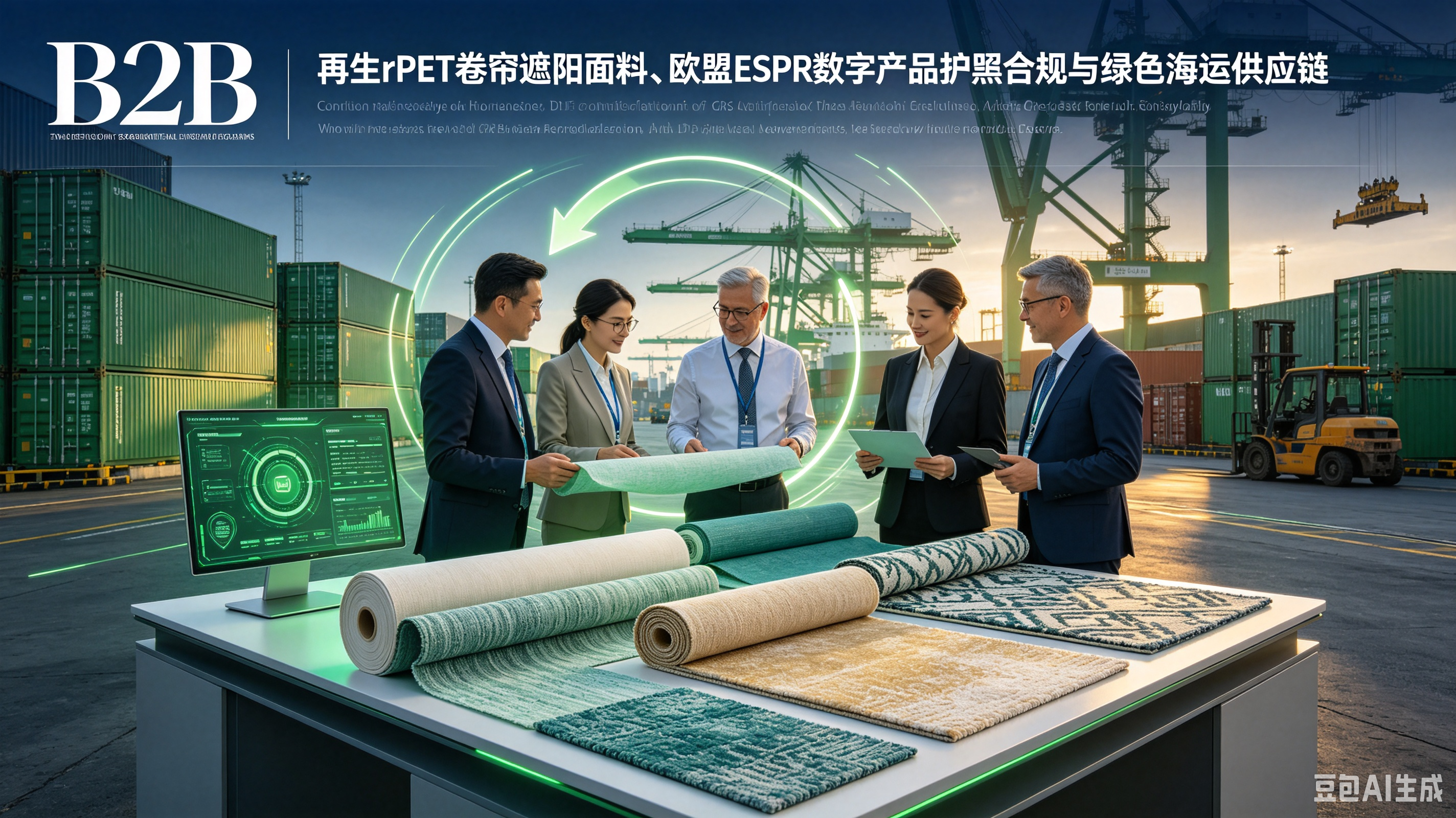
EU ESPR DPP compliance of recycled rPET roller fabric, supplier sourcing at exhibitions, GRS woven coated fabrics for sea import.
The EU ESPR Ecodesign Regulation continues to be rolled out, and the DPP Digital Product Passport system is gradually becoming mandatory. When buyers in Europe and Northern Europe source soft furnishing fabrics such as roller shades, window screens and upholstery fabrics, recycled traceability, fibre composition certificates and full-lifecycle environmental documentation have become mandatory thresholds for bidding and import customs clearance. Many overseas importers sourcing Chinese sunshade fabrics have had their goods detained by customs upon arrival due to missing GRS Global Recycled Standard certification and recycled raw material traceability documents, and are even barred from bidding for local projects in hotels, office buildings and public buildings. Coupled with ongoing volatility on Red Sea shipping routes, port congestion and rising surcharges, returned shipments triggered by compliance failures incur high detention, warehousing and round-trip ocean freight charges, creating heavy capital pressure for overseas purchasing enterprises.
International home textile exhibitions serve as the most critical channel for buyers to select recycled fabric suppliers on-site. Heimtextil Frankfurt, Dubai International Home Textile & Sunshade Exhibition and R+T Sunshade Exhibition in the US gather global soft furnishing buyers and fabric manufacturers, with recycled eco-friendly fabrics standing as a core highlight of exhibitions in recent years. When inspecting suppliers at exhibitions, buyers should not only check fabric handfeel and appearance. For rPET recycled coated roller shades, high shrinkage yarn window screens, ice-crack textured upholstery fabrics and jacquard woven fabrics, it is essential to verify complete GRS certificates and raw material recycling traceability chains on-site, and distinguish between "partially recycled" and "100% post-consumer recycled raw materials". Many suppliers only hold certification for samples, yet cannot provide batch traceability documents for bulk orders, resulting in invalid certification at the destination port.
Under the ESPR regulation, the DPP Digital Product Passport requires fabric suppliers to input full sets of data including fibre composition, chemical usage, recycled content ratio, manufacturing plant information and recyclability assessment, enabling customs, brands and project owners to access and verify information at any time. Requirements for recycled fabrics vary widely across regional markets: the EU mandates paired GRS and DPP documentation; Northern Europe imposes additional restrictions on hazardous substances, with low-VOC and halogen-free flame retardancy as competitive advantages; the Australian market prioritises UV-resistant recycled roller shade fabrics; for projects in Saudi Arabia and the UAE in the Middle East, recycled fabrics paired with flame retardant certificates enjoy strong competitiveness in high-end hotel projects. Wanbo Fabrics’ full range of recycled fabric products holds complete GRS recycling certification and can generate supporting DPP digital files upon customer request. It provides one-stop supply of roller shades, window screens, upholstery fabrics and carpets, helping overseas buyers comply with new EU regulations and smoothly complete import customs clearance and project bidding.
During exhibition sourcing, buyers are recommended to adopt a four-step verification process for supplier screening. Step 1: Verify factory qualifications to confirm the factory has stable capacity for recycled yarn weaving and coating finishing, instead of being a trading intermediary. Step 2: Inspect the scope of the GRS certificate and confirm it covers the fabric categories of the order, rather than borrowing certificates for other fabrics. Step 3: Request bulk samples on-site to test fabric physical properties, including shading rate, tensile strength and colour fastness. Step 4: Confirm the lead time for document delivery, ensuring batch traceability sheets and composition reports can be supplied for every shipment to match DPP digital file upload requirements. Recycled fabrics involve more complex production processes; coating and setting procedures may affect recycling attributes. Buyers should arrange third-party testing in advance to avoid discovering non-compliant recycled indicators after bulk production starts.
In terms of practical ocean export operations, recycled woven roller shade fabrics are mostly supplied in rolls with a large volume factor. Overseas buyers can adopt a multi-category consolidated container model, shipping recycled roller shade fabrics, recycled window screens, recycled upholstery fabrics and carpet fabrics in one container to reduce per-unit ocean freight costs. Given unstable sailing schedules on Red Sea routes, buyers may prepare alternative transportation plans, choosing the Cape of Good Hope rerouting or sea-rail intermodal transport to avoid risks from a single shipping route. During container loading, recycled fabrics require moisture-proof sealed packaging with anti-mildew tablets to prevent fabric dampness during long-distance sea transport, which would alter fabric performance and appearance and jeopardise port inspection results. Within the trade contract, clearly define delivery responsibilities for GRS, DPP and related documents, and agree on compensation clauses if recycled traceability documents fail to meet the importing country’s regulations, lowering procurement risks.
Recommended best-selling recycled fabrics:
- GRS-certified rPET full blackout coated roller shade fabric: Bestseller for European commercial engineering, made of 100% recycled plastic bottle raw materials with low VOC, meets EU ESPR and DPP requirements; inquiries for office and hotel orders keep rising
- Recycled high shrinkage yarn semi-transparent window screen: Hot-selling item for Northern European residential projects, soft light transmission, UV resistance, complete recycled traceability available, suitable for bulk procurement by home décor wholesalers
- GRS ice-crack textured recycled upholstery fabric: Hit product for high-end hotel soft furnishing, unique texture, excellent colour fastness, recycled eco attributes fit European sustainable hotel projects, can be shipped mixed with roller shade fabrics in one container
- Recycled jacquard woven carpet fabric: Popular product for commercial complexes, wear-resistant and anti-slip, made from recycled fibres, ideal for one-stop soft furnishing procurement
- Halogen-free flame retardant recycled roller shade fabric: Bestseller for high-end Middle Eastern engineering, combining flame retardancy and recycled eco performance, adapted to the hot climate of the Middle East with growing demand from local contractors
For overseas buyers, sustainable fabrics are no longer an optional bonus, but an entry threshold for accessing high-end markets in the EU and Northern Europe. When contacting suppliers at international exhibitions, prioritise Chinese original manufacturers capable of supplying multi-category recycled fabrics together with full environmental certifications and traceability documents. Source roller shades, window screens, upholstery fabrics and carpets in one stop, with unified documentation and consolidated ocean shipments, to cut compliance risks and logistics costs brought by multiple suppliers. Plan sample testing and certification audits ahead of schedule, reserve sufficient buffers for production and shipping schedules, avoid trade losses caused by EU environmental regulations and shipping volatility, and capture the growth dividend of the global recycled sunshade fabric market.