"With Panama Canal capacity cuts and Middle East shipping risks in late 2026, overseas buyers face new logistics challenges for window‑covering fabrics. This guide covers trade‑fair sourcing tips, peak‑season shipment tactics and hot‑selling fabric selections for importers.
In the second half of 2026, the global home textile supply chain faces multiple variables: the Panama Canal continues to reduce navigation quotas, geopolitical tensions in the Strait of Hormuz disrupt shipping routes, war‑risk surcharges on certain routes rise again, and the risk of vessel schedule delays increases, posing considerable challenges to the export delivery of soft furnishing fabrics such as roller‑shade fabrics, window screens and upholstery fabrics CCTV News.... Meanwhile, overseas retail and engineering markets have entered the Q4 stocking window for functional sun‑shade fabrics. Many buyers intend to attend international exhibitions to select new‑product samples, secure reliable Chinese suppliers, and balance sample development, small‑batch trial orders and large‑volume sea shipments. Targeted at overseas curtain and soft‑furnishing importers, this article analyzes the current supply‑chain situation, exhibition‑sourcing tips, practical sea‑shipping risk‑avoidance measures and Q4 hot‑selling fabric‑selection solutions.
Entering the fourth quarter, orders for roller‑shade fabrics, window screens and upholstery fabrics are rising simultaneously across Europe, America, the Middle East and Australia. On the one hand, renovation projects for commercial office buildings and hotels are launched intensively, driving strong demand for flame‑retardant coated roller‑shade fabrics and blackout woven fabrics. On the other hand, home‑furnishing retail channels enter the year‑end consumption peak, with growing inquiry volumes for ice‑crack jacquard fabrics, high‑shrinkage yarn fabrics and jacquard decorative fabrics. Nevertheless, hidden shipping risks remain prominent: insufficient water levels in the Panama Canal keep limiting the number of passing vessels, resulting in tight vessel space and sharp freight fluctuations for US‑East routes. Geopolitical conflicts in Middle‑East waterways have prompted some shipping lines to impose additional war‑risk surcharges, and rerouting extends overall transit time. The general sea‑shipping lead‑time for textile containers has increased by 10‑18 days Yicai Global. If overseas buyers stick to the traditional practice of placing orders shortly before peak seasons, they may well finish fabric production yet fail to secure vessel space, leading to container detention and missed sales windows.
Exhibitions remain a core channel for overseas buyers to efficiently vet original Chinese manufacturers. Two key professional fabric shows stand out for the second half of the year: Interfabric Moscow in late September, covering the Commonwealth of Independent States market with numerous exhibitors for curtains, upholstery fabrics and carpets, ideal for buyers targeting Eastern‑European markets; APTEXPO Asia‑Pacific Textile Supply‑Chain Exhibition in November Singapore, focusing on functional and sustainable home‑textile fabrics for Southeast‑Asian and Oceanian buyers, enabling on‑site connections with suppliers of coated roller‑shade fabrics and recycled eco‑friendly fabrics. When sourcing at exhibitions, do not merely collect sample books. Three practical actions are recommended: first, verify real factory capacity, confirm sampling lead‑time and minimum order thresholds, and distinguish pure traders from original manufacturers with in‑house weaving, coating and finishing workshops; second, check fabric test reports on‑site, and confirm flame‑retardant, UV‑resistance and environmental‑compliance documents in advance to avoid non‑compliance with local import standards upon goods arrival; third, negotiate alternative sea‑shipping solutions and check whether suppliers support multi‑port shipment with Ningbo and Shanghai as backup ports against port congestion or typhoon‑related shutdowns.
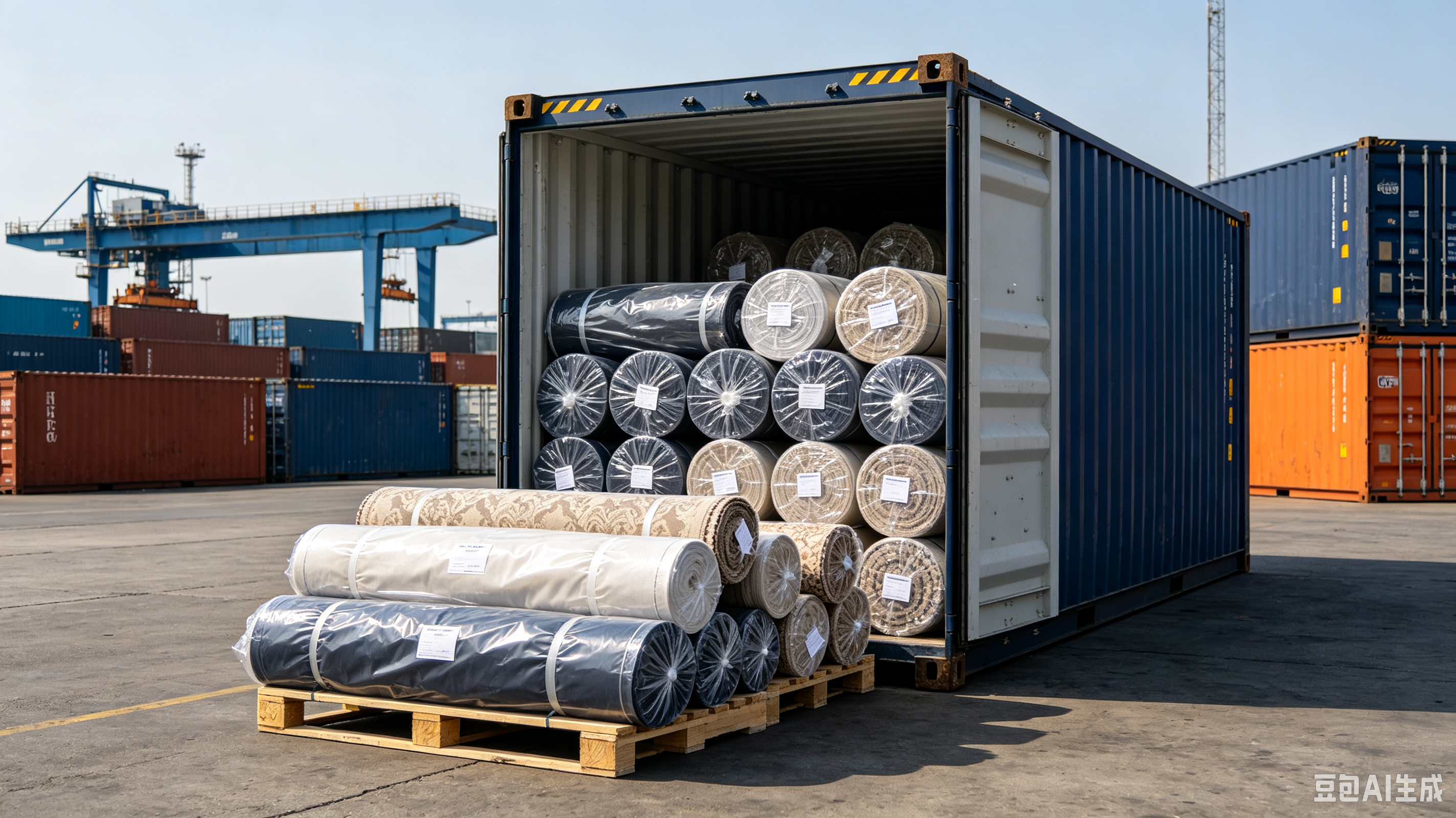
Against the complicated shipping landscape, overseas buyers sourcing Chinese roller‑shade and other soft‑furnishing fabrics may adopt the export strategy of “advance sampling + staggered production scheduling + multi‑route contingency plans”. Send samples by express delivery in advance to confirm colourways, weight and colour fastness for ice‑crack, jacquard, high‑shrinkage‑yarn and coated fabrics, instead of validating samples after bulk‑goods production. Place bulk orders 45‑60 days ahead of schedule to avoid the vessel‑space crunch from October to November. Logistically, avoid over‑reliance on one single route. For North‑America shipments, compare lead‑time and cost between Panama‑Canal routes and rerouting alternatives. For Middle‑East destinations, estimate transit time for Cape of Good Hope rerouting and reserve sufficient sales buffer time. Packaging also matters greatly. Wrap coated roller‑shade fabrics and woven fabrics with moisture‑proof stretch film and include desiccants to prevent mildew and cargo damage during long‑haul humid sea transit.
Q4 hot‑selling fabric recommendations for different regional markets:
- Full‑blackout coated roller‑shade fabric: High‑density woven base with composite coating, UV‑resistant and optional flame‑retardant properties. Continuously popular for European‑American commercial projects and Middle‑East residential developments. Wanbo supplies multiple weight options from stock plus custom coating formulas with fast sampling support.
- High‑shrinkage‑yarn sheer window‑screen fabric: Excellent drape and soft texture, a retail hit in Australia and Western Europe for finished roller‑shades and Shangri‑La blinds, ample stock available.
- Ice‑crack jacquard upholstery fabric: Strong textured surface, wear‑resistant and pilling‑resistant, suitable for sofa upholstery and soft‑furnishing booths. Trial‑order demand from cross‑border retailers has surged recently.
- Recycled‑PET sun‑shade woven fabric: Compliant with EU green regulations with complete recycled‑material certificates. Targeting European markets, it ranks among the fastest‑growing fabric categories in H2 2026.
- Outdoor weather‑resistant furniture fabric: Waterproof and sun‑proof, applicable for outdoor roller‑shades and courtyard upholstery. Inquiries for outdoor projects in South Africa and the Middle‑East keep rising.
When engaging Chinese suppliers, overseas buyers should prioritise full‑chain manufacturers familiar with multi‑route sea‑shipping risks and capable of providing complete document services. As an original manufacturer specialising in curtain and sun‑shade fabric exports, Wanbo’s product portfolio covers coated roller‑shade fabrics, high‑shrinkage‑yarn fabrics, ice‑crack jacquard fabrics, upholstery fabrics, carpet base fabrics, window screens and a full range of home‑textile materials. It supports in‑stock quick delivery as well as ODM customisation, understands import‑compliance requirements for the Middle East, Europe, Australia and other regions, and assists buyers with advance production scheduling and backup shipment ports to mitigate delivery delays triggered by geopolitics and canal capacity constraints, helping overseas customers complete Q4 stocking smoothly.