2026 market trends for sheer curtains and Shangri-La blinds: smart, green, and customized. Data-driven insights for manufacturing factories.
Against the backdrop of sustained global growth in the window coverings market, Sheer Curtains and Shangri-La Blinds, as the “twin stars” of functional window coverings, are ushering in an unprecedented window of growth. According to Research and Markets data, the global blinds market size is projected to reach $7.37 billion in 2026, growing at a CAGR of 5.14% to $9.47 billion by 2031-2. Concurrently, another industry report indicates that the broader market encompassing curtains and window blinds reached $27.02 billion in 2026 and is expected to surge to $61.25 billion by 2034, achieving a remarkable CAGR of 9.52%-6.
As a specialized factory focused on the finished product processing of Sheer Curtains, Shangri-La Blinds, and more, Shaoxing Wanbo Import and Export Co., Ltd., with 15 years of industry experience, a complete industrial chain advantage, and export experience to over 20 countries globally, stands at the forefront of this industry upgrade. However, facing multiple trends like smart home penetration, upgraded green environmental standards, and intensified brand competition, how can factories precisely position themselves, optimize product strategies, and capture market share? This article combines recent industry data and dynamics to provide an in-depth interpretation and action guide for factories processing finished Sheer Curtains and Shangri-La Blinds.
I. Market Size and Growth Drivers: Dual Drive from Home Renovation and Smart Upgrades
1. Global Market Breakthrough, Asia-Pacific Leads in Growth
According to Mordor Intelligence's "Global Blinds Market Report 2026-2031", roller blinds held a 33.74% market share in 2025, while smart blinds, though smaller in base, became the fastest-growing segment with a CAGR of 7.39%-2. Notably, the Asia-Pacific region leads global growth with a 6.02% CAGR, where the Chinese market plays a core role-2.
Another report from TechSci Research further confirms this trend: the global window blinds market is projected to grow from $8.15 billion in 2025 to $11.52 billion by 2031, at a CAGR of 5.94%-8. North America leads with a 31.72% share, while Europe leads in eco-friendly material innovation-2.
2. Growth Drivers: Demand Shift from "New Construction" to "Existing Home Renovation"
In the past, new home deliveries were the main driver for window covering demand. However, as the real estate market enters a deep adjustment phase, existing home renovation has become a new growth engine-1. According to statistics, annual housing starts in the US reached 1.36 million units in 2024, and homeowners' annual spending on home improvements and repairs is expected to hit $466 billion in 2024-8. In China, a large number of existing urban homes have entered a secondary renovation cycle, making curtains, as the easiest soft furnishing to replace with immediate effect, the renovation favorite-1.
Furthermore, demand from commercial spaces, hotels, office buildings, and other non-residential sectors continues to grow. For example, LEED and WELL building certification standards require automated shading systems, further driving the adoption of smart blinds in commercial projects-2.
Data Support:
-
Global Blinds Market 2026-2031 CAGR: 5.14% → Reaching $9.47 billion by 2031-2
-
Broader Curtains & Blinds Market 2026-2034 CAGR: 9.52% → Reaching $612.5 billion by 2034-6
-
Global Window Blinds Market 2025-2031 CAGR: 5.94% → Reaching $11.52 billion by 2031-8
Implication for Factories: For export orders targeting European and American markets, focus on existing home renovation projects and commercial space solutions; for the Asia-Pacific market, keep pace with bulk procurement demand driven by new residential construction and urbanization.
II. Product Trends: The Path to Functional Upgrade for Sheer Curtains and Shangri-La Blinds
1. Sheer Curtains: From "Light Control" to "Health & Environment"
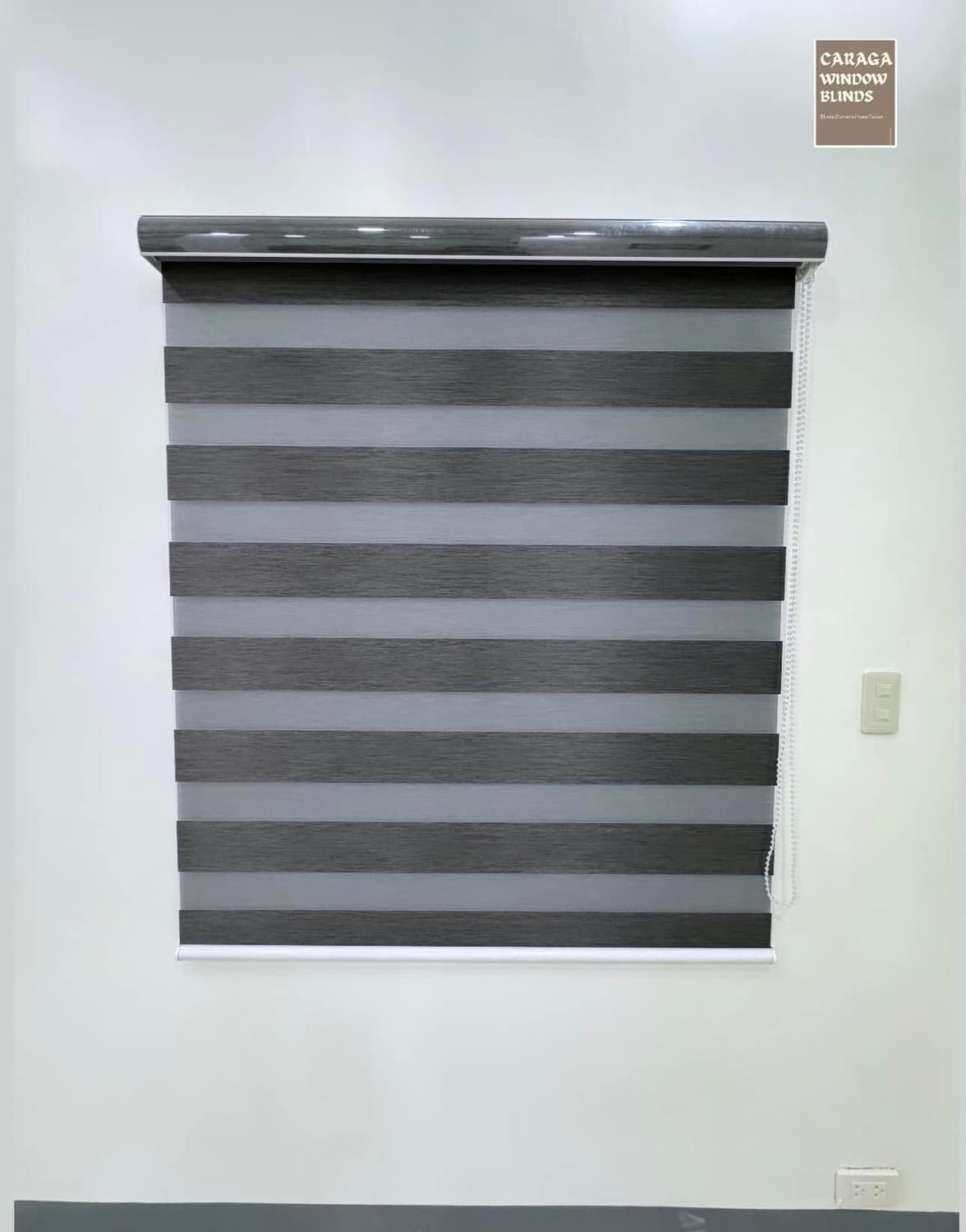
Sheer curtains (also known as Zebra blinds or Dream blinds), through the offset design of double-layer fabric, achieve stepless light adjustment from fully transparent to fully blackout, making them a darling in modern homes and offices-7. According to industry research, the global sheer curtain market size reached tens of billions of RMB in 2025 and is expected to maintain a stable compound growth rate until 2031-7.
Current product iteration for sheer curtains focuses on three areas:
-
Functional Fabrics: Fabrics featuring UV protection, heat insulation, soundproofing, antibacterial, and anti-mildew properties are becoming a competitive focal point. Easy-care, stain-resistant fabrics are particularly favored by families with children and pet owners-1.
-
Eco-friendly Materials: The EU restricts hazardous substances in textiles increasingly strictly. Sheer curtain products using eco-friendly dyes, formaldehyde-free finishing processes, and recycled fabrics will command higher market premiums-1.
-
Smart Integration: Although sheer curtains are still mostly manually operated, smart features like wireless remote control, scheduled timers, and light sensors are beginning to penetrate mid-to-high-end product lines-7.
2. Shangri-La Blinds: The Ultimate Expression of Light Aesthetics
Shangri-La blinds, with their unique "three-layer fabric structure" – two sheer outer layers sandwiching a non-woven fabric vane – achieve a perfect balance of soft light diffusion and privacy protection. This product is particularly popular in high-end residences, boutique hotels, and designer projects.
Core trends for Shangri-La blinds include:
-
Material Innovation: Extending from traditional polyester fabrics to more decorative materials like linen texture, linen blends, chenille, catering to diverse interior style requirements.
-
Customized Design: Rising consumer demand for personalized patterns and color matching requires factories to possess flexible production capabilities for small batches and diverse varieties-7.
-
No-Drill Installation: Targeting the rental market and younger users, no-drill, ready-to-hang Shangri-La blind product lines are expanding rapidly.
Implication for Factories: As a factory specializing in finished sheer and Shangri-La blinds, beyond the standard product lines, focus on developing:
Antibacterial & Anti-mildew Series (suitable for humid regions in the south and baby/mom scenarios)
Eco-certified Series (meeting EU/US export environmental standards)
Smart Motor-Ready Series (reserving motor slots or adapting to mainstream smart home platforms)
III. Industry Challenges and Coping Strategies: Price Fluctuations, Safety Standards, and Branding Dilemmas
1. Raw Material Price Volatility: Aluminum and Fabric Cost Pressures
According to a 2025 report by the Associated General Contractors of America, the Producer Price Index for aluminum mill shapes surged 22.8% year-over-year-8. Aluminum is a primary material for structural components of roller blinds and Venetian blinds, and this price surge directly elevates manufacturing costs. Furthermore, price fluctuations of specialized fabrics, PVC, and other raw materials introduce uncertainty into long-term factory production planning.
Coping Strategies:
-
Secure Long-term Suppliers: Sign annual framework agreements with fabric and aluminum suppliers to hedge against short-term price volatility risks.
-
Optimize Product Mix: Appropriately increase the proportion of all-polyester fabric products to reduce reliance on expensive metal materials.
-
Improve Efficiency & Reduce Costs: Utilize automated cutting and hemming equipment to enhance material utilization and reduce unit waste.
2. Safety Standard Upgrades: Cordless Design Becomes Mandatory
In March 2025, the U.S. Consumer Product Safety Commission (CPSC) recalled approximately 16,300 corded window blinds that did not meet federal safety regulations-8. Requirements for cordless, child-safe designs in European and American markets have escalated from "recommended" to "mandatory". For export-oriented factories, non-compliance with safety standards risks returns, recalls, or even sales bans.
Coping Strategies:
-
Fully Transition to Cordless Design: Upgrade the corded operating systems of sheer curtains and Shangri-La blinds to cordless solutions like spring-loaded, motorized, or Velcro-secured mechanisms.
-
Obtain Safety Certifications: Proactively seek third-party safety certifications like Best for Kids as market access and marketing selling points.
3. Branding Deficit: The Industry Pain Point of "Product Category Known, Brands Unknown"
The curtain and window covering industry currently has low concentration, with numerous micro, small, and medium enterprises coexisting. Consumers tend to trust fabric origins or store reputations rather than specific brands-1. This implies factories have limited B-side bargaining power and squeezed profit margins.
Coping Strategies:
-
Build Own B-side Brand: Establish a professional brand image (product catalogs, certifications, case studies) targeting overseas importers and wholesalers.
-
Leverage Content Marketing: Use channels like TikTok, Facebook, and YouTube to showcase fabric details, processing steps, finished product displays, and loading container footage, building recognition as a "professional factory".
-
Parallel OEM + ODM: While providing private labeling for clients, launch standardized "factory direct" series to gradually accumulate brand equity.
IV. Future Outlook: Smart, Green, Custom – Three Directions Define Winners
1. Smart Blinds: From Standalone Smart to Whole-Home Integration
Smart blinds are no longer just a concept. According to a 2024 Smart Home Association survey, 47% of consumers have adopted some form of smart home technology-8. In the future, blinds will no longer be isolated products but will deeply integrate with whole-home smart systems, enabling scene-based interactions with lighting, air conditioning, and security-1.
For finished product processing factories, this means:
-
Pre-wire Motor Interface: Reserve motor installation space and power routing channels within roller tubes and tracks.
-
Adapt to Mainstream Ecosystems: Products must be compatible with major protocols like Tuya, Zigbee, Wi-Fi, capable of interfacing with platforms like Alexa, Google Home, Xiaomi, etc.
-
Provide "Motor + Fabric" Package Solutions: Offer one-stop smart blind kits to B-side clients, reducing their procurement and installation complexity.
2. Green & Eco-friendly: From "Nice-to-Have" to "Ticket to Play"
EU Regulation (EU) 923/2023 already bans the use of high-lead PVC components, pushing the market towards natural fibers and recycled metals-2. Concurrently, international buyers increasingly demand suppliers provide carbon footprint data and eco-certifications (e.g., OEKO-TEX, GRS).
Action Suggestions:
-
Material Upgrades: Promote sheer curtains and Shangri-La blinds made from recycled polyester fabrics and bio-based materials.
-
Prioritize Certifications: Obtain GRS (Global Recycled Standard), OEKO-TEX Standard 100, etc., as a "passport" for exports to Europe and North America.
3. Customization & Flexible Production: Meeting "A Thousand Different Needs"
With rising consumer aesthetic standards, standardized products can no longer meet market demands. Customization extends beyond size to deep customization of patterns, colors, and fabric combinations-1.
Factory Capability Building:
-
Digital Sampling: Utilize AI-assisted design to quickly generate renderings of how different fabrics and colors look on finished blinds.
-
Small-Batch Production Line: Configure quickly changeable cutting and sewing equipment to support extremely small batch orders of 10-50 meters.
-
Online Configurator: Develop simple online configuration tools for B-side clients, allowing them to independently select fabrics, sizes, accessories, and generate orders with one click.
Conclusion
For factories processing finished Sheer Curtains and Shangri-La Blinds, the window covering market in 2026 presents both challenges and opportunities. The global market is growing steadily, with existing home renovation and commercial space demand becoming new engines; the three major trends of smart, green, and customization are reshaping product logic and competitive rules.
As a professional factory with 15 years of experience, products exported to over 20 countries, Shaoxing Wanbo Import and Export Co., Ltd. possesses the complete industrial chain capability from fabric R&D to finished product production, from quality control to international logistics. In the future competition, only factories that keep pace with trends and proactively upgrade products and services will win a larger share in the global window coverings market reshuffle.
Call to Action: If you are looking for a reliable partner for processing finished Sheer Curtains and Shangri-La Blinds, please contact us for a product catalog and latest quotation. We support OEM/ODM customization, offering one-stop service from fabric selection to finished product shipment.
```