All six major lines have returned to Suez; Asia-Europe rates are down about 60 percent from July, and a record 15.6 million TEU orderbook meets soft demand. This piece unpacks rate transmission and the risk register, then delivers practical booking, packing and negotiation tactics for fabric buyers in Q1 2027.
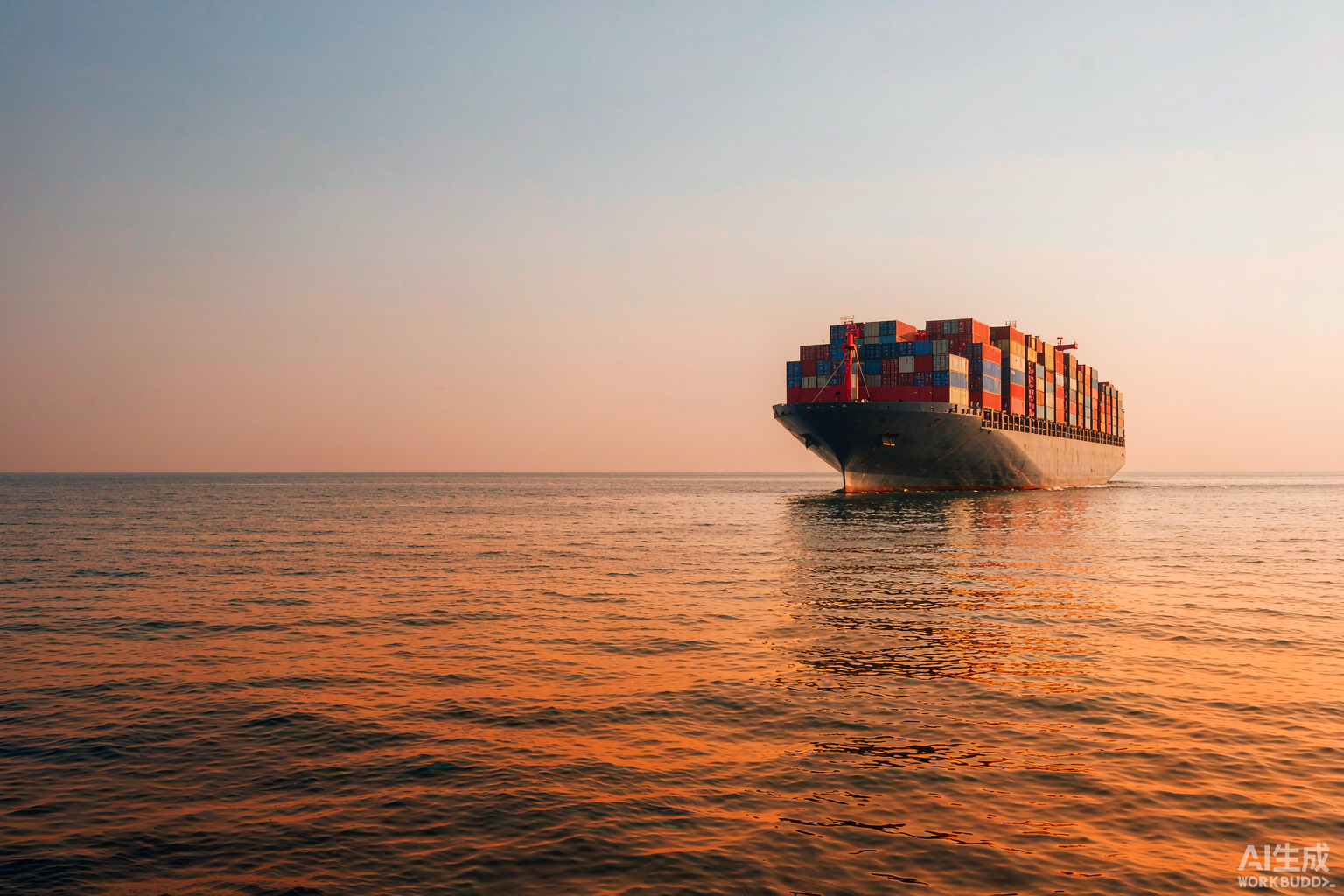
On 17 October 2026, the 8,110 TEU container ship "ONE Continuity" departed Laem Chabang, Thailand, bound for Northern Europe via the Suez Canal — the first Suez transit for the Premier Alliance (ONE, HMM and Yang Ming) since the Red Sea crisis erupted in January 2024. With this sailing, all six major container lines — CMA CGM, Maersk, MSC, Hapag-Lloyd, Cosco/OOCL and ONE — have now resumed Suez transits. What began in mid-2026 as a cautious pilot programme has become an industry-wide consensus: the Cape of Good Hope detour that shaped Asia-Europe freight pricing for over two years is steadily unwinding. For overseas buyers of roller blind fabric, sheer curtain fabric, sofa upholstery and coated blackout materials, this means shorter transit times, released vessel capacity and a freight market sliding firmly downhill. This article breaks down the change in three layers — routing, rates and capacity structure — and turns it into concrete booking tactics for Q1 2027.
1. The Suez Return: A Timeline That Explains the Momentum
The return did not happen overnight; it has accumulated month by month since May 2026. According to Linerlytica, more than 140 containerships representing roughly 2 million TEU of capacity have shifted back from the Cape of Good Hope to Suez since May, and Maritime Strategies International estimates that about 35 percent of Asia-Europe sailings now use the Red Sea route. In early October, a single week saw 30 vessels above 4,000 TEU transit the canal — the busiest week for Suez containership traffic since 2024. Key milestones: on 4 October, the 24,200 TEU "OOCL Spain" completed Cosco's first westbound Suez transit in more than two years; from mid-October, the Premier Alliance's FE1 service linking Southeast Asia with Northern Europe returned to the canal in full, with the 9,000 TEU "NYK Venus", the 8,200 TEU "ONE Hamburg" and the 9,000 TEU "NYK Orion" queued up for transits in the weeks that follow. For importers, this means ocean lead times on Southeast Asian and South China origins are progressively returning to pre-crisis levels. The Cape routing added roughly 10 to 14 days to a round voyage; that calendar time is now being handed back, week by week, to shippers on the world's busiest east-west trade lane.
2. Rate Transmission: Why Prices Are Falling Faster Than Expected
A shorter route is not merely a matter of a few saved days. Each Asia-Europe loop that ran around the Cape needed three to four extra vessels to maintain weekly frequency. When those loops return to Suez, the surplus vessels are released to other trades or laid up — and effective market supply expands. Rates have reacted immediately. The Freightos Baltic Index for the week of 6 October showed Asia-North Europe spot rates at approximately USD 3,260 per FEU and Asia-Mediterranean at approximately USD 3,555 per FEU, down another 2-3 percent week on week. The Shanghai Containerised Freight Index on 2 October stood at USD 2,199 per TEU and USD 3,378 per FEU. Measured from the July peak, Asia-Europe rates have fallen around 60 percent. Carriers are pushing back with a concerted rate-restoration campaign from late October: MSC announced FAK rates of USD 3,150 per TEU and USD 4,500 per 40-foot container to North Europe effective 19 October. But Linerlytica was blunt in its assessment: the Suez return "poses the biggest threat to carrier efforts to reverse the rate slide" on the Asia-Europe trade, because capacity is returning faster than demand — and blanket rate-increase announcements rarely survive contact with an oversupplied market. Buyers should treat announced increases as negotiating anchors, not as settled prices.
3. The Deeper Supply-Side Pressure: A Record Newbuild Wave Meets Soft Demand
Zoom out, and the Suez return is only half of the oversupply story. The global containership orderbook has swollen to a record 15.6 million TEU — equal to roughly 45 percent of the fleet currently in service. In September alone, nearly 200,000 TEU of new capacity was delivered, while not a single vessel was demolished: owners are reluctant to scrap tonnage, so supply keeps flowing in like water through an open valve. Meanwhile, the backlog that typhoon disruptions created at major Chinese ports over nearly three months is clearing, and global port congestion — which still held about 3.76 million TEU, or 10.9 percent of the global fleet, in early October — continues to release capacity as it eases. Every congested ship that resumes sailing is, in effect, another vessel added to the fleet. Demand, however, is not cooperating: Chinese export volumes weakened during the Golden Week holiday, and carriers blanked multiple sailings concentrated on the Asia-Europe and transpacific trades. Strong supply, soft demand — that is the fundamental backdrop for Q1 2027 fabric shipments, and it favours buyers who move decisively rather than wait for a bottom that may be shallower than expected.
4. The Risk Register: Suez Is Not a One-Way Street
Before embracing the lower rates, buyers should keep three facts in view. First, the security situation has not been fundamentally resolved: the European Union's Aspides naval mission has publicly stated it does not have enough vessels to meet all escort requests — cited by analysts as the main obstacle to a fuller and faster return. The situation along the Yemeni coast near the Bab el-Mandeb Strait remains volatile, and the recovery of Saudi crude flows through the southern Red Sea is only a marginal improvement, not a guarantee. Second, war-risk insurance and surcharges persist: while war-risk premiums have fallen from crisis peaks, Red Sea transits still carry additional insurance cost, and some loops within individual alliances retain Cape routings for specific services — so every booking must be confirmed in writing as a "Suez transit". Third, remember the lesson of 2024: the market initially assumed the Cape diversion would last a few months; it lasted more than two years. By the same token, do not treat today's return as irreversible — a single major attack on merchant shipping could see alliances re-divert within hours. The healthy buyer mindset is to enjoy the shorter transit and lower rates, but never to bet an entire year's logistics budget on the stability of this corridor. Build flexibility into contracts, and let optionality, not optimism, carry the risk.
5. Six Practical Booking Tactics for Q1 2027 Fabric Shipments
- Lock rates while the window is open: Asia-Europe spot rates have fallen about 60 percent from the July peak, and the oversupply dynamic will not reverse quickly. For non-urgent replenishment, ship in batches at spot; for project orders with fixed installation dates, negotiate 30-45 day fixed-rate agreements with your forwarder so the late-October "rate restoration" announcements do not distort your landed cost.
- Get the routing in writing: Within the same alliance, one loop may transit Suez while another still rounds the Cape — a two-week difference in transit time. Require "Suez transit" to be stated on the Booking Confirmation, and retain reroll or cancellation rights should the carrier unilaterally revert to Cape routing.
- Redirect freight savings into inventory turns: Transpacific rates remain elevated (around USD 8,322 per FEU to the US West Coast and USD 9,600 to the East Coast, supported by blank sailings), while Europe is the clear bargain lane. European buyers can advance Q1 replenishment into December-January sailings and let the freight savings offset a meaningful share of overseas warehouse storage fees.
- Rebuild the landed-cost model: With Suez transits restored, Northern European base-port transit times shrink by roughly 10-14 days, cutting capital lock-up, insurance and warehouse-in-transit costs simultaneously. Recalculate "freight + transit + capital cost" together — many orders previously forced into full-container economics can now be handled with leaner LCL schedules without missing delivery windows.
- Scrutinise war-risk and surcharge clauses: Confirm whether quoted rates include war-risk insurance or carry it as a surcharge; if a vessel diverts, agree in advance how demurrage, storage and destination free-time provisions extend. The transition period is precisely when ambiguous terms generate disputes, so close the gaps before booking, not after.
- Keep air freight as a live option: China-North America air spot rates have eased to about USD 5.60 per kg (down more than 15 percent week on week) and China-Europe to about USD 3.83 per kg. For samples, urgent replenishment and exhibition cargo, air freight is currently at yearly lows — raise your tolerance threshold for air shipments accordingly and protect your most time-critical deliveries.
6. Packing and Anti-Moisture Details for Each Fabric Category
Beyond rates, half of ocean-freight quality is decided by packing. Roller blind fabrics ship wound on paper tubes, loaded vertically or horizontally; both tube ends must be fitted with end caps against crushing, and rolls separated by pearl-cotton or corrugated dividers to prevent transit vibration imprinting the cloth face. Full-blackout coated fabric is the most humidity-sensitive: the coating slowly hydrolyses in hot, damp conditions, so every roll should be sleeved in its own polybag before loading, the container lined with a moisture barrier, and a generous quantity of desiccant added — a workable benchmark is no less than 8-10 kg of calcium chloride per 20-foot container, with container desiccant sticks recommended on long, high-temperature routes. High-weight categories such as sofa fabric and carpets are best palletised, wrapped and corner-protected, which prevents unbraiding and speeds destination-port cross-docking; jacquard and high-shrinkage decorative fabrics need anti-snag protection — smooth lining inside the outer carton, with no direct contact between fabric and pallet timber. One frequently missed rule of thumb: place heavy cargo at the front of the container and light, bulky cargo at the rear, and arrange rolls of the same order "in the same direction" by width — destination-side handling efficiency improves noticeably.
7. Four Execution Details When Negotiating with Forwarders and Carriers
First, negotiate the "validity period" of the locked rate together with the "free time" at destination: in a falling market, quoted rate validity is typically only 3-7 days, but destination free time can be negotiated to 14-21 days — and the latter matters more for cost control when ships queue at congested ports in peak season. Second, require fuel and war-risk surcharges to be itemised, never bundled: ask your forwarder to list BAF and war-risk premiums line by line so you can re-verify each component as the market falls, instead of letting an all-in rate swallow costs that should be dropping. Third, write cut-off times into the operation schedule: during the Suez transition period, container cut-offs at individual ports fluctuate, and a one-day difference between VGM cut-off and manifest cut-off can roll your booking — fix every port milestone into the shipping calendar. Fourth, front-load the evidence for cargo-damage claims: photograph the empty container before stuffing (paying attention to rust and holes), video the entire loading process, and document exterior condition within 48 hours of arrival — once the claims window closes, liability becomes very hard to establish.
8. How Wanbo Coordinates Fabric Exports Through the Transition
As a Shaoxing-based shading fabric exporter, Wanbo treats the freight window as an input variable for production scheduling, not an afterthought. This falling-rate period is exactly the right moment to front-load European orders and compress total logistics cost: our main categories — roller blind fabrics, sheer curtains, sofa upholstery, carpets, jacquard decorative fabrics and coated blackout series — can be scheduled on a dual-track rhythm of "fixed-rate Europe, batched North America". For the uncertainty of the Suez transition period, we provide dual-scenario quotations (Suez direct vs Cape of Good Hope), written routing confirmation on booking, transparent itemisation of war-risk premiums and surcharges, and proactive alerts on destination-port congestion risks. Wanbo supports flexible combinations from small-batch sampling to full-container programmes, with full English and Arabic documentation support, helping overseas buyers keep delivery calendars intact even while ocean lanes are being rewritten. Bring us your destination port and monthly volumes, and we will map out your Q1 2027 shipping calendar together.