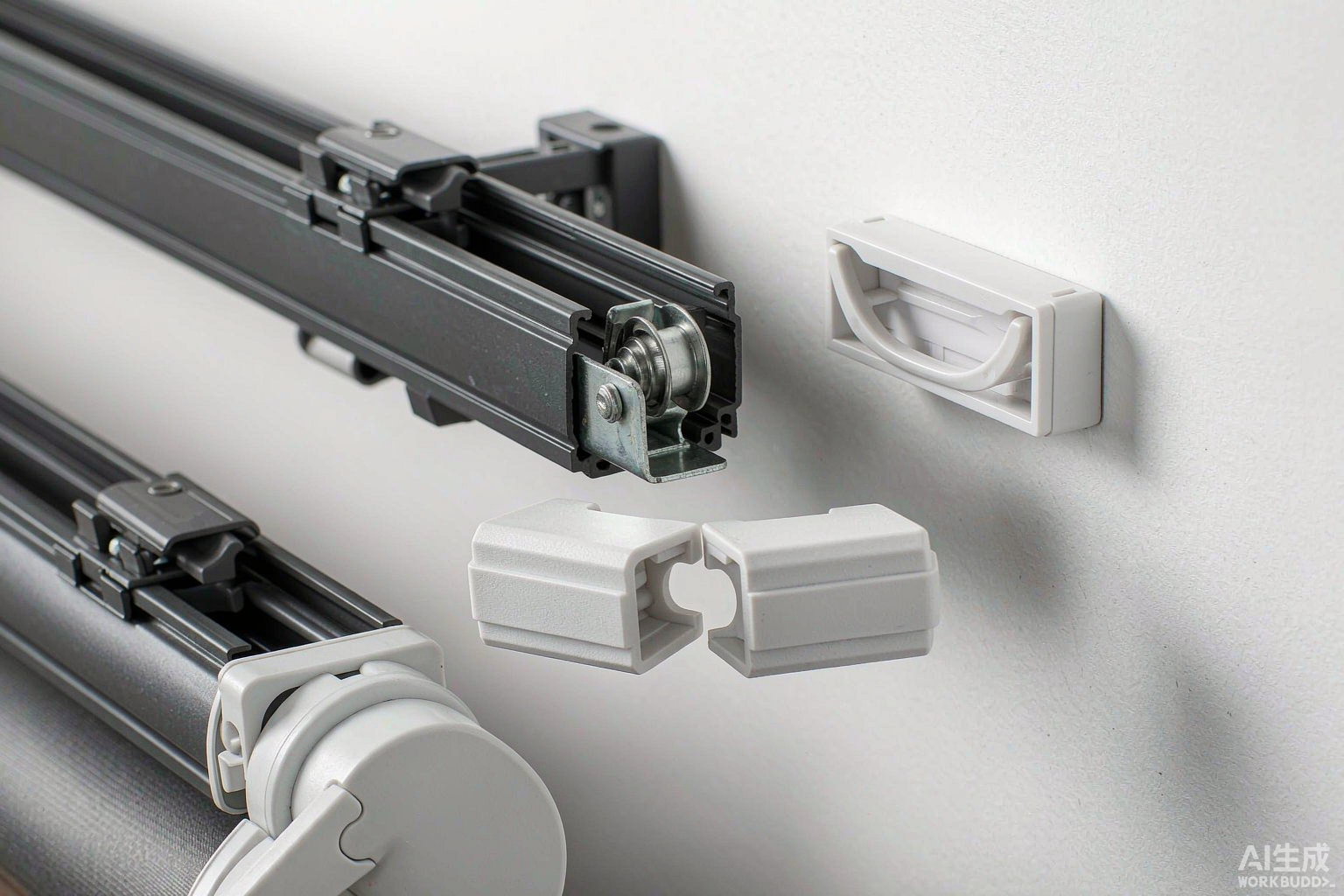
Window blind cord child safety guide, covering mandatory standards in EU, US and Australia, cordless alternatives and report verification.
In cross-border trade of shading window covering products, one compliance threshold is frequently underestimated by both exporters and buyers alike: child cord safety. This is not a fabric performance issue, nor is it identical to building flame retardant codes. It is a separate mandatory product safety requirement that countries have established specifically for the strangulation risk that window blind cords pose to children. Over the past decade and a half, numerous recalls, sales bans and lawsuits have been triggered on this basis across North America, Europe and Australia. For roller blinds, venetian blinds, vertical blinds and similar corded shading products, a determination of non-compliance in the destination market typically results in full delisting, mandatory recall and potentially substantial damages. When exporting shading fabric and finished products, Wanbo incorporates cord safety design at the product definition stage, helping overseas buyers avoid this easily overlooked compliance risk.
Start by understanding the underlying logic of this regulation. There are two main hazardous scenarios involving window blind cords. First, strangulation by loop formation, where a pull cord or bead chain forms a loop during use or children's play and catches around the neck. Second, entanglement suffocation, where a child playing near a window becomes entangled in hanging cords. Such accidents occur predominantly among children aged one to five, because children in this age range lack sufficient neck strength and the ability to free themselves. Precisely because the consequences are severe and the scenario is well defined, regulatory approaches across countries are highly consistent: either eliminate the cord, or restrict it to a range children cannot reach. Once this core principle is understood, all specific standard clauses can be derived from it.
Now consider the standards landscape across regions. In the United States, the Consumer Product Safety Commission (CPSC) has issued a mandatory rule on window covering cord safety, requiring finished window coverings entering the US market to adopt cordless designs or satisfy cord length and accessibility limits. The industry also widely references the ANSI/WCMA A100.1 standard system, whose successive revisions have progressively tightened the permissible use of cords; the current direction allows very few cord configurations. In the European Union, EN 13120 is the principal performance and safety standard for internal blinds, with dedicated clauses on cord safety, supported by EN 16433 and EN 16434 which separately regulate cord restraint devices and safety devices. In addition, the EU General Product Safety Regulation (GPSR) requires products to undergo safety assessment and maintain technical documentation before being placed on the market. Australia and New Zealand operate a mandatory consumer product safety standard for corded internal window coverings with explicit limits on cord length, height above floor and loop dimensions. Canada has its own Corded Window Coverings Regulations. Several Middle Eastern countries reference EU or US standards in setting local requirements. Notably, these regulations target the finished product, not the fabric itself — which is precisely the stage many fabric suppliers overlook and buyers must cover themselves.
Compliant approaches are actually quite clear and can be grouped into four categories by product form. First, cordless solutions, the most thorough option, including spring-assisted roller blinds, push-pull roller blinds and ceiling-mounted cordless structures. With no cord at all, there is inherently no strangulation risk. This is the mainstream preference in European and North American retail channels today, particularly suited to children's rooms and bedrooms. Second, motorised solutions, using tubular motors to drive operation and completely removing the operating cord. Electrical safety certification for the motor and control system (such as CE, UL or ETL) must be confirmed, however, otherwise a mechanical risk is merely exchanged for an electrical one. Third, short cord solutions with restraint devices, where a cord tensioning device pulls the freely hanging cord into a taut straight line, preventing loop formation. Installation quality is absolutely critical here — the device must be correctly fixed to the wall or frame per instructions; improper installation amounts to no restraint at all. Fourth, cord solutions with safety devices, including breakaway connectors (which separate when force exceeds a threshold), safety clips, and cord structures that do not form closed loops. Note that acceptance of these approaches varies significantly between markets, so the destination country's permissibility must be confirmed before purchase.
How buyers verify compliance is the most practical part of this discussion. Contracts should explicitly require suppliers to provide the following. First, test reports conforming to destination country standards. Reports must be issued by an accredited third-party laboratory (such as SGS, Intertek, TUV or BV), and the product model and structure stated on the report must exactly match the product actually supplied. The most common trap here is a factory presenting a report for a different model while the shipped product has had its cord configuration changed or its restraint device omitted. Second, installation instructions and safety warning labels. Most regulations require products to be accompanied by safety warning labels meeting local language requirements, with explicit statements such as keeping cords away from children and not placing beds or furniture near windows. Missing instructions or incorrect language will also be deemed non-compliant. Third, technical documentation retention. Markets such as the EU require manufacturers to keep technical files and safety assessment records. Buyers should contractually require suppliers to provide and retain these documents for submission during regulatory inspections or e-commerce platform audits. Fourth, arrival consistency verification. Sample and inspect whether delivered products structurally match the tested sample, particularly at critical points such as restraint devices, cord length and connector type.
From a procurement decision standpoint, several pitfalls merit attention. First, do not substitute "fabric compliance" for "finished product compliance". What a fabric supplier can provide are fabric-level test reports on flame retardancy, colour fastness and environmental compliance, whereas child cord safety is a finished product structural matter. The two cannot cover each other. If the buyer purchases fabric and assembles independently, compliance responsibility rests entirely with the buyer — a point that must be made clear during commercial negotiation. Second, channel requirements may exceed regulatory requirements. Large North American retailers and European home furnishing chains often maintain their own compliance lists that are more detailed than regulation, sometimes rejecting cord configurations that remain legally permissible. Confirm the internal admission list with the end channel before purchasing, rather than checking regulations alone. Third, avoid the gamble that "a small change won't matter". Reverting a cordless structure to cord control, or omitting the cord tensioning device, to save cost is the most typical cause in recall cases. Such changes usually account for a very small share of total product cost while creating enormous risk exposure. Fourth, watch the second-hand and renovation market. Hotel and apartment renovation projects that retain older corded products may equally violate current regulations, an issue already receiving attention in European and North American property compliance inspections.
Practical checklist for overseas buyers:
- Confirm current destination country requirements before purchasing: establish whether the market has banned corded products, whether restraint device solutions are accepted, and whether the channel imposes stricter admission lists of its own;
- Lock the structural solution at product definition stage: determine whether to use cordless, motorised, tension restraint or safety device solutions, and write structural requirements into the technical annex to prevent substitution at the production end;
- Require "same model" test reports: verify consistency between the model and structure on the report and the product actually supplied, and require supplementary testing of differing components where necessary;
- Confirm label and instruction compliance: check language, content and placement of safety warning labels against destination country requirements;
- Define documentation retention responsibility: specify in the contract which party retains technical documents, for how many years, and the obligation to cooperate with regulatory enquiries;
- Establish arrival consistency sampling: record sampling inspections of critical components such as restraint devices, cord length and connectors, retaining images and inspection records.
Child cord safety may appear to be a narrow technical clause, but it fundamentally reflects how deeply a supplier understands the product's actual end-use scenario. A supplier capable of addressing this requirement at the design stage is usually also more disciplined in product structure, packaging labelling and document management, with lower delivery risk. In its shading finished-product export business, Wanbo can assist overseas buyers in mapping destination country cord safety requirements, offer cordless and motorised structural solutions with matching restraint and safety device options, and coordinate third-party testing and document archiving — giving shading products one less obstacle when entering mature markets such as Europe, North America and Australia.