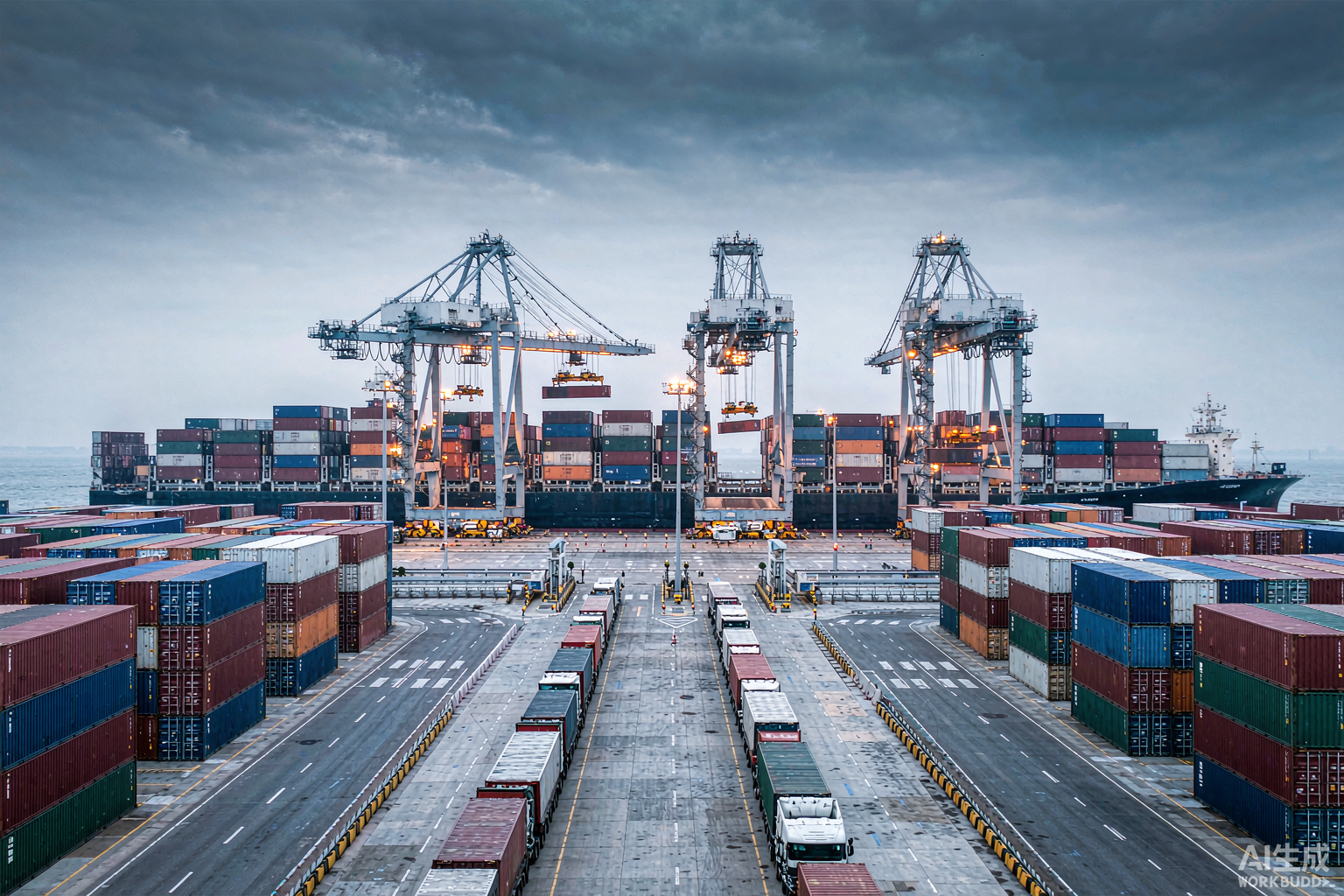
Once the Golden Week holiday ends, October through December becomes the most critical delivery window of the year. This guide breaks down blank sailings, freight rate movement, destination port congestion and peak season surcharges, and provides a working export shipping checklist to help fabric exporters land cargo on time.
October is the most deceptive export month of the year. Space looks loose, quotations look like they are falling, and yet the costly surprises are usually not about price at all — they are about whether the vessel actually sails. In 2026 the National Day Golden Week runs from 1 to 7 October, with 10 October designated as an adjusted working Saturday. This year the calendar was unusually compressed: the Mid-Autumn Festival fell on 25 to 27 September, leaving only the three normal weekdays of 28 to 30 September between the two holidays. Cargo that missed that window waits until factories, customs brokers and trucking teams are back to anything like normal staffing.
This article sets out the October 2026 export rhythm: the blank sailing list, port congestion, congestion and detention at the destination end, and — amid the disruption — what actually distinguishes a reliable supplier.
1. Start with the single most important item: how many sailings were cancelled in October
This is the information most often missed and most likely to cause real loss. According to Drewry’s cancelled-sailings tracking, weeks 40 to 44 show 58 announced blank sailings on the main East–West trades, an 8% cancellation rate, with about 64% concentrated on the eastbound transpacific. A wider window from 14 September to 18 October shows 79 cancellations out of 721 scheduled sailings, 11%, roughly a third of them on Asia–North Europe and Asia–Mediterranean services.
Among the blankings Maersk has published, those directly relevant to China include: AE15 service 640W/645E (Far East to Europe, Qingdao, 28 September), AE12 641W/648E (Ningbo, 8 October), AE1 641W/648E (Shanghai, 10 October), TP8 640E (Asia to US West Coast, Busan, 9 October) and TP12 641E (Asia to US East Coast, Ningbo, 9 October).
Note carefully: each of these is a single cancelled voyage, not a suspended service, and carriers state they will offer coverage through substitute sailings. The catch is that the replacement voyage, the working load port and the revised gate-in cutoff must all be confirmed booking by booking. A container handed to a cancelled voyage does not automatically roll onto the next departure on the same loop.
2. Origin ports: congestion has eased, but it has not gone away
- Shanghai: average vessel waiting time for 16 to 22 September was 4.7 days, reaching 6 to 8 days at the Yangshan and Waigaoqiao terminals.
- Ningbo: 2.5 days waiting. Qingdao: 1.2 days, with berth dredging running from 15 September to year-end.
- Yantian: gate-in restrictions continue, and 40-foot high cube equipment is tight across Chinese ports.
- Global congestion: Linerlytica estimates about 3.76 million TEU of capacity is tied up, roughly 10.9% of the global fleet.
- No major China port closures from typhoons in September, although Typhoon Dujuan closed Yokohama for 45 hours on 20 to 22 September.
3. Peak season surcharges: the new round from 1 October
These numbers go straight into your cost. Effective 1 October:
- CMA CGM: Far East and Indian subcontinent to the US West Coast, USD 4,000 per 40ft; Indian subcontinent to the US East Coast, USD 10,000 per 40ft.
- Australia and New Zealand (ANL, effective 15 October): North East Asia to Australia USD 500 per 20ft, USD 1,000 per 40ft; South East Asia, the Indian subcontinent and the Middle East to Australia USD 300/600; to New Zealand USD 600/1,200. This follows two USD 500 per TEU increases on China/Asia–Australia lanes on 1 and 15 September.
- Africa (effective 15 October): Maersk Far East to South Africa and Mauritius USD 250 per 20ft, USD 500 per 40ft; CMA CGM North and Central China to Dar es Salaam USD 600 per TEU and to Mombasa USD 800 per TEU; South China to Dar es Salaam USD 550 per TEU and to Mombasa USD 800 per TEU.
Putting the surcharge in proportion makes it clearer. Against Drewry’s World Container Index of USD 4,476 per 40ft, that USD 4,000 West Coast charge equals about 89% of the index level and about 54% of the actual Shanghai–Los Angeles rate of roughly USD 7,352 to 7,838. This is not a number to “keep an eye on” — it has to appear as its own line in your quotation.
4. A counter-intuitive conclusion: sailings are being cancelled, yet rates are falling
The conventional pattern is a pre-holiday space squeeze followed by post-holiday rate restoration attempts. Drewry’s call for the coming week is the opposite: rates are expected to fall, despite 15 transpacific blank sailings (up from 9 the previous week). The reason is that capacity released by the Suez return is outweighing the capacity withdrawn by blank sailings — Suez Canal containership transits rose from 41 in week 37 to 48 in week 38, and every loop back through the canal releases vessel days.
The divergence between lanes is stark:
- Europe is falling: Shanghai–Genoa USD 3,835 per 40ft (−5%), Shanghai–Rotterdam USD 3,485 (−4%).
- The US remains firm: Shanghai–Los Angeles USD 7,838 (+2%), Shanghai–New York USD 10,373 (flat, +216% year on year). Forwarder market pricing sits at USD 7,800 to 8,300 to the West Coast and USD 9,000 to 10,500 to the East Coast.
- Fuel is setting a floor: bunker prices have risen back to June levels on escalation and higher Chinese crude imports, putting an elevated floor under container rates.
- Post-holiday data will be distorted: Golden Week itself makes the following fortnight look soft, so direction is only readable a week or two after the holiday.
5. The destination end is the real minefield in October
This is the section most worth your time. Surcharges are filed because the receiving end cannot clear fast enough.
South Africa — Durban, Richards Bay and Cape Town: Durban’s average port call time has stayed above seven days for three consecutive weeks at 7 days 6 hours (3 days 8 hours at anchorage and 3 days 22 hours at berth). Richards Bay is worse at 9 days 1 hour. Cape Town waiting time rose 69% to 2 days 8 hours, the highest since mid-June. The Durban Chamber of Commerce, the Road Freight Association and SAAFF report more than 96 vessels waiting at anchorage, a direct sunk cost of roughly R98 million per day plus at least R26 million daily in indirect costs, with around R7 billion of goods unable to move each day. The trend is the worrying part: average delay hours at Durban moved from 39 in January to 96 in July, 194 in August, and 364 in September.
The Gulf has hardened: on 29 September the UK Maritime Trade Operations reported that a vessel transiting the Strait of Hormuz was struck by an unidentified projectile, causing a fire the crew extinguished before continuing, with no casualties. Satellite imagery indicates a very large tanker was targeted roughly 31.5 kilometres east of Khasab in Omani waters. An IRGC spokesman stated the strait is “not only not open but has become a hunting ground” for its naval forces. For cargo owners this surfaces as a booking problem: Maersk has suspended reefer bookings to and from Iraq, Kuwait, Qatar, Bahrain, Saudi Arabia, Jordan and most of the UAE, and applies an emergency freight rate cost of USD 3,800 on cargo accepted for local consignees in Jeddah. Cargo that used to be booked direct now moves overland via Salalah, Khor Fakkan, Fujairah and Aqaba.
Chattogram, Bangladesh: median waiting time rose to 0.57 days for 20 to 26 September (from 0.12 days the week before), still low regionally. Container deliveries through the port gates halted for six hours on 28 September over a gate pass fee dispute and resumed the same evening.
Israel, by contrast, has become easier: Maersk has lifted dangerous goods restrictions and now accepts DG bookings fully at Haifa and Ashdod.
The Panama Canal: the draft reduction scheduled for 1 October was postponed, with the existing 14.63 m (48 ft) tropical freshwater limit continuing. That is good news for Asia–US Gulf and East Coast services.
6. Detention and demurrage: the cost that runs away faster than freight
Once the destination port jams up, demurrage and detention accumulate, and they frequently exceed the freight itself. The usual reason this gets out of control is that everyone watches the rate and nobody watches the free time. Seven practical measures:
- Negotiate free time at the point of booking, and put the free container days and free storage days into the booking confirmation rather than leaving them to be argued after arrival.
- Confirm destination customs documents early, especially that the certificate of origin, invoice and packing list agree. With frequent October schedule changes, a mismatch between documents and voyage is the most common cause of a hold.
- Establish the surcharge trigger: is the PSS charged on gate-in, sailing date or bill of lading date? That single definition decides whether you pay, so get it confirmed in writing by your forwarder.
- Aim to gate in before 1 October — but respect the physical constraint. With Shanghai berth waits at four to five days, a booking placed on 28 September may never gate in before 1 October, so treat 25 September as the practical working cutoff.
- Book the pickup and the empty return before arrival. At congested ports the problem is often not picking up but returning — return slots are harder to get than pickup slots.
- Put detention risk into the contract with your buyer, stating who bears costs arising from destination port congestion.
- Consider alternatives for high-value cargo: on some congested lanes, sea-air or a transhipment overland bridge costs more per unit but locks in the arrival window.
7. A practical October export timetable
- Now (the first week back): confirm deliverable dates with suppliers for the first half of October immediately. Factories need a ramp-up after the holiday shutdown.
- First to second week of October: expect a post-holiday backlog at origin, with roll-overs possible on popular sailings. Prioritise rebooking cargo on cancelled voyages.
- Around 15 October: the new round of rate restorations and PSS takes effect for Australia, New Zealand and Africa. Lock these in early.
- Mid-October to mid-November: a late-season PSS window is expected on the Australia–New Zealand lanes. This is a forecast rather than a confirmed announcement.
- October is the last realistic window for Christmas cargo. Through November and December the constraint shifts from price to space itself.
- New Zealand pre-Christmas cutoffs: 6 November for direct ports and 30 October for feeder ports.
8. How to judge a supplier when the market is chaotic
This is in fact a good moment to screen suppliers, because differences that are invisible in calm conditions all surface in October. Do not look at price — look at four capabilities:
- Do they warn you about blank sailings proactively? These are published by the carrier; a good supplier tells you before you ask.
- Can they give you a lane-by-lane cost breakdown? Base freight, PSS and emissions surcharge shown on separate lines, not one vague landed price.
- Can they handle instalment delivery? Splitting a large order and shipping what can physically catch the sailing is the most practical October shipping strategy.
- Can they control document quality? When schedules shift frequently, consistency between the certificate of origin and the bill of lading directly determines whether the cargo is held at destination.
9. How Wanbo works with customers in peak season
In its export business for shading fabric and home textiles, Shaoxing Wanbo works with a multi-market, multi-batch order structure. During peak season it can do three things for customers: provide a line-by-line breakdown of freight and each surcharge by destination port and container type, so that PSS and carbon cost are each visible; arrange instalment delivery by sailing schedule and cutoff, shipping the batches that can still catch a vessel; and reserve raw material and production capacity in advance so that the holiday shutdown does not erode delivery dates in the first half of October. If you have a shipment that must arrive before Christmas, the earlier you send over the destination ports and container volumes, the more options remain open.
10. An action checklist for buyers
- Establish today whether your cargo sits on a cancelled voyage, and what the substitute sailing and revised cutoff are.
- Ask your forwarder for a line-by-line cost estimate covering base freight, PSS and the emissions surcharge.
- Confirm in writing whether the PSS trigger is gate-in, sailing date or bill of lading date.
- Negotiate free container and free storage days in advance for congested destinations (South Africa, the US East Coast and parts of the Indian subcontinent).
- Get first-half-of-October deliverable dates confirmed with your suppliers — do not assume full output resumes the moment the holiday ends.
- If your market is Australia, New Zealand or Africa, prioritise bookings before 15 October.
- Try to ship Christmas cargo within October. After November the problem is not price, it is getting space at all.
- Book the emissions surcharge and the PSS separately — the two costs behave in completely different ways.