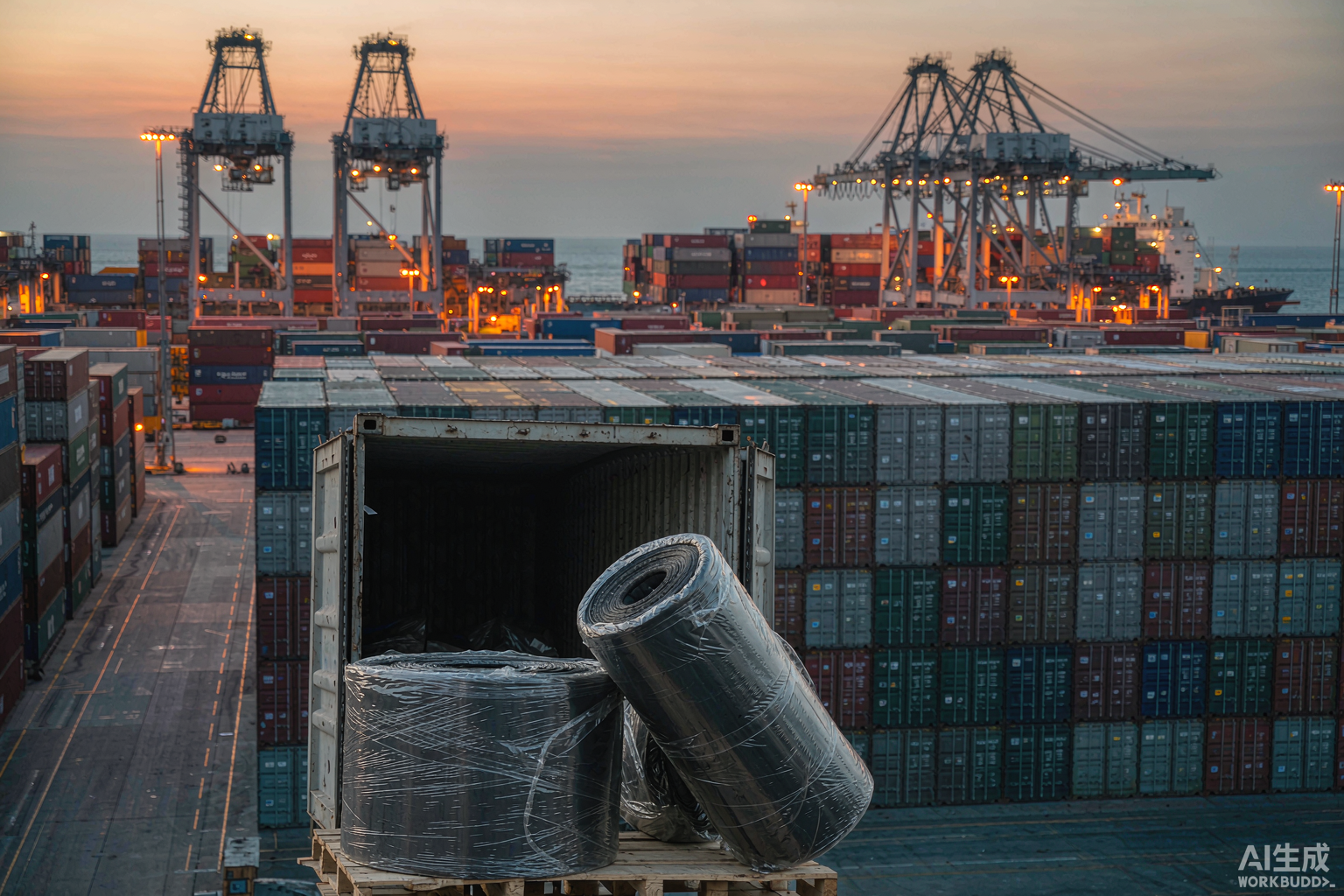
Drewry's WCI rebounded 3% to $4,485 on October 15, ending a 13-week slide; yet Sea-Intelligence shows schedule reliability down to 49.9%, average delays of 6.81 days, and some 3 million TEU of capacity trapped in congestion. Space is plentiful — punctuality is not. This briefing unpacks the Suez-return arrival wave, route-by-route reliability and the 7.11-day dwell at Los Angeles, then delivers eight practical moves: buffered lead times, dual-gateway routing, split shipments, carrier selection by reliability and capped delay liability, to protect fabric buyers' 2027 selling windows.
In mid-October 2026, the ocean freight market is showing a deeply uncomfortable combination: rates are rising while delivery performance is getting worse. According to Drewry's World Container Index (WCI) assessment of October 15, the composite index rose 3% to $4,485 per 40ft container, ending thirteen consecutive weeks of decline. Shanghai–Rotterdam climbed 6% to $3,522 and Shanghai–Genoa jumped 7% to $3,945 — the first Asia–Europe increase in three months. Yet in the same week, Sea-Intelligence data showed that global schedule reliability had already fallen to 49.9% in August, the worst level since September 2022, with vessels arriving an average of 6.81 days late. Roughly 3 million TEU of capacity — about 8.5% of the global fleet — is currently trapped in port congestion, an increase of more than 75% versus mid-August. In plain terms: space is not scarce, rates are rebounding, and what is truly scarce right now is punctuality. For fabric exporters and importers who move their goods in full containers, the delivery math has to be rewritten.
First, the October snapshot on rates. On the Drewry index, Shanghai–Los Angeles rose 3% to $7,884 per 40ft while Shanghai–New York slipped 1% to $10,075 — the transpacific and Asia–Europe trades are moving in opposite directions. The year-on-year comparison is even starker: in mid-October 2025 the same Shanghai–Genoa lane stood at $1,821 and Shanghai–Rotterdam at $1,669. Freight on both European lanes has more than doubled in twelve months. Carriers are attempting to lock in the recovery with a new round of FAK (freight all kinds) increases effective October 19: Hapag-Lloyd at $4,200 to North Europe and $4,600 to the Mediterranean; CMA CGM at $4,600 to North Europe and $4,700 to the Mediterranean; MSC filing $4,500 on both. Drewry explicitly cautions that these are announced requests rather than paid prices, and that with effective capacity growing, full implementation remains uncertain. On blank sailings, only two Asia–Europe sailings have been announced for the coming week, down from six the week before — meaning actual available space is expanding even as carriers push headline rates upward.
The biggest structural variable remains the return to the Suez Canal. Clarksons Research calculates that in early October roughly 36% of container capacity routed via Suez or the Cape of Good Hope transited the canal — up sharply from just 8% between 2024 and mid-2026, though still well below the roughly 80% share seen before the Red Sea attacks. Weekly container transits reached about 753,000 TEU in the first two weeks of October, below the 1.457 million TEU of the same period in 2023 but accelerating month by month. The Premier Alliance (ONE, HMM and Yang Ming) has brought its FE1 Asia–North Europe service back through the Red Sea this week. The consequence is double-edged: when fleets return to Suez, round-trip voyage times shorten and the same fleet produces more effective capacity — but European ports suddenly face a "bunching" of arrivals within the same week, which is exactly the new congestion risk now flagged across North European gateways, while the Port of Los Angeles records historic import volumes from shifted trade flows.
Now the reliability ledger in detail. The Shanghai Shipping Exchange's weekly bulletin for October 5–11 puts the on-time berth rate of major global ports at just 41.79%, with vessels spending an average of 2.08 days in port. By route: Asia–US West Coast reliability fell to 33.33% (down 8.47 percentage points week-on-week), Asia–Europe to 32.23% (down 6.79 points), and Asia–US East Coast stood at 37.93%. Port dwell times diverge dramatically: Los Angeles averaged 7.11 days in port (up 22.6% in one week) and Long Beach 5.39 days, while New York needed only 2.14 days; Chinese gateway ports averaged 2.14 days for oceangoing vessels. At city level, Dimerco's Asia-Pacific freight report recorded Shanghai's on-time rate as low as 21% and Ningbo's at 34.6% — meaning eight or nine out of ten containers miss their promised arrival window. Sea-Intelligence estimates that restoring congestion to mid-2025 levels will take seven to ten months, implying elevated delays through at least the first half of 2027. The one bright spot is alliance differentiation: Maersk's October North America update, citing Sea-Intelligence's Global Liner Performance report, notes Gemini network reliability of 95.7% into the US West Coast and 93.5% into the East Coast, against industry averages of 69.7% and 71.5%. Choosing a carrier is quietly becoming a choice of certainty rather than of price.
Why is the fabric trade uniquely exposed to schedule slippage? First, fabric is a classic low-value, high-cube commodity: a 40ft high-cube loaded with blackout roller-blind fabric often carries a commercial value of only $20,000–30,000, so freight, demurrage and detention consume a disproportionate share of an already thin margin. Second, window-covering fabrics live on seasonal and project timelines — retail floor-set dates, hotel and office installation milestones, Ramadan and Christmas stocking windows — and value evaporates when the date is missed. Third, fabric is a color product: buyers frequently need replenishment from the same dyelot, and if the first container arrives late, even an expedited replacement cannot catch the selling window. Fourth, and most often overlooked: when freight is cheap, negotiations revolve around price; when reliability collapses, the most expensive line item becomes breach — customer claims, lost orders, empty shelves. None of that appears on a freight invoice, yet all of it is deducted from profit.
The core remedy is to replace "nominal transit time" with "committed transit time". Nominally, Shanghai to Los Angeles is about 15 days and to Rotterdam about 32. In a market where one-third of vessels arrive on time and the average delay approaches seven days, promising nominal transit is simply underwriting systemic risk on behalf of your customer. Overseas buyers and Chinese suppliers should use the checklist below to rewrite delivery terms and operating procedures for the 2027 contract year:
- Write buffered lead times into quotations and contracts. After the production lead time (25–35 days for roller-blind and curtain fabric), reserve a 7–10 day ocean buffer and a 5–9 day destination-port clearance buffer. State in the proforma invoice or sales contract that "delivery dates are estimates and port congestion does not constitute breach", and cap delay compensation (for example at 10–30% of freight value) to avoid unlimited liability.
- Book at least three weeks ahead; plan four weeks on transpacific peaks. Maersk's North America update explicitly recommends three weeks' notice; a Mediterranean Peak Season Surcharge of $250 per dry or reefer container starts November 1, 2026 and must be built into quotations.
- Split gateways and split shipments. Spread core SKUs across two or more origin ports and two or more services (for example Ningbo and Shanghai, USWC and USEC), and replace one full container with staged partial deliveries, so a single delayed sailing cannot take down an entire season; for deadline-critical buyers, airfreight small high-value top-ups as a pressure valve.
- Choose destination ports by dwell time, not by rate alone. The current gap — 7.11 days in port at Los Angeles versus 2.14 at New York — can erase an entire ocean-leg advantage. Watch Panama Canal draft restrictions for East Coast routings and reserve buffer for the Suez-return arrival wave at European ports.
- Select carriers by reliability, not only by price. On the same lane, a Gemini-network service at 93–96% on-time is worth far more than a $200–300 per-container saving on project orders. Add schedule stability and alliance membership to your supplier scorecard.
- Build the blank-sailing calendar into production planning. Around 13% of October sailings were blanked, and forwarders typically know adjustments two to three weeks ahead. Ask your forwarder for a rolling four-week list of blanked sailings and schedule changes, and adjust container-ready dates accordingly.
- Recalculate landed cost and safety stock. With Drewry's October 15 reading, Shanghai–Rotterdam is up roughly 111% and Shanghai–Genoa about 117% year-on-year; for low-unit-value fabric the freight share of landed cost has risen materially. Reset overseas-warehouse and in-transit safety stock using "weekly sales × (transit + buffer) × 1.2", and carry up to four extra weeks of inventory through the high-delay window from Q4 2026 into Q1 2027.
- Keep an evidence chain and streamline claims. Archive booking confirmations, carrier delay notices, demurrage invoices and bill-of-lading remarks item by item. For split deliveries, contract that "partial deliveries constitute partial performance", so one delayed container cannot trigger default on the entire order.
Different buyer profiles carry different exposures, and the priorities differ accordingly. For wholesalers and import distributors, the core issue is inventory turnover: low reliability turns in-transit stock into "uncertain stock". Raise reorder points across the board and replace the pattern of "one large container, one arrival" with "two smaller containers, four to six weeks apart" — this smooths capital tied up in transit and caps the damage of any single delayed sailing. For project buyers — hotels, offices and turnkey fit-outs — the critical variable is the installation milestone: decouple "fabric arrival at port" from the main contractor's programme in the contract, prioritize high-reliability direct services, and agree a substitute-dyelot plan for emergency top-ups after lab-dips are sealed. For cross-border e-commerce sellers shipping finished roller blinds into marketplace warehouses, the key metric is the stockout rate: extend FBA replenishment windows from the usual 60 days to 75–90 days, split inbound shipments between West and East Coast warehouses to avoid a single-location stockout that degrades listing performance. What all three profiles share is simple: put your forwarder's delay alerts on the weekly meeting agenda, rather than reacting when the demurrage invoice arrives.
For the 2027 buying calendar, three windows matter most. First, November–December is the traditional soft season on Asia–Europe: if the October 19 FAK increases fail to stick and rates slide again, that is the moment to lock Q1 2027 space and annual contract rates. Second, Chinese New Year and Ramadan fall in the same early-February window in 2027; the four weeks before the holiday (late December to January) will bring a booking rush, so confirm Ramadan and spring-season orders by the end of November. Third, expect volatility all year — Drewry already warns that post-holiday demand, capacity adjustments and geopolitical uncertainty will keep the market whipsawing. Anchor your delivery promises in data and buffers, not in luck. Rates and conditions change daily; the figures in this article explain the structure and are not a substitute for a live quotation.
As a source factory in Keqiao, Shaoxing — the heart of China's home-textile cluster — Wanbo supplies blackout roller-blind fabric, sheer curtain fabric, sofa upholstery fabric, carpets and rugs, plus jacquard, high-shrinkage, coated and woven collections to wholesalers, importers and project buyers worldwide. Against the reliability challenges of late 2026 we support dual-gateway routing and split shipments, production planning reverse-scheduled to your seasonal windows, optimized container loading and LCL consolidation, and end-to-end coordination of booking, documentation and destination customs files. Contact Wanbo for the latest color cards, samples and FOB/CIF quotations — and protect your 2027 selling season with certainty of delivery, not just a low rate.